Algorithms, Measurable Outcomes and the Value of a Reliable Recipe


albert-einstein2

I’ve been spending a lot of time of late trying to quantify things, such as which marketing actions translate into actual books sales; which high school curriculum will enable Daughter #1 to have an interesting and challenging education, get into college, graduate and be self-supporting before she’s 40; and how much value our two bathroom renovations will add to our house and to our lives.
DSC_0003

(I almost entitled this post Bonfire of the Vanities.  You can’t underestimate the value of providing bathroom space for two girls to straighten their hair at the same time).  When not searching online for a 42 inch vanity with an offset sink, I’ve been writing articles about the benefits and detriments of standardized tests in our public schools and other education-related conundrums.

PISA_OECD_rankings3

All this examination of data, marketing campaign statistics, shower stalls, tile samples, paint chips, vanity tops (we decided to have one custom made) cost-benefit analyses and discussion of measurable outcomes has my mind reeling. I’m overloaded with information yet, when the decision-making rubber meets the road, like Whitney Houston, I find myself wondering “how will I know?”

Whitney

Luckily, a few shining lights have guided me.

Though it had been an exceptionally busy week and I was on the verge of coming down with the nasty cold/flu that knocked me flat by Sunday, I’m glad I made the effort to attend a meeting of Book Publishers Northwest, where the featured speaker was Laura Pepper Wu, self-described entreprenette and book marketing guru, whose website 30 Day Books offers a wealth of valuable information for independent authors.  I haven’t yet purchased her pdf book Fire Up Amazon (at $4.99 it’s a deal), but I plan to.

fire-up-amazon-300x262

I followed a few of the tips she offered for optimizing your book’s Amazon page (turns out, it’s all about the algorithms, baby) and lo and behold I had some, dare I say, measurable outcomes.

There were more measurable outcomes to come.

I love my husband, I really do.  But we don’t usually follow the same path when it comes to house projects, which is why our kitchen wallpaper was half torn down for a number of years.  Up until now, our philosophy has been, to quote Bob Dylan, “most likely you go your way and I’ll go mine.” If one of us is invested in a project, we run with it (shelves and anything to do with the garage – him, turquoise kitchen walls and any other cool painting project – me.

However, it was Jeff who lugged 56 of these tiles home from Turkey.

However, it was Jeff who lugged 56 of these tiles home from Turkey.

When we have to work together…. well…

Here's what happened when Jeff hung a temporary mirror in our bathroom.

Here’s what happened when Jeff hung a temporary mirror in our bathroom.

But these bathrooms.  Maybe it’s the chance of escape from the vicissitudes in mood of our teen and tween that had us companionably scraping wallpaper from the master bathroom for hours one Sunday (because you know the t(w)eens aren’t going to offer to help) and trolling for tiles on a Saturday afternoon.

I know that’s what drove us to the custom vanity place not once, but twice this past weekend and then off to a lighting fixture store after that.  Imagine my surprise when we managed to agree, not only on floor and shower tiles, but also on style of vanity, counter top (that was big), faucet style and finish and drawer pulls, but also on unexpected new bedroom lighting.  I’ve been worrying about us as empty nesters. Now I see our bright future.  We’ll become renovators.

(Anyone who knows me is snorting right about now and perhaps uttering that evocative British phrase “Not bloody likely.”)
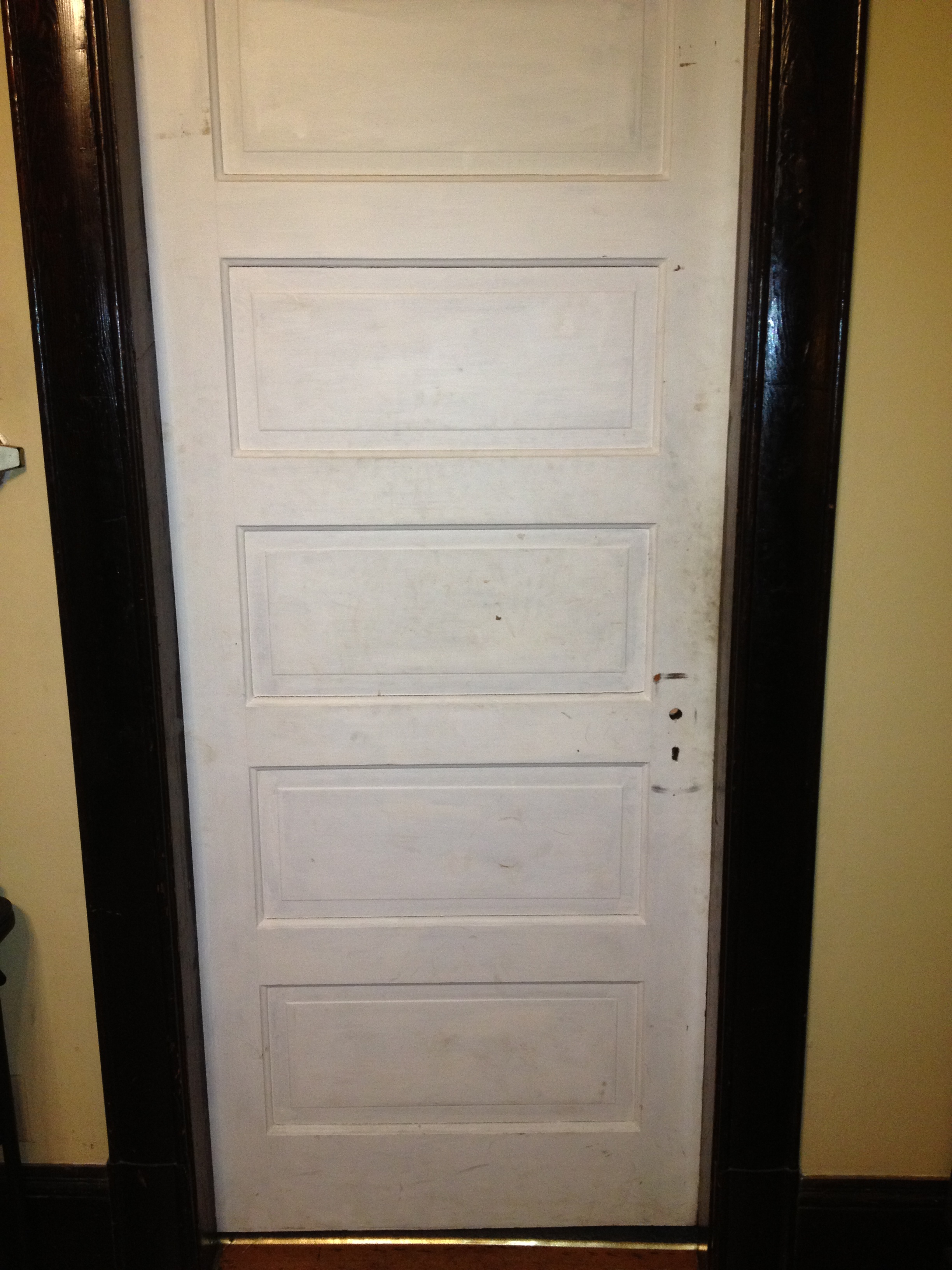
Exhibit A.  Note the lack of doorknob.

Exhibit A, still-unpainted.  Note the lack of doorknob.

The promise of a new vanity that would soon need to be picked up led me to get my act together and finally repair the broken trunk lock of the Famous Minivan. I have yet to deliver the bags that have been sitting in said trunk to Goodwill or to remove Daughter #2’s end of first term project — it’s term four now– but I’m on a roll, so watch out, world.

The nasty cold/ flu bug had knocked me flat just as the high school deliberations started intensifying and, deprived of my usual moxie, I was looking for a sure thing. I found it in a recipe.

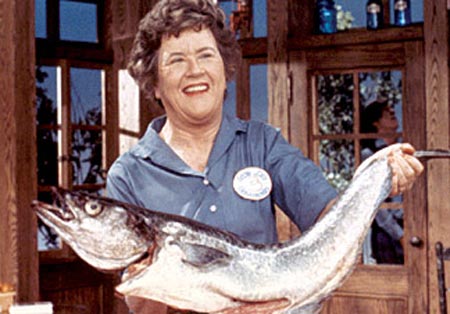
If you like to cook with recipes, you know that there are certain people you can rely on to never steer you wrong (Claudia Roden, Marcella Hazen, Paula Wolfert, Patricia Wells, David Lebovitz and, my current gastronomic crush, Yotam Ottolenghi) and other Julia-come-latelys who have to earn your trust.
julia_child_avec_un_poisson

If you like to cook at all, you know that there are certain ingredients that are magic together and techniques that are nearly impossible to screw up.  Like stew.  I’m a big fan of stews, tagines and any sort of one pot mash-up.

So when I saw that the ingredient list included chickpeas, preserved lemons, dates, saffron, plus lamb and that nice exotic lamb sausage, merguez, I put down my tissue box and perked up.  I hadn’t felt like eating much over the past few days (but had managed to produce chicken adobo and a Mexican tomato soup with fideos.  I may not be timely with household projects, but, as my friend Donn likes to say “Damn, the bitch can cook).

It came from The Garum Factory, one of my favorite foodie blogs, which perks up my inbox each Friday morning with its clever combination of history, culture, technique and interesting food.

On the way back from picking up the now-repaired Famous Minivan, I zipped over to store, bought the ingredients, slapped them in the pressure cooker and in less than an hour was tucking into a divine tasting and beautiful looking lamb stew.

Sometimes it’s nice to forget about algorithms.
window

And sometimes it’s a relief to have a recipe for success.

Thin Mints

Explaining Myself to a Twenty-something

Now that all the hoopla has died down — two birthdays and a book launch party in one week, surprise out-of-town guests for said launch party and a delicious weekend of basking in the glow of friends, family and accomplishment — we’re back to business-as-usual and the daily slog of work, deadlines, school and the dishes and laundry that seem to mysteriously pile up when I’m not looking.  Add to that high school tours, flu, a middle-aged basketball injury and it’s hard to remember what all the fuss was about. Oh yeah, I wrote and published a book.

books

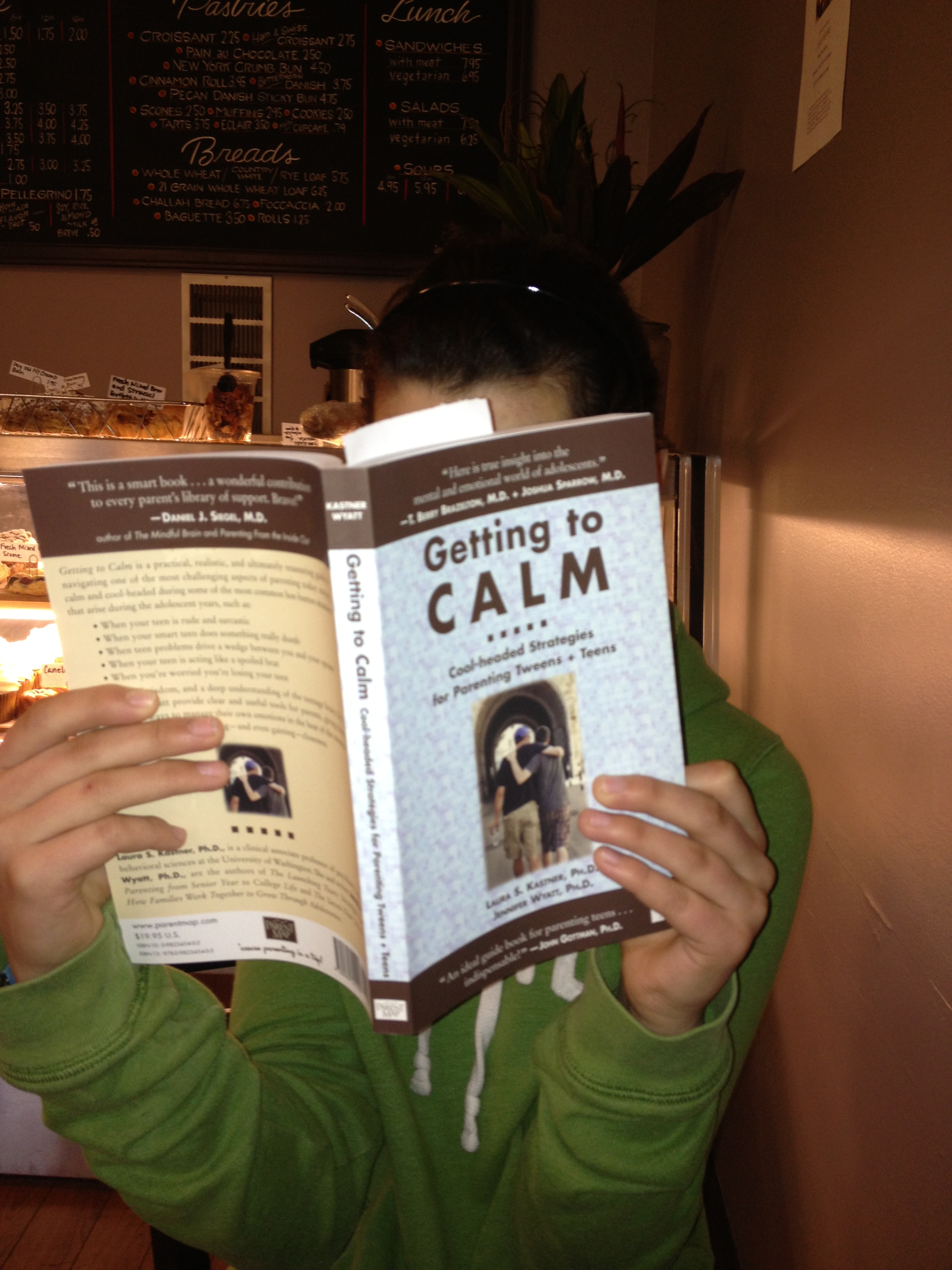
You may have seen me decked out in a red dress and heels the night of the party, but it was also me you saw this morning at 6:55 in my pajamas, robe and Uggs at the ATM in downtown Ballard getting the forgotten funds for Daughter #2’s lift ticket, so she can go on ski bus tonight (we were wise to get D#1 a season pass; I realize this now).  Tonight, at 11:00 p.m., Jeff and I will hop into our respective cars and head to the daughters’ respective schools to pick them up from their ski forays.  We’ll be off to D #2’s  basketball game in the morning.  I will be grateful that there is no weekend swim meet requiring me to sit on uncomfortable bleachers for four hours to watch D#1 swim for less than ten minutes total, as I did last weekend (I entertained myself by reading Getting to Calm:  cool-headed strategies for parenting teens and ‘tweens, but kept the book cover hidden, so D#1 wouldn’t be mortified).

I'm not the only member of the family interested in this book.

Someone else seems to be interested in these pearls of wisdom.

Tomorrow afternoon we will make dumplings with a group of Chinese exchange students to celebrate Chinese New Year.  Today I’ll need to find a mango-based Asian dessert recipe and prepare said dessert for said party.  Someone needs to buy a gift for a birthday party on Sunday. The beat goes on.

A few days ago I was scheduled to be interviewed about my new book by our local newspaper.  By local, I mean neighborhood. Seattle is a city of neighborhoods and my neighborhood, Ballard, has a particularly strong community, a community newspaper and a popular blog.  Until D #2 started going to school across town, I rarely left Ballard. There is some truth to the bumper sticker you sometimes see around here:  “If you can’t find it in Ballard, you don’t need it.” My friend Peggy, a columnist for the Ballard News Tribune, beautifully summed up our attachment to our neighborhood. The interviewer was to be a journalism student at the University of Washington named L.  “Go easy on him,” Peggy said.

L. and I arranged to meet at Caffe Fiore.  There are actually two Caffe Fiores in Ballard — one in the Sunset Hill region of the neighborhood, that is favored by families and people with dogs, but doesn’t have WiFi, and one in downtown Ballard, that is favored by childless hipsters and WiFi aficionados.  I gave L. the address of the Sunset Hill Caffe Fiore, where I do much of my “business,” because it’s closer to my house and it’s easy to park there.  Still, I wasn’t surprised, while sipping my double short non-fat latte, to receive an email from L. saying he was at the other Caffe Fiore.

fiore_logo

I found him amidst the laptops, he turned on the voice recorder on his iPhone and we settled in to talk.

apple_voice_memos_voice_recorder_iphone

I interview people for a living but have rarely been interviewed myself.  To be honest, I expected L. to ask me some rote questions about my book, which I am fairly certain he has not read, and to go through the motions of interviewing a 50-something year-old-woman with whom he has nothing in common.

L. surprised me.

How many times have you encountered young relatives at large family gatherings or seen the college-aged kids of your friends and asked them about their studies and their plans for the future?  These conversations always seem rather one-sided:  you, the experienced adult, offer suggestions about internships. You offer to put in a good word with the friend of a friend, who may be able to offer some help.  You inquire about hopes and dreams and inject some practicality into the conversation.

L. was not particularly interested in my book,  but he was interested in my life.  He asked me to reflect on which accomplishment made me proudest (Foreign Service officer, mother, journalist or author) and I had to think before responding that I was proudest to have figured out how to have accomplishments in each of the different phases of my adult life.

We talked about the differences in international travel in the pre- and post-Internet world.  “Don’t underestimate the value of truly being away and unplugged,” I said.  “The examined life is important, but not if you are living your life so it can be examined.”  Then I sheepishly remembered that I am a blogger (and a person, Jeff would point out, who is tethered to her iPhone).

slice of mid-life logo

But here’s what really struck me.  L. wanted to know about my future.  He asked me about  my hopes and dreams. He questioned me about my values and how I would apply those to whatever I hope to do next.

At 51, it’s easy to think the course has been set.  We get so caught up in thinking about our kids’ futures that we forget to think about our own, other than squirreling away money into retirement funds.

It’s not that we don’t grapple with what we want out of life, it’s just that we’re busy being practical and making sure our kids get to ski.

teenager mom

Seeing yourself through the eyes of a twenty-year-old, who is not your kid, can be revealing, especially when they turn the tables on you and ask you to dream.

I’m looking forward to reading L.’s story, to see how our conversation resonated with him (turns out, my aerobics buddy K. is L’s journalism professor and will have a hand in editing the story.  I’m hoping, in fifty-something solidarity, she ensures I come across well. Another perk of living in a small community).

For the record, I want to tell L., his professors and his parents that I think he has a bright future ahead.

But I especially want to thank him for for reminding me never to stop asking yourself the big questions, even if the answers are not on the tip of your tongue.

There is an interesting article about “twenty-somethings” in the January 14 issue of The New Yorker called Semi-Charmed Life, that I encourage you to read, along with the Letters to the Editor in response to this article (some from fifty-somethings), which appear in the February 11&18 issue of the magazine.

Years ago, when I was in my twenties and living and working in Thailand, I met New York Times journalist Nicholas Kristof and his wife Sheryl WuDunn in Laos (I think on a flight from Vientiane to Luang Prabong).  They were young too, living and reporting in Beijing, where the Tiananmen Square uprising had recently occurred.  They won the Pulitzer Prize for their reporting from China, Kristof became an Op-Ed columnist, often focusing on the plight of disenfranchised peoples around the world, and they wrote Half the Sky:  Turning Oppression Into Opportunity for Women Worldwide.

 Kristof, a native Oregonian, has written about the importance of wilderness experiences, describing the annual backpacking trip he takes with his family on the Pacific Crest trail. 

He’s just announced that he is taking a leave from his column to write another book with Sheryl WuDunn.  He says, “The theme is the benefits to ourselves when we engage in a cause larger than ourselves, and, given that, how we can engage in a way that actually works. In other words: the emerging science of how to make a difference.”

I appreciate contemporaries of mine, such as Kristof and WuDunn, who continue to ask the big questions and share what they’ve learned to benefit us all. 

Collective Soul

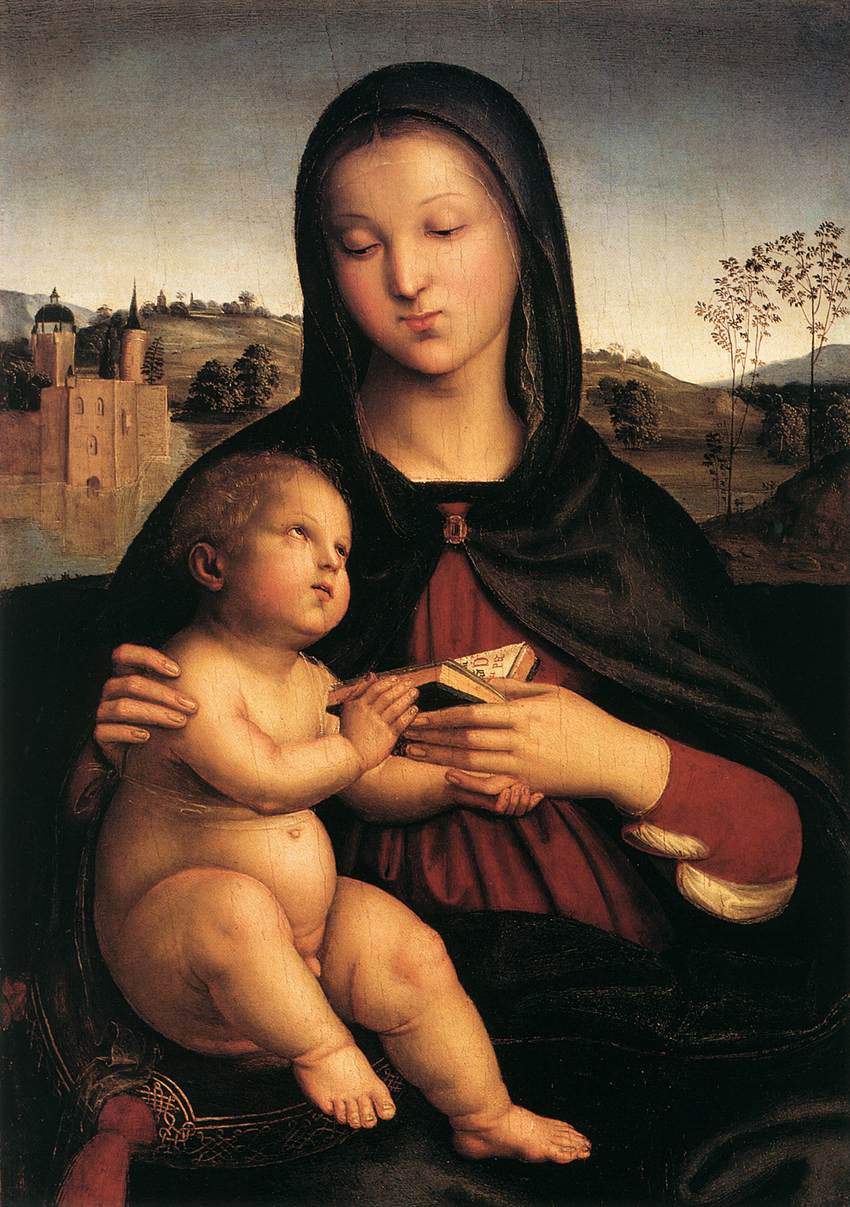
A fellow Seattle-based blogger who is much loved (for good reason) recently confessed on her blog that she has been diagnosed with post-partum depression. Her revelation, and the outpouring of support and thanks she received, got me thinking about the differences in the way women share their experiences now and the way things worked when I was a first-time mother in January of 1999. (Daughters #2 and #1 turned 12 and 14 this week, so I am feeling sentimental).

madonna-and-child

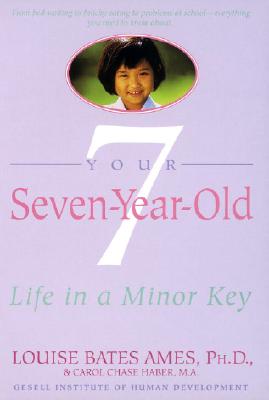
First, there were the books. The pregnancy and parenting books of course:  The What to Expect series, Brazelton and Leach, Sears and all of the behavior books that would follow.  My personal favorites?  The now quaint-seeming age-specific series by Louise Bates Ames, Ph.D. and other members of the Gesell Institute of Human Development, written in the 1980s.  Many’s the time I’ve found comfort in these books and their evocative subtitles, such as Your Three-Year-Old:  Friend or Enemy or Your Seven-Year-Old:  Life in A Minor Key.  When my daughters were old enough and there were clouds on the home front, we would read these books together, delighted and relieved to learn that eleven-year-olds are so difficult at home that everyone in the family would benefit from a “geographic cure,” such as camp, a visit to grandparents or boarding school.

Your-Seven-Year-Old-9780440506508

I can’t tell you how sad it makes me to realize that we are on our last Louise Bates Ames book, Your Ten-to-Fourteen-Year Old, which doesn’t have a subtitle, though I can think of a few, some not appropriate for a family-friendly blog. I am reassured that, at twelve, D #2 will be “a dream come true.” We have already experienced the “boundless energy and optimistic enthusiasm and goodwill” from her now fourteen-year-old sister, along with the realization that she finds practically everything we do objectionable.

3986-failed-test-mom-amp-dad-teenager-post-teenagerposts-Favim.com-459511

If there were blogs when I was a new mother, I didn’t know about them.  Essays were the sharing mechanism of choice.  When Brain, Child, the magazine for thinking mothers debuted it was like manna from Heaven.  Here was a treasure trove of other women’s experiences with the good, the bad and the ugly aspects of parenting (a verb that was still relatively new back then).

The only online parenting site I knew of was the wonderful Mothers Who Think section of Salon magazine.  These essays were eventually collected in an anthology; eventually there were many anthologies, including The Bitch in the House, Toddler:  Real Life Stories of Those Fickle, Irrational, Urgent Tiny People We Love and a host of great collections from Seal Press, publisher of books “by women, for women.”

I became a rabid consumer of essays about motherhood and eventually started writing and publishing them myself, having the good fortune to have one of my stories included in the Seal Press anthology Secrets & Confidences:  The Complicated Truth About Women’s Friendships.

Years later, I received an email from a fellow parent from my daughter’s elementary school, a woman I had never met.  “I recognize your name,” she told me.  “We’re in the same anthology.  We should get together for coffee.”

I found her story in the anthology, got on her website, read her blog and I panicked.  She sounded so cool, not like the square, boring, goody two-shoes parent I had become.  She rode a motorcycle.  She wrote erotica.  She wrote raw essays about her struggles with infertility and the challenges of fostering and later adopting a little boy. Her writing was funny.  Her writing was real.

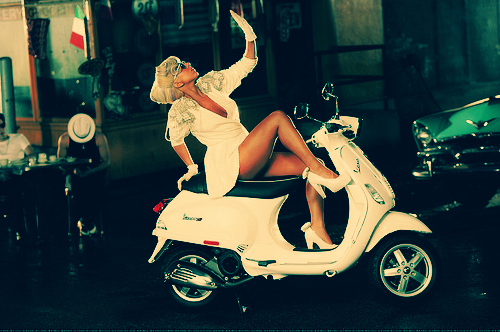
adorable-lady-gaga-mother-monster-motorcycle-not-a-motorcycle-the-fame-Favim.com-69087

When we met, I relaxed.  She was just as funny in person as in her writing, but also self-deprecating and down-to-earth, not the hip mama I feared would judge me.

Not long ago, a fan of this blog commented that he had enjoyed the book Poser:  My Life in Twenty-Three Yoga Poses, Claire Dederer’s memoir of life as a new mother in Seattle.  “I know her, ” I told him.  “Our kids used to do toddler gymnastics together.  I was secretly envious of her. I had no idea she was so frustrated.”  I emailed Claire and told her of this exchange and she responded “I always thought you seemed so smart and together — I was kind of intimidated by you, to be honest.”

I jokingly replied that we could edit an anthology of frustrated mothers and the different ways they secretly found to combat this frustration — her, yoga; me, cooking; who knows what everybody else was secretly doing.

mother+cooking

When I was alone in my kitchen, cooking away the frustrations of confinement, I had no idea there were others like me.  Today’s new mothers need not feel that sense of isolation. They cook, they blog, they comment, they support each other in real time.

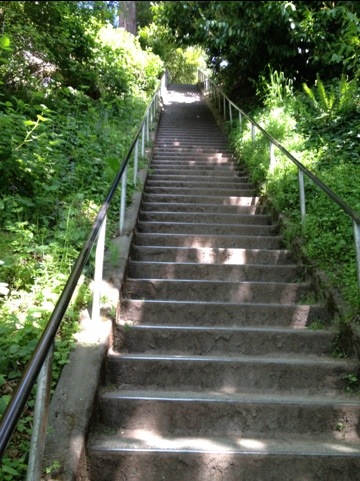
On weekend mornings when the kids were little I would drive my minivan to our neighborhood coffee shop, situated at the top of a bluff overlooking Puget Sound.  I would leave the car in the parking lot and go running through the woods.  My route ended with a flight of 77 steps that lead to the coffee shop.  Often I would see a group of women walkers, older than me, and ahead of me on the stairs.  When I reached the top I would retrieve sippy cups from my van, go into the coffee shop and buy lattes for Jeff and me and cocoa for the kids.  The women would be there too, contentedly drinking their coffee, without the urgency of getting home to young children.  I often thought of their presence ahead of me on those stairs as a metaphor for where they were in relation to me on life’s journey.

stairs

I delivered a copy of my book to that blogger, in the hopes that it will bring her some comfort.  She probably doesn’t need it, as she’s received heaps of support in the form of comments on her blog, but, since I’m ahead of her on the parenting stairway, I thought she might like a hand with the climb.

No real food adventures to report, as we’ve been busy with work and birthday parties and planning for my book launch, which is tomorrow night and which may actually draw a sizeable crowd (though Seattleites have a unique relationship with the RSVP, so I really have no idea who will actually turn up).

I’ve been trying to eat healthily and found two recipes from the Washington Post’s Lean & Fit column:  Everyday Stir-Fry (Sabji) and Kale and Chickpea Stew.  While eating the latter, Daughter #2, a white food fan, who has never met a cheeseburger she didn’t like, commented, “Hey, this isn’t bad.”

Maybe she’s turning into that delightful twelve-year-old dream come true.

Some nice book PR from the mysterious Diplopundit, the anonymous chronicler of Foreign Service life. There’s an interview with me at the end.

Ruminations and Resolutions

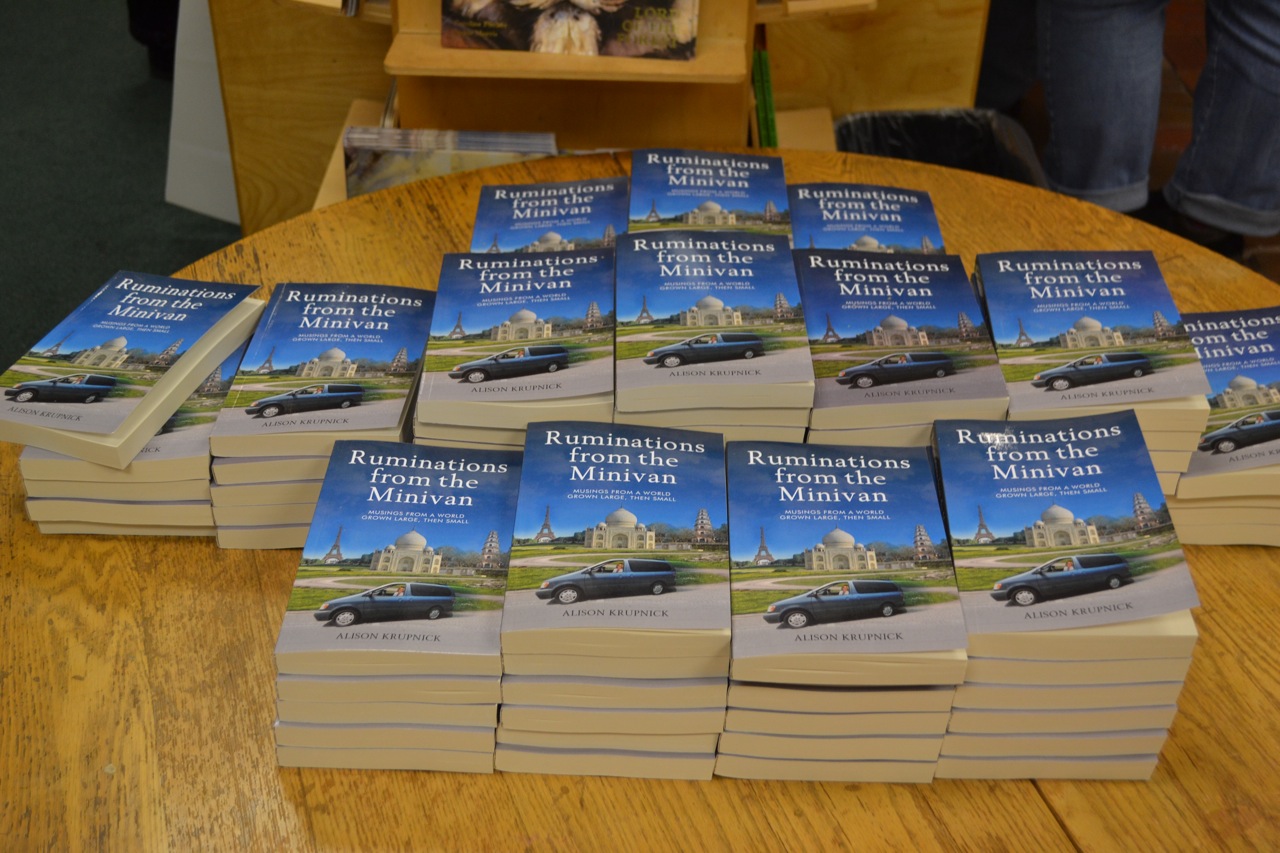
Now available on Amazon.com.  Ask for it at your local bookstore.  They can order it.

Now available on Amazon.com (Kindle edition coming soon). Ask for it at your local bookstore. They can order it.

On January 1, 2013 my book Ruminations from the Minivan, musings from a world grown large, then small was published.

Which means that I got to start out the new year having fulfilled a promise I made to myself last year, not an official New Year’s resolution per se, but a resolution all the same.  I resolved that 2012 would be the year I published the book I had started ten years earlier.

I’ve got to tell you, it feels pretty good.

DSC_0004

It felt even better on January 2, when I got onto Amazon.com and saw my book listed there.  And better still, when Facebook friends from far away announced they had or were buying the book and shared this information with their friends.

I didn’t think the day could get any better but it did.  2013 started out with the best winter weather Seattle has to offer – crisp and clear and dry with the mountains gleaming in the distance. I went out for a run and on the way home was treated to the sight of the snowy owl that has been nesting in our neighborhood.  I got a close-up view of this beautiful bird thanks to a neighbor who had thoughtfully set up a telescope. (Though not the actual bird I saw, this is what a snowy owl looks like).

snowyowl

That’s enough bounty for one day, right?  But it gets better.  When I returned home, there was Daughter #1, who these days is usually embarrassed by everything I say or do (We read this blog about girls’ relationships with their mothers during puberty. “Interesting,” she commented, rather cryptically, I thought.) engrossed in my book.

D #1 has read my manuscript, heard me perform parts of it onstage and was helpful during the editing and cover design process. But to hold the book, the actual book, in her hands and be able to read it was different.

“I’m so proud you wrote this book, Mom,” she’s told me over and over again.

The rest is gravy.

The rest is gravy.

With last year’s resolution so satisfyingly accomplished, I found myself wondering what I would resolve for this year.

We talked about resolutions on our way to the beach for Jeff’s annual Polar Bear Swim, which D#1 participated in for the second year in a row.

D#2, a pragmatist, was not  tempted to join in the fun.  She was, however, the first person to complain she was cold.

D#2, a pragmatist, was not tempted to join in the fun. She was, however, the first person to complain she was cold.

“I’ve got to lose ten pounds this year,” I resolved.

“Oh, come on, ” said Jeff.

I was taken aback, until he continued. “Surely you can come up with something less pedestrian than that.  How about doing something to make the world a better place?”

Jeff must have noticed the initial look of shock on my face because he laughed and said, “Did you think I was going to say, ‘how come only ten pounds’?”

There have been lots of articles, blog posts and comic strips about resolutions and I don’t think I have anything profound to add on the subject, especially since resolutions are a personal and ongoing matter.

But two things have stuck with me:  This year, like nearly every year, there was one Christmas card noticeably absent from the pile.  Though I realize sending actual cards is a dying convention, sometimes when one is missing, you know in your gut that something is wrong.

Sure enough, I emailed my dear friend R. and discovered she has been through not one, but four major life traumas in the past few months. “It seemed like a bit much to put on a holiday card,” she said ruefully.

So when I allow myself to feel intimidated by the uncomfortable and overwhelming process of book promotion, I am reminded of something an acquaintance told me several months ago, when I mentioned I was working on a book and she said she wanted to be invited to the book launch party.  “Really?” I said.  “I feel funny asking people I hardly know.”

“Most people just want to be happy for you,” she told me.

Somehow I think being happy for each other is an important step in making the world a better place. I thank those of you who have been happy for me.  I resolve to revel in the good fortune of others and also to be supportive when skies are gray.

Don’t tell Jeff, but I’m also still resolving to lose ten pounds this year.  My favorite post-holiday recipe to ease the transition from indulgence to “eating mindfully” comes from the book Oregon’s Cuisine of the Rain.  It’s also a great way to use up post-holiday bubbly and cream.  If you happen to have something to celebrate, as I did this week, it’s a pretty festive dish, though certain members of the family were not thrilled that I served it with brown rice.

Petrale Sole with Champagne Sauce

Sauce:

1 cup fish stock or bottled clam juice (I used some homemade shrimp stock from my freezer)

1 cup brut champagne (I used Cava and have also used Prosecco on occasion)

2 scallions or shallots, chopped

1 cup creme fraiche or heavy cream

salt and freshly ground pepper

juice of 1/4 lemon or to taste

Fish:

salt and unbleached all-purpose flour for dusting

2 pounds petrale sole or other white, firm-fleshed fish fillets

3 T extra virgin olive oil

1 T fresh chopped tarragon

1. Preheat oven to 400 degrees.

2. To make sauce, place fish stock or clam juice in a heavy saucepan over medium heat. Add 2/3 cup of champagne and scallions or shallots. Turn up heat to high and reduce mixture by 4/5 of its volume, skimming the surface occasionally (around 15 minutes). Add creme fraiche or cream and reduce by half (5-10 minutes) until mixture is thick. Season with salt, pepper and lemon juice.  Remove from heat and set aside.

3. Salt fillets and dust with flour.  Heat two 10-inch saute pans over high heat  Add  1 1/2 T of oil to each pan.  Divide the fillets between the two pans, saute for 30 seconds, then flip over and place in the preheated oven for two minutes.

4. Remove pans from oven, cover with tight-fitting lids and let stand for three minutes. Remove lids and pour collected liquid into the reserved sauce. Cover pans again and set aside.

5. Bring reserved sauce to a boil, then reduce heat to low, so sauce simmers. Divide chopped tarragons and remaining 1/3 cup champagne to the saute pans.  Divide sauce evenly between the pans and warm to serving temperature. If you want, you can spoon the sauce onto each serving plate and top with a fillet  We’re not that fancy, so we just serve sauce and fish from the saute pans.

Another resolution I am contemplating, comes from my new friend Martin, who makes a cassoulet feast every year on New Year’s Day. Martin is an engineer by trade and he tackles cassoulet with the zeal of an experienced project manager, making confit and sausage over a period of several days. Because I shared my favorite recipe for preserved lemons with him, I got invited to this year’s feast.  I hope to stay in Martin’s good graces so I get invited back every year.  

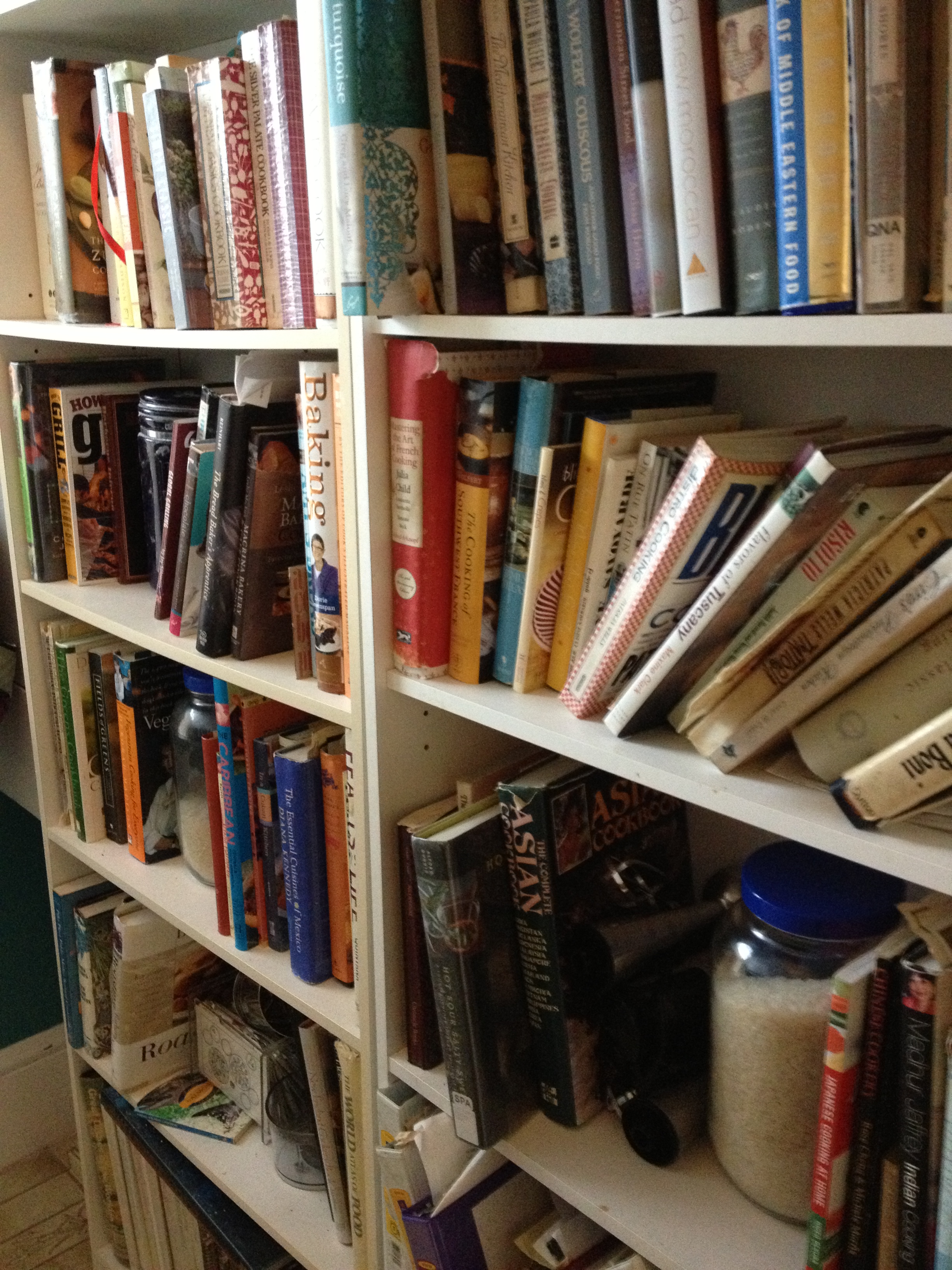
Martin and I are fellow cookbook nerds and we both live with people who question the utility of using so much space for these books.  Martin’s solution:  each week a member of the family chooses a cookbook from the shelves and the other person in the family makes the recipe of their choice from that book. I’m excited to give this a try (though I’ll be doing most of the cooking).  There has been a less than enthusiastic response from the members of my family pod, but as you can see, we have a lot to work with.

We have a lot to work with.

Happy New Year!

Monday, Monday

Blah, blah; blah blah blah blah

Blah, blah; blah blah blah blah

Last Monday was a dreary day and I just couldn’t kick it in gear.  Keepers of family tradition might know what I’m talking about.  No sooner are the Thanksgiving leftovers put away, then the December holiday season ramps up with a vengeance.  Suddenly it’s the beginning of Advent (which we take seriously in our household) and time to order the holiday photo cards and calendars while Snapfish still has them on sale. Far-flung family members (who have also probably been caught by surprise) request Christmas wish lists via early morning and late night texts and the holiday pressure mounts.

HolidayEatingFrenzy

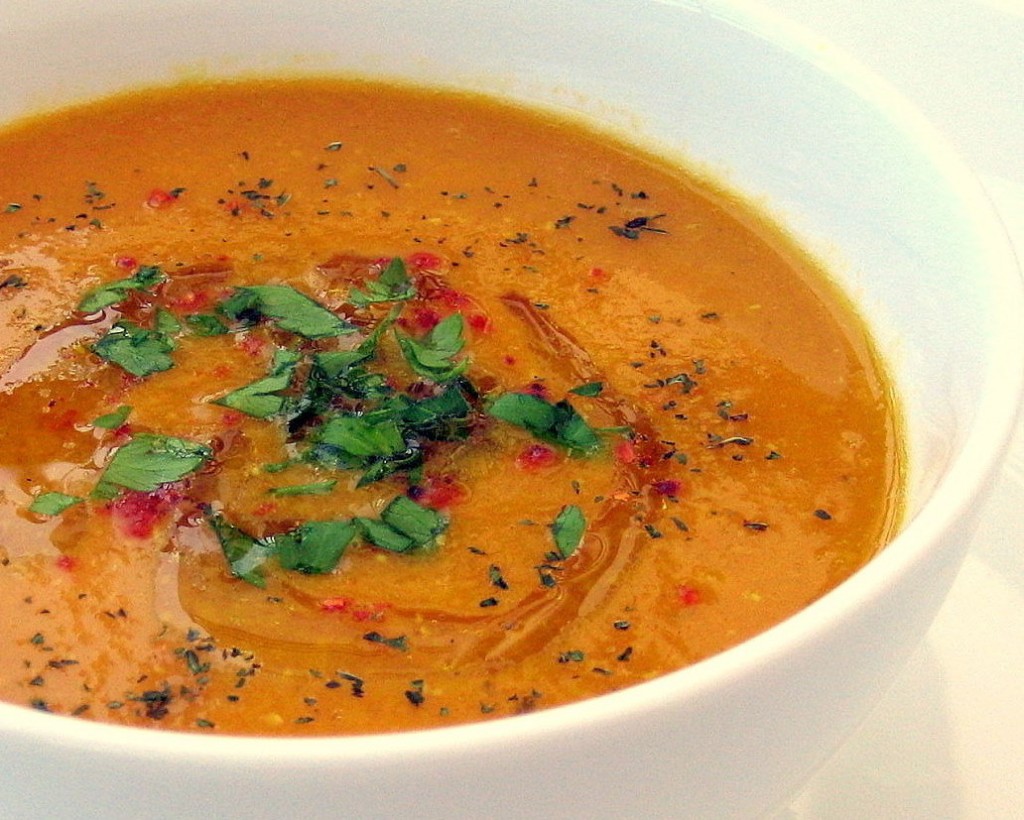
I had spent the rainy Sunday evening before happily peeling and chopping a leftover Thanksgiving pumpkin for a Turkish pumpkin soup while listening to the audio version of Salman Rushdie‘s new book Joseph Anton. I know some critics have said that the book falls prey to excessive name-dropping and self-promotion, but I haven’t  gotten there yet.  I am reveling in Rushdie’s evocative portrait of the artist as a young man. I find this book riveting.

So I should have been soothed and intellectually sated come Monday, but I wasn’t.  All day I lacked inspiration.  I decided to turn things around by preparing Marcella Hazen’s Braised Artichokes and Potatoes.

Essentials-of-Classic-Italian-Cooking-Hazan-Marcella-9780394584041

To be fair, Marcella Hazen probably didn’t decide to cook this on a day when she had inadvertently double-booked herself to drive in two different carpools at the same time on opposite ends of the city at rush hour.

And I’m fairly certain that she didn’t have to pee while embarking  on the elaborate trimming protocol required to ensure that the artichokes are silky and tender and melt in your mouth.

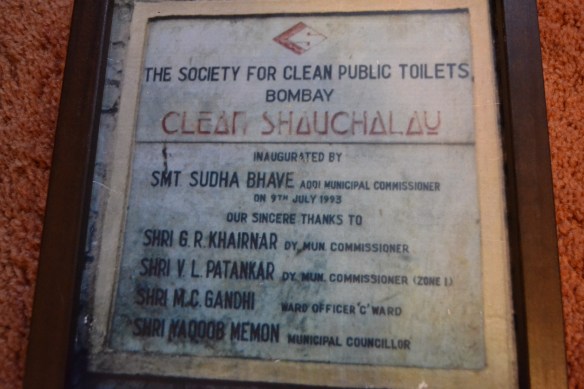
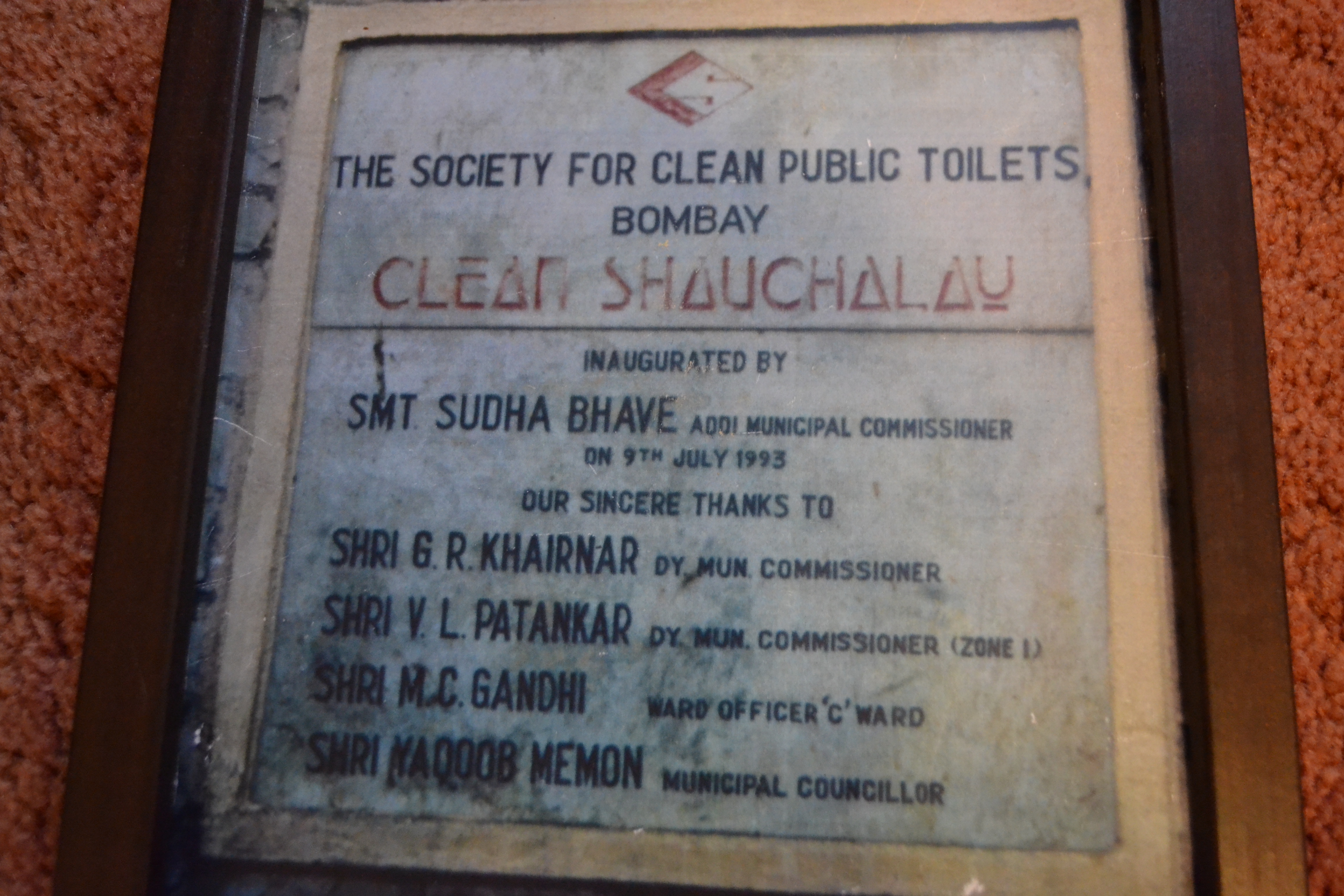
I think of myself as possessing a reasonable amount of self-awareness, so, even though I was rushing to get the artichokes braising so they would be ready for D#2 to eat and digest before departing for basketball practice, I’m not sure why I didn’t take the time to pee before trimming. Years of traveling and living in the developing world, where the facilities have sometimes been of dubious hygienic quality, have made me a rapid peer of Olympic caliber. The bathroom at the Shalimar Gardens in Srinigar, circa 1987 remains etched in my memory, yet I traveled seemingly the whole of Cost Rica, circa 2006, in search of a dirty bathroom and couldn’t find one.

DSC_0003

But I digress.
The potatoes in the dish did indeed melt in our mouths, the artichokes, due to my hasty preparation, less so. But we enjoyed our dinner, which was accompanied by a pork tenderloin that I’d had the foresight to brine on that mellow Sunday night following the simple recipe from the Zuni Cafe cookbook.  If you remember nothing else, remember this:  Use Zuni’s wet brine, or something like it, whenever you plan to roast pork.  Use the Zuni Cafe dry brine recipe for roast turkey. You can screw up every other part of the meal and people will love you anyway if you follow these two meat preparations. Also, bring a sarong with you wherever you travel.  It can be helpful when you have to pee on the fly.

It was pouring on Tuesday and still lacking inspiration, I took our puppy Kobe for a very long walk.  A few blocks from home, C.S., a woman I hadn’t seen for a long time drove by and waved.  Then she pulled a U-turn and came back to tell me how much she had loved my blog post about the importance of pets. I hadn’t been aware she knew about, much less read my blog. “I’m so happy there are writers to help us make sense of our lives, ” she told me.

The week was looking up.

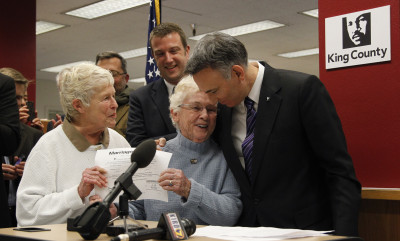
Buoyed by C.S., I decided to seek inspiration from other writers.  There was “I Want My Daughters Back,” a John Blumenthal essay on Huffington Post about the melancholy of the empty-nester, that made me temporarily appreciate the vicissitudes of life with Daughters #1 and #2.  There was the song “Same Love” by Seattle’s own Macklemore, a rousing rallying cry for supporters of same-sex marriage, which this week became officially legal in my home state of Washington. (If you have fifteen minutes to spare, watch the link to the NPR Tiny Desk concert with Macklemore, which I’ve posted at the end of this blog entry).

Image: Dow Constantine

There was this song by Shayna Cram, a young Foreign Service officer serving in Peshawar, Pakistan, who was inspired by  Malala Yousufzai, the teenage Pakistani schoolgirl shot by the Taliban after advocating education for girls.

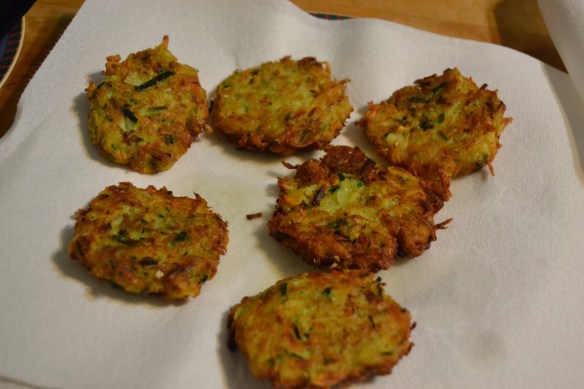
And there was a long run on a surprisingly crisp and clear Saturday with Joseph Anton echoing in my ears. That night we dined on Joan Nathan’s potato latkes

DSC_0001

and played dreidel with our wooden dreidel that seems weighted so that everyone except Jeff always gets Nun.

Liked my braised artichokes, the night wasn’t perfect, but, it was a pretty good ending to the week.

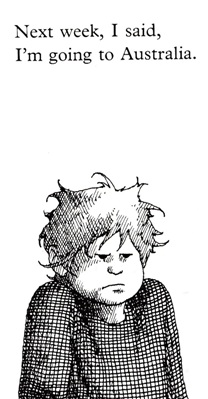
On blah days and weeks, perhaps the writer who provides the best much-needed perspective is Judith Viorst, author of an impressive canon of work, including Alexander and the Terrible, Horrible, No Good, Very Bad Day. 

alexvid1

Sometimes you just have to roll with a bad day or a blah week, because, to paraphrase Alexander, some days/weeks are just like that.

Even in Australia.

Happy Monday to all and to all a good week.

Braised Artichokes and Potatoes

2 large globe artichokes

1/2 lemon

1 pound potatoes, peeled (though I didn’t) and chopped into 3/4 inch wedges

1/3 cup chopped onion

1/4 cup extra virgin olive oil

1/4 teaspoon finely chopped garlic

salt, fresh ground pepper to taste

1 tablespoon chopped Italian parsley

1/4 cup water

Follow artichokes preparation directions in the above link, but do yourself a favor and go to the bathroom first.

Heat oil in pan and saute onions on medium heat until translucent.  Add garlic and cook until gold.  Add potatoes, artichoke wedges and stems, salt, pepper and parsley and stir two or three times.

Add 1/4 cup water, adjust heat to simmer and cover saute pan tightly. Cook until tender (approximately 40 minutes), adding a few tablespoons of water, if necessary.  Taste and add salt, if necessary.

NPR Tiny Desk Concert with Macklemore

An Historic Day in Washington

Zen

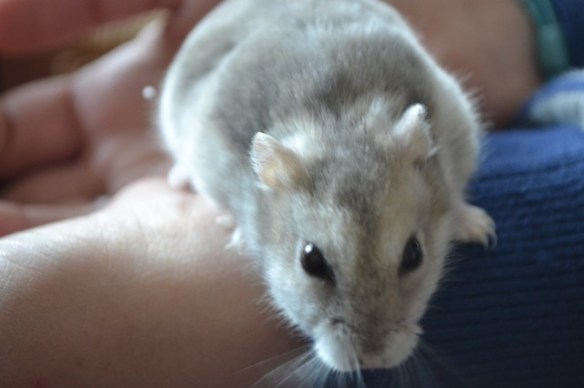
Our dear hamster Zen passed away a few days prior to Thanksgiving. Her death was not unexpected; we’d been on hamster death watch since August, when the ravages of old age were beginning to show, and on high alert for most of November, as she slowed down and eventually became paralyzed.

Zen’s death was the first we’d experienced since the death of my mother, in February 2010.  Just as we had with my mother, we observed Zen eventually stop eating and had to coax her to drink.  In her final hours, just as we had with my mother, we took our iPod and played the songs she’d loved, while telling her how much we loved her and what she had meant to us.  My mother’s play list:  the Israel Kamakawiwo’ole version of “Hawaii Aloha,” Madama Butterfly, Camelot and “Stardust,” sung by Willie Nelson, because that’s the only version I could find on iTunes.  Zen’s playlist:  Sean Kingston’s “Dumb Love,”  Ed Sheeren’s “The A Team,”  and Bruno Mars’ “Count on Me.”

We went out in the pouring rain and buried Zen in the “kitty arbor,” where three cats and one bird rest beneath a pieris japonica plant and a statue of a sleeping cat.

There’s a wonderful David Sedaris essay (which I mentioned in a previous post about dogs) called Youth In Asia that, among other things, talks about how the pets in our lives mark the passage of time.

Zen was Daughter #1’s fifth grade graduation gift.  Now as D#1 prepares to go to high school, it feels as if the last vestiges of her little girlhood are fading away. As we tour prospective schools, she is feeling the pressure of PSATs, SATs, leaving some of the friends she’s gone to school with since kindergarten and contemplating college and beyond.  I used to say that our kids’ remaining time living with us was equivalent to the lifespan of a guinea pig.  Suddenly, for Daughter #1, it’s dwindled to the lifespan of a healthy hamster.

In the aftermath of Hurricane Sandy, many of my friends from New Jersey posted updates on Facebook about the havoc wreaked by the storm, including how they had coped with power outages.  One of the most heartfelt updates came from my high school friend S., who included this picture:

This is her turtle Speedy, wearing the sweater S. made to ward her off from the cold while the power was out. S. says she also held Speedy over a steaming pot of boiling water, but reassured her that it was for warmth, not turtle soup.

Speedy has lived with S. for more than forty years.  When we were young and S and her family went on vacation, I used to feed Speedy cantaloupe and watch her slowly make her way around S.’s house.

Speedy has been a constant in S.’s life, and, I guess by extension, mine. Though S. and I haven’t seen each other since we were in college, the fact that she still has Speedy is a reminder that she is still the person I knew and loved.  Speedy brings back fond memories of S.’s and my mostly happy high school years.

I wanted to do something special for Daughter #1 to acknowledge the loss of her pet.  Quiet, gentle, bookish, artistic and dreamy, D#1’s feelings are sometimes overshadowed by the loud and harsh realities of everyday life.

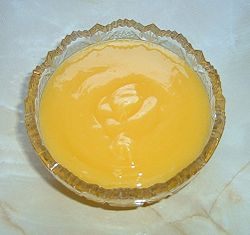
I decided that after Zen’s funeral we would have lemon curd, something D#1, adores almost as much as she enjoys Britishisms. (In a recent report she did on British cuisine, D#1, who has an excellent sense of humor and a firm grasp of the inner workings of the middle school mind, decided to steer clear of mentioning “spotted dick.”).

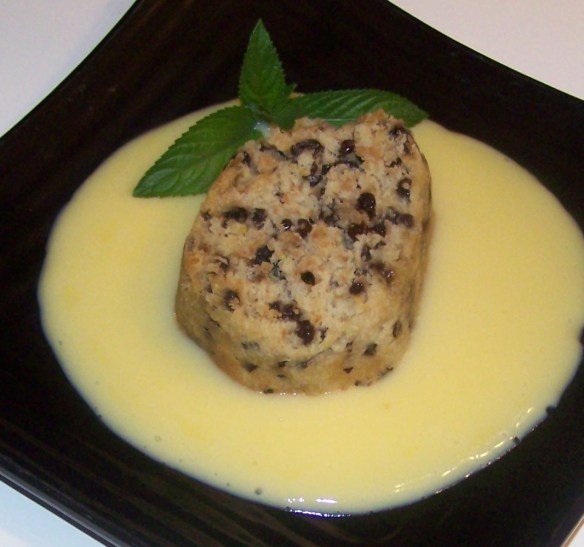
Get your mind out of the gutter. It’s a steamed pudding with currants.

When she was little and couldn’t pronounce the letter L, D#1 would refer to the tangy marriage of lemons, butter and eggs as yemon curd.  Other little kids, who had trouble pronouncing her multi-syllabic name, sometimes referred to her as Lemony. For birthdays she enjoyed the Lemon Butter Cake with Fresh Strawberries and Butter Cream from our friend Leslie Mackie’s Macrina Bakery and Cafe Cookbook and my favorite White Chocolate Whisper Cake, featuring lemon curd and raspberry preserves.  You can find that recipe in Leslie’s new book More From Macrina.  I am the “fellow soccer mom” mentioned on page 169, who enjoyed the cake on my fortieth birthday.

So even though I was up to my ears in Thanksgiving preparations, I took a breather from pies, turkey stock and the cranberry- pomegranate sauce from Food and Wine magazine that will now be a staple in my Thanksgiving repertoire and I made lemon curd, using David Lebovitz’s recipe. We ate it with shortbread cookies while watching an episode of Modern Family to cheer us up.

I don’t know if we will get another hamster, though, if we do, we agreed a few years ago while vacationing in Turkey to name it Suleiman the Magnificant (there is some back-pedaling about that agreement now).

The advice about high school I would give Daughter #1 comes from the immortal words of Bob Marley:

Finally, in the immortal words of Jon Stewart, here it is, your moment of Zen (and Speedy’s brush with fame):

As the holiday roller coaster speeds up, we could all use a few moments of Zen.  I finally took some time to collect all the recipes on this site onto one page and also to provide some information about my forthcoming book. It was kind of relaxing. You’ll find both of these pages at the top of the site.  

The Perks of Being a Wallflower Mom

For seven years I have facilitated a mother-daughter book group, established when Daughter #1 was in second grade.  We started the group because the first signs of girl bullying were beginning to surface in the classroom, and so we gathered every girl in the class together on a Saturday to discuss the book The Hundred Dresses.

Over the years, the group has shifted from school-based to home-based and the membership has waxed and waned.  It’s now comprised of a core group of avid readers, young and not-so-young, who have discussed everything from race relations in the South during the early1960s to dystopian societies of the future; dysfunctional and functional families; the complexities of mother-daughter relationships; and girl power:  extraordinary and ordinary.

Our most recent book was The Perks of Being a Wallflower, which was followed by a group outing to see the film.  The main character, who is a freshman in high school, deals with SPOILER ALERT suicide, depression, molestation, abortion, drugs and gay bashing, in addition to the typical emotional highs and lows of adolescence.

The girls, all but one of whom are in eighth grade, chose the book because they wanted to see the movie. Daughter #1, the first of her peers to read it, found it unexpectedly depressing.  “I can’t believe that the main character is one year older than me,” she said.  So I starting reading the book. I found it riveting because it captured many of my own high school experiences (especially the Rocky Horror Picture Show obsession).

Did you read Catcher in the Rye, Go Ask Alice, Girl, Interrupted or Ordinary People?  Depressing stories of depressed teenagers are nothing new (and Perks was actually written in 1991).  But there’s a moment in the book, and also in the film, in which the main character is riding in a truck with newfound friends and a song comes on, the perfect song.  He describes the way he feels as “infinite.”

A few days after I finished the book, there was knock on my door. A neighbor wanted me to know that the police had been called because one of the inhabitants of my house had broken into her house and set off the alarm. I looked at my charge, whom I still think of as young and innocent, and didn’t want to believe it could be true.

Hadn’t I spent years instilling good values?

He broke in through the cat door, stole some food and beat up my neighbor’s cat.

At the beginning of the school year, a group of ninth-graders in my neighborhood allegedly stole a parent’s car, sped down a neighborhood avenue and hit a parked car, which mercifully protected them from the telephone pole behind it. The owners of the smashed car left it there for weeks with a note on it and on the telephone pole, the gist of which was:  “Dear Kids, If you’ve come to see the results of your accident, know that we are glad you are okay.  Please take care of each other.”

I took Daughters #1 and #2 to see the smashed car and the note.  “I can’t believe the kids who did this are one year older than me,” said Daughter #1.

There were apparently marijuana-laced brownies at the middle school Halloween dance and whiffs of other pot rumors have been floating in the air. (Yes, I do live in Washington State, where we’ve just legalized recreational marijuana, but not for middle-schoolers).

My daughters and I watched a few episodes of My So-Called Life.  It was depressing to watch fifteen-year-old Angela Chase struggle with questions of identity, which involved sneaking out of the house and having confusing experiences, before returning home, usually miserable and defeated, yet sometimes grateful to be back in her mother’s orbit.

Late one Saturday night, my puppy, who is perfecting his watchdog skills, spied movement at the abandoned home of our recently deceased neighbor. As he barked, teenagers came spilling out of the house and scattered into the alley.  I wondered whether I should call the police.  There are so few abandoned houses anymore, as there were in my youth, and this one is likely to soon be replaced with a modern duplex. My guess is that the kids inside were feeling infinite.

The other mothers were as riveted by The Perks of Being a Wallflower as I was.  We discussed whether the book was too depressing for our daughters and C, who may sometimes be forgetful, but is always wise, said “Better for us to introduce these topics then for them to learn about them elsewhere.”

When our group came to discuss the book, we mothers told carefully chosen stories about ourselves in high school. The girls were fascinated.  “I can’t believe you’re telling us this,” said the daughter of the formerly raucous Catholic school girl, who became an emergency room nurse.  “We weren’t always the way you see us now,” we told them.  “We grew up.”

There is a scene at the end of the film version of The Perks of Being a Wallflower in which one of the characters, who has been away at college, tells the high school protagonist what he has to look forward to:  “The world gets so much bigger,” she says.

Our daughters liked the film, but they were equally impressed with the art house theater where we saw it. It was the first time any of them had seen a film in a venue so funky and cool.

Their worlds will get so much bigger and I am glad they will have moments when they feel infinite.

I just hope they will take care of each other when they do.

For most of my high school years, I felt infinite at the Jersey Shore, specifically the boardwalk at Seaside Heights. My heart goes out to everyone who was affected by Hurricane Sandy, especially the inhabitants of my former home state.  Please continue to take care of each other.

I won’t pretend that I’m not apprehensive about the looming parenting challenges, but I have found one sure-fire method to bind the family together:  potatoes. Specifically, the Buttermilk Mashed Potatoes from the Zuni Cafe Cookbook.  No matter how angry or uncommunicative or hormonal anyone gets, these potatoes bring them around, even me, a rice aficionado, who has never been a fan of making or eating mashed potatoes. These mashed potatoes are tangy and comforting without being too decadent.  Anyway, sometimes it’s important to ignore the glycemic index in the interest of family harmony.

Here’s the recipe:

Zuni Cafe Buttermilk Mashed Potatoes (serves four, but I always double it to serve four)

1 1/4 lbs. peeled potatoes (I use Yukon Gold), cut into chunks

Salt

2-3 T heavy cream (you can also use milk or half-and-half), warmed

2-3 T buttermilk at room temperature

3T melted unsalted butter

1. Boil the potatoes with salt until tender.

2. Drain and mash, while piping hot and then add hot cream, followed by buttermilk.  Finish by adding butter.

3. Mash vigorously and add salt to taste.

4. Enjoy your family.

Vanity: The Thyroid Chronicles, Part II

from sketchfu.com

By now you may have heard of “The Mom Stays in the Picture,” Allison Slater Tate’s manifesto that we mothers shouldn’t hide behind the camera because we are ashamed of our post-baby bodies and the ravages of aging.

“Our sons need to see how young and beautiful and human their mamas were. Our daughters need to see us vulnerable and open and just being ourselves — women, mamas, people living lives.

“When I look at pictures of my own mother, I don’t look at cellulite or hair debacles. I just see her — her kind eyes, her open-mouthed, joyful smile, her familiar clothes. That’s the mother I remember.” 

Juxtaposed with this, I read a piece on the Huffington Post on why feeling pretty after 50 is important.

What still confuses me, and what I want to explore in my thoughts, conversations and writing, is what aging gracefully means to me.

I’ve mentioned before that I don’t dress a whole lot differently than I did at sixteen and, truth be told, I don’t look a whole lot different either.  So when I have to grapple with things like that roll of fat around the middle that just won’t go away

I’m not sure whether to fight it, accept it or make peace with it and figure out how to deal with it.

“It’s inevitable. You’re getting older,” sighed my Ob/Gyn.  “It may be the perfect storm of perimenopausal hormones and glycemic sensitivity,” said my new general practitioner, who spent a full hour talking with me and listening to my concerns. “Try shaving two or three hundred calories off your daily intake each day, change your exercise routine and give yourself six months to lose ten pounds.”

My first round of thyroid tests were normal and though I don’t yet have the results of my second round of blood work, I assume those tests will also be normal.

That’s a good thing.  Though I was anxious for a concrete answer to the changes in my body and rightfully vigilant of the impact of the steroid injections I’d received, I’m glad there’s nothing wrong with me and that I won’t have to be on medication for the rest of my life.

But because I’m not ready to throw in the towel when it comes to my tumultuous tummy, at the doctor’s suggestion, I became familiar with the glycemic index, which measures the impact on blood sugar levels in the body after eating certain foods. If you feel bloated after eating pasta and wonder whether the glycemic index could be the greatest thing since sliced bread, check out the glycemic index website put together by the University of Sydney, which among other things, maintains the international glycemic index database of a wide variety of foods.  Most experts agree that the number you want to pay attention to is the glycemic load, which combines both the quality and quantity of carbohydrate in one ‘number’. According to the University of Sydney, it’s the best way to predict blood glucose values of different types and amounts of food. (This blog is not meant to be the source of medical advice. If you are curious about the glycemic index or any other aspects of your health, please consult with a doctor, preferably one who will take the time to listen to your concerns).

I’m more concerned with the life index, which I define as how quickly a meal shared with others is converted to joy,  i.e. how I can have my cake and eat it too.

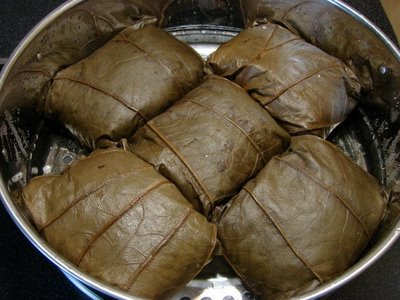
I knew the day we went to eat dim sum with two Chinese exchange students that lo mai gai, sticky rice wrapped in a lotus leaf with pork, would wreak havoc on my mid-section.  I could ill afford the Michelin look, because the next day I was scheduled for a photo shoot to obtain an author photo for my book Ruminations from the Minivan:  musings from a world grown large, then small, which is coming out soon.

We had a great time with the Chinese girls, I ate leftover lo mai gai for a mid-afternoon snack and was predictably puffy the next morning.  So I ate oatmeal for breakfast, worked out and instructed the photographer to take head shots only.

It was worth it.

Despite the warmth and easy demeanor of the photographer, I still found the photo shoot uncomfortable, especially when I looked at all the images she had taken on her digital camera and saw my many nuanced poses reflected back at me in Fifty Shades of Alison.

I hadn’t until realized until then that, unlike writing a book, promoting a book means getting into the picture instead of remaining comfortably behind the scenes, and that this is just the first of many times in the coming months that I will have to put myself out there — vanity be damned.

What saved me was a recent interview I’d had with B.J. Neblett, a fellow author who was writing a profile of me for our writers’ collective website.  The morning we met, I was unshowered and wearing an old sweatshirt of Jeff’s. B.J. didn’t care that I was scruffy. We had an enjoyable conversation, which was reflected in the flattering profile he wrote about me.

I’m not going to pretend to have given up vanity, not to be flattered when people compliment me on my youthful appearance and not to be shocked when I resemble my maternal forbears in their later years (spoiler alert – there is one poem in my new book entitled, “My Grandmother’s Thighs”). I will sporadically pay attention to the glycemic index but hopefully, as the years go by, I will scrupulously pay attention to the life index — dim sum bloating be damned.

Aging gracefully

 I had a great idea for a recipe to share with you that I thought would cleverly tie the themes in this post together.  I planned to call it “Vanity Fare.”  It comes from Dorie Greenspan‘s book Around My French Kitchen and involves slicing boneless skinless chicken breasts into strips, sauteeing them in butter and then adding a cup of creme fraiche with two LU Cinnamon Sugar cookies crumbled and mixed in.  I was going to say that when chicken breasts are sweet and creamy and comforting, nobody cares if they are pleasantly plump.

“What’s for dinner,” daughters #1 and #2 asked suspiciously (they are often suspicious when I am cooking). “Chicken with cookies!” I said, assuming they would be thrilled to have a dessert-like twist on dinner.  I was thrilled to produce such an effortless elegant meal so quickly because I had to rush off to a meeting before the meal was over. They took tentative bites and proclaimed it “too rich.”  The next day, I found some chicken wadded up in a napkin and (not very well) hidden in my office.  We had pasta that night for dinner.

 I hope when my kids look at pictures of me and I’m sporting a tummy, they’ll see the kind eyes and joyful open smile of a mother who ate carbohydrates to make them happy.

My Three Sons

” I have mountains to look at, stars at night to gaze at and it’s so dark that you can see every star in the sky. Also, the people here… everyone wants to help each other.”

“When I arrived here, nobody knew me. Nobody looked at me and associated anything besides the connotations of being American. It’s like someone just hit the ‘reset’ button on my life, and I get to build a name for myself from scratch again. It’s a great feeling to know that anything people think of me before they get to know me comes from questionable stereotypes and nothing else.” 

“Best of all, we got to experience life under a philosophy that’s different from today’s norm. Rather than “keeping up with the Kardashians” and constantly working more in order to buy more, our hosts worked comfortably with what they had. As a result they’ve ended up with a beautiful home, two grounded and fun-loving sons, and best of all, the time to appreciate it. “

Three young men that I have known since birth are on extended forays in Afghanistan, France and New Zealand.  These sojourners — a soldier, a “sheap traveler” and a student — are sharing their impressions of the world, and their place in it, via Facebook and blogs.

(To be fair, the insights about appreciating what you have were written by the sheap traveler’s girlfriend and travel companion.  He’s lucky to be sharing his life and this adventure with such a grounded, healthy “shiny” young woman).

More than thirty years ago, I launched myself into the world.  There was no Internet back then, and therefore no Facebook and blogs, and the only way to share one’s impressions was via tissue paper- thin aerogrammes. It usually took two weeks for them to reach their destination and two additional weeks to receive a reply.

By the time the response arrived, you might have forgotten what had inspired you to write in the first place, having moved on to new experiences and corresponding new emotions.

I like this real time communication.  Yesterday I chatted on Facebook with my sweet, strong nephew A, who is serving in the Air Force in Afghanistan.  He regularly Skypes with his wife, parents, siblings, nieces and nephews and I imagine it is a great comfort to them to know that he feels safe and happy under the stars and that the previous night he shared a delicious meal with his Italian friends.  Rather than feel isolated, A can participate in home life and share the sweet mix of pumpkin patches, soccer games, doggy love and memories of good food with the people he loves.

I had to laugh when I read K’s accounts of student life in France.  Not much has changed since I attended a lycee in 1978.  His blog reminds me of the highs and lows I felt each day, as I, too, struggled with stereotypes and the reserve of the French students at my school.

I spent a second year attending college in France in the company of E’s parents.   Reading his stories of living and working in New Zealand on the cheap brings back memories of sleeping in parks and youth hostels, drinking inexpensive red wine and taking endless train trips throughout Europe.

E did a stint living and working in New York, so he’s experienced one version of “grown-up” life.  Now he’s seeing contrasting views of what a satisfying life can be. I can’t wait to find out what he decides for himself.

A few weeks ago, when the Canadians were here, Jeff pulled out his journals from his 1990 Everest trek.

That’s where he met S, aka “Cheesehead” (we’re not talking about Wisconsin here.  Jeff says this is the term used in Bellingham, Washington in the 1970s to describe Canadians who crossed the border in search of dairy products).

More than twenty years later, we laughed as Jeff read us his impressions of S and tales of their adventures together in Nepal.  Twenty years and two very different life paths, yet we marveled after the Canadians left, that Jeff and S still feel a sense of connection and of shared values, as well as a mutual acknowledgement that their international experiences  shaped the way they chose to live their lives.

I’ve been reliving my own first tentative steps into the world as I put the finishing touches on the cover and interior design of my book Ruminations from the Minivan, musings from a world grown large, then small, which should be out by the end of next month (stay tuned for details).

I know of what I speak when I tell these young men that their lives will be forever changed by their international forays.

“Kids, today,” one generation is fond of sighing about the next.

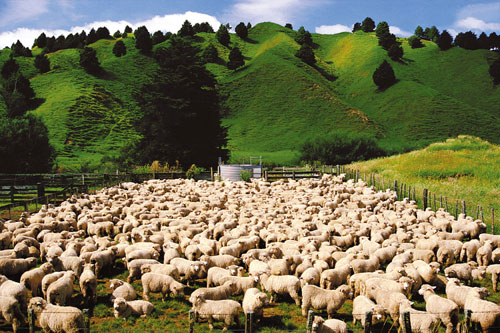
Judging from the tales from abroad I’ve been reading, I’d say, the kids are alright.  They are scaling mountains.  They are making informed choices about their values.  They are not sheep.

If my two daughters  explore the world and show as much insight, sensitivity and open-mindedness  as my three spiritual sons, I will have fulfilled my most important goal as a parent.  Their parents should be very proud of them.  I know I am.

There hasn’t been a whole lot of cooking going in in our house because we are still adjusting to a busier schedule.  One night, tired of quesadillas and pasta, I vowed to make the Garum Factory’s Roast Chicken with Muhammara, but was thwarted by a Justin Bieber-related incident that it took most of the night to resolve (this time it’s personal, Bieber!).  A few nights later I did make that blissful chicken and the night after that, I used the stock I’d made from the chicken carcass to make one of my favorite standby soups, Ezogelin Corbasi, Turkish Red Lentil, Bulgur and Mint Soup.  Recipes for this soup abound. I used the recipe from Turquoise, Greg and Lucy Malouf’s beautiful book about their culinary travels in Turkey.  Here’s a link to the recipe.

You can find some additional fabulous Greg Malouf recipes here.  

Lentils are one of those ancient foods that provide sustenance all around the world.  May these young men continue to find sustenance and broadened perspectives  through the people they meet and the meals they share.