Explaining Myself to a Twenty-something

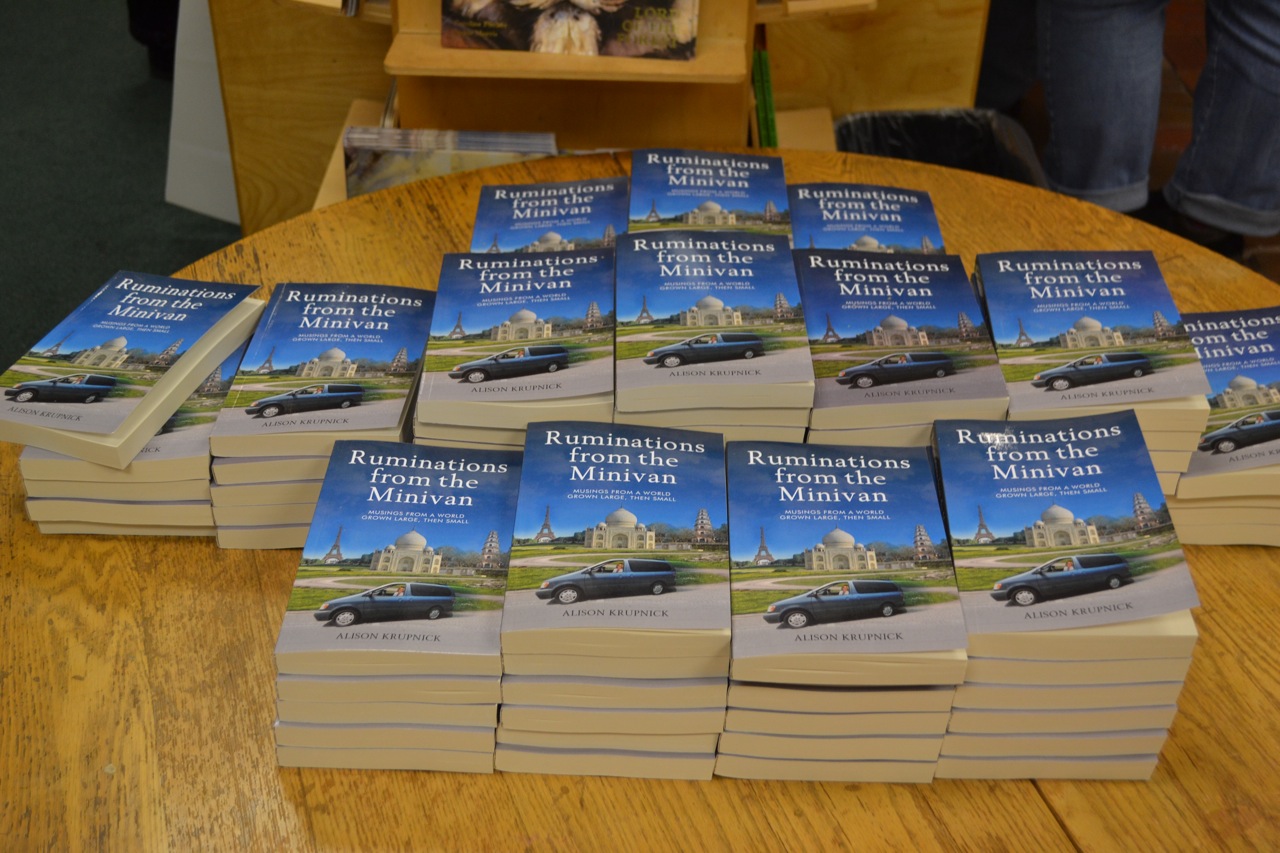
Now that all the hoopla has died down — two birthdays and a book launch party in one week, surprise out-of-town guests for said launch party and a delicious weekend of basking in the glow of friends, family and accomplishment — we’re back to business-as-usual and the daily slog of work, deadlines, school and the dishes and laundry that seem to mysteriously pile up when I’m not looking.  Add to that high school tours, flu, a middle-aged basketball injury and it’s hard to remember what all the fuss was about. Oh yeah, I wrote and published a book.
books

You may have seen me decked out in a red dress and heels the night of the party, but it was also me you saw this morning at 6:55 in my pajamas, robe and Uggs at the ATM in downtown Ballard getting the forgotten funds for Daughter #2’s lift ticket, so she can go on ski bus tonight (we were wise to get D#1 a season pass; I realize this now).  Tonight, at 11:00 p.m., Jeff and I will hop into our respective cars and head to the daughters’ respective schools to pick them up from their ski forays.  We’ll be off to D #2’s  basketball game in the morning.  I will be grateful that there is no weekend swim meet requiring me to sit on uncomfortable bleachers for four hours to watch D#1 swim for less than ten minutes total, as I did last weekend (I entertained myself by reading Getting to Calm:  cool-headed strategies for parenting teens and ‘tweens, but kept the book cover hidden, so D#1 wouldn’t be mortified).
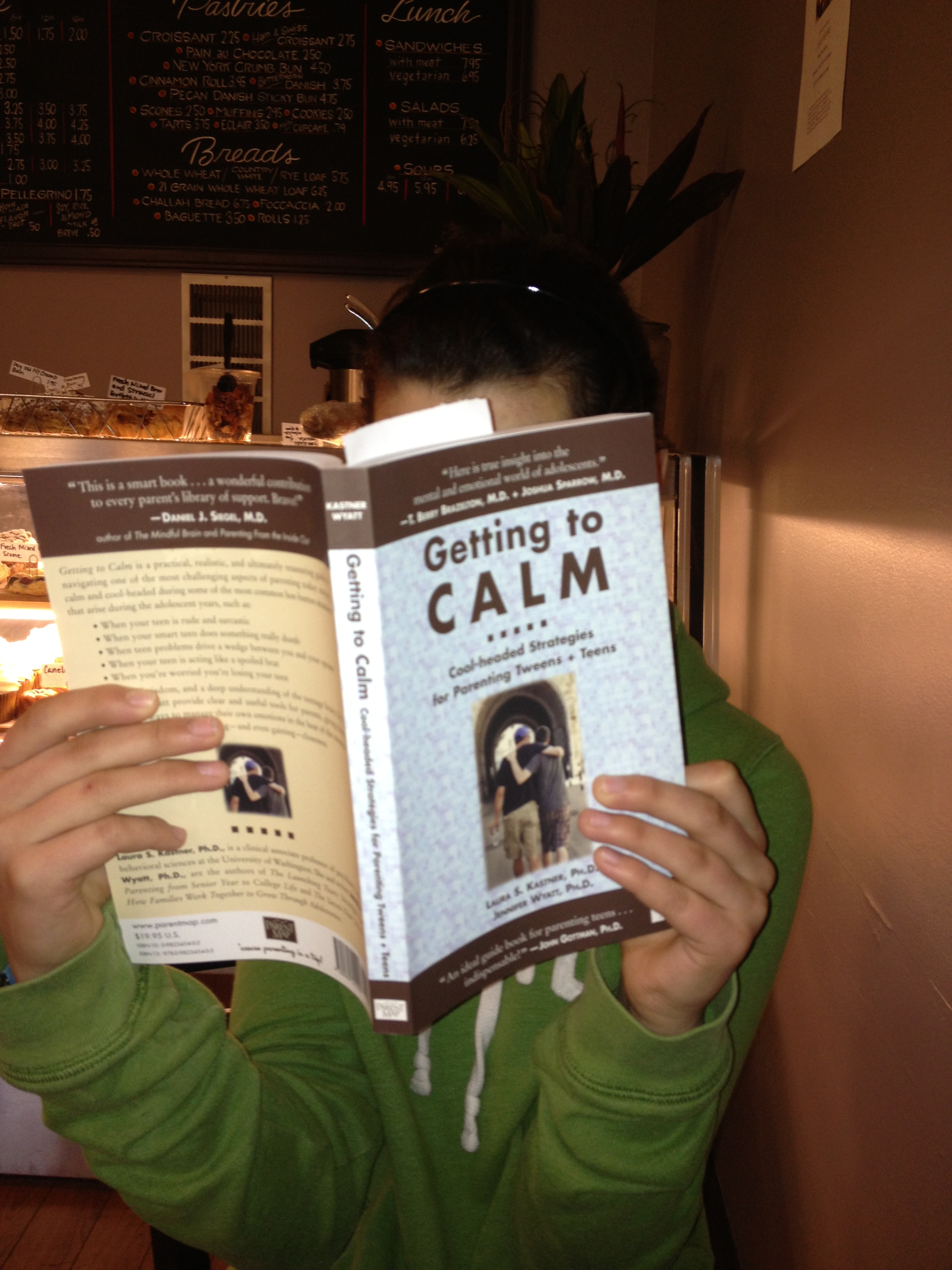
I'm not the only member of the family interested in this book.

Someone else seems to be interested in these pearls of wisdom.

Tomorrow afternoon we will make dumplings with a group of Chinese exchange students to celebrate Chinese New Year.  Today I’ll need to find a mango-based Asian dessert recipe and prepare said dessert for said party.  Someone needs to buy a gift for a birthday party on Sunday. The beat goes on.

A few days ago I was scheduled to be interviewed about my new book by our local newspaper.  By local, I mean neighborhood. Seattle is a city of neighborhoods and my neighborhood, Ballard, has a particularly strong community, a community newspaper and a popular blog.  Until D #2 started going to school across town, I rarely left Ballard. There is some truth to the bumper sticker you sometimes see around here:  “If you can’t find it in Ballard, you don’t need it.” My friend Peggy, a columnist for the Ballard News Tribune, beautifully summed up our attachment to our neighborhood. The interviewer was to be a journalism student at the University of Washington named L.  “Go easy on him,” Peggy said.

L. and I arranged to meet at Caffe Fiore.  There are actually two Caffe Fiores in Ballard — one in the Sunset Hill region of the neighborhood, that is favored by families and people with dogs, but doesn’t have WiFi, and one in downtown Ballard, that is favored by childless hipsters and WiFi aficionados.  I gave L. the address of the Sunset Hill Caffe Fiore, where I do much of my “business,” because it’s closer to my house and it’s easy to park there.  Still, I wasn’t surprised, while sipping my double short non-fat latte, to receive an email from L. saying he was at the other Caffe Fiore.
fiore_logo

I found him amidst the laptops, he turned on the voice recorder on his iPhone and we settled in to talk.

apple_voice_memos_voice_recorder_iphone

I interview people for a living but have rarely been interviewed myself.  To be honest, I expected L. to ask me some rote questions about my book, which I am fairly certain he has not read, and to go through the motions of interviewing a 50-something year-old-woman with whom he has nothing in common.

L. surprised me.

How many times have you encountered young relatives at large family gatherings or seen the college-aged kids of your friends and asked them about their studies and their plans for the future?  These conversations always seem rather one-sided:  you, the experienced adult, offer suggestions about internships. You offer to put in a good word with the friend of a friend, who may be able to offer some help.  You inquire about hopes and dreams and inject some practicality into the conversation.

L. was not particularly interested in my book,  but he was interested in my life.  He asked me to reflect on which accomplishment made me proudest (Foreign Service officer, mother, journalist or author) and I had to think before responding that I was proudest to have figured out how to have accomplishments in each of the different phases of my adult life.

We talked about the differences in international travel in the pre- and post-Internet world.  “Don’t underestimate the value of truly being away and unplugged,” I said.  “The examined life is important, but not if you are living your life so it can be examined.”  Then I sheepishly remembered that I am a blogger (and a person, Jeff would point out, who is tethered to her iPhone).
slice of mid-life logo

But here’s what really struck me.  L. wanted to know about my future.  He asked me about  my hopes and dreams. He questioned me about my values and how I would apply those to whatever I hope to do next.

At 51, it’s easy to think the course has been set.  We get so caught up in thinking about our kids’ futures that we forget to think about our own, other than squirreling away money into retirement funds.

It’s not that we don’t grapple with what we want out of life, it’s just that we’re busy being practical and making sure our kids get to ski.
teenager mom

Seeing yourself through the eyes of a twenty-year-old, who is not your kid, can be revealing, especially when they turn the tables on you and ask you to dream.

I’m looking forward to reading L.’s story, to see how our conversation resonated with him (turns out, my aerobics buddy K. is L’s journalism professor and will have a hand in editing the story.  I’m hoping, in fifty-something solidarity, she ensures I come across well. Another perk of living in a small community).

For the record, I want to tell L., his professors and his parents that I think he has a bright future ahead.

But I especially want to thank him for for reminding me never to stop asking yourself the big questions, even if the answers are not on the tip of your tongue.

There is an interesting article about “twenty-somethings” in the January 14 issue of The New Yorker called Semi-Charmed Life, that I encourage you to read, along with the Letters to the Editor in response to this article (some from fifty-somethings), which appear in the February 11&18 issue of the magazine.

Years ago, when I was in my twenties and living and working in Thailand, I met New York Times journalist Nicholas Kristof and his wife Sheryl WuDunn in Laos (I think on a flight from Vientiane to Luang Prabong).  They were young too, living and reporting in Beijing, where the Tiananmen Square uprising had recently occurred.  They won the Pulitzer Prize for their reporting from China, Kristof became an Op-Ed columnist, often focusing on the plight of disenfranchised peoples around the world, and they wrote Half the Sky:  Turning Oppression Into Opportunity for Women Worldwide.

 Kristof, a native Oregonian, has written about the importance of wilderness experiences, describing the annual backpacking trip he takes with his family on the Pacific Crest trail. 

He’s just announced that he is taking a leave from his column to write another book with Sheryl WuDunn.  He says, “The theme is the benefits to ourselves when we engage in a cause larger than ourselves, and, given that, how we can engage in a way that actually works. In other words: the emerging science of how to make a difference.”

I appreciate contemporaries of mine, such as Kristof and WuDunn, who continue to ask the big questions and share what they’ve learned to benefit us all. 
Vanity: The Thyroid Chronicles, Part II

from sketchfu.com

By now you may have heard of “The Mom Stays in the Picture,” Allison Slater Tate’s manifesto that we mothers shouldn’t hide behind the camera because we are ashamed of our post-baby bodies and the ravages of aging.

“Our sons need to see how young and beautiful and human their mamas were. Our daughters need to see us vulnerable and open and just being ourselves — women, mamas, people living lives.

“When I look at pictures of my own mother, I don’t look at cellulite or hair debacles. I just see her — her kind eyes, her open-mouthed, joyful smile, her familiar clothes. That’s the mother I remember.” 

Juxtaposed with this, I read a piece on the Huffington Post on why feeling pretty after 50 is important.

What still confuses me, and what I want to explore in my thoughts, conversations and writing, is what aging gracefully means to me.

I’ve mentioned before that I don’t dress a whole lot differently than I did at sixteen and, truth be told, I don’t look a whole lot different either.  So when I have to grapple with things like that roll of fat around the middle that just won’t go away

I’m not sure whether to fight it, accept it or make peace with it and figure out how to deal with it.

“It’s inevitable. You’re getting older,” sighed my Ob/Gyn.  “It may be the perfect storm of perimenopausal hormones and glycemic sensitivity,” said my new general practitioner, who spent a full hour talking with me and listening to my concerns. “Try shaving two or three hundred calories off your daily intake each day, change your exercise routine and give yourself six months to lose ten pounds.”

My first round of thyroid tests were normal and though I don’t yet have the results of my second round of blood work, I assume those tests will also be normal.

That’s a good thing.  Though I was anxious for a concrete answer to the changes in my body and rightfully vigilant of the impact of the steroid injections I’d received, I’m glad there’s nothing wrong with me and that I won’t have to be on medication for the rest of my life.

But because I’m not ready to throw in the towel when it comes to my tumultuous tummy, at the doctor’s suggestion, I became familiar with the glycemic index, which measures the impact on blood sugar levels in the body after eating certain foods. If you feel bloated after eating pasta and wonder whether the glycemic index could be the greatest thing since sliced bread, check out the glycemic index website put together by the University of Sydney, which among other things, maintains the international glycemic index database of a wide variety of foods.  Most experts agree that the number you want to pay attention to is the glycemic load, which combines both the quality and quantity of carbohydrate in one ‘number’. According to the University of Sydney, it’s the best way to predict blood glucose values of different types and amounts of food. (This blog is not meant to be the source of medical advice. If you are curious about the glycemic index or any other aspects of your health, please consult with a doctor, preferably one who will take the time to listen to your concerns).

I’m more concerned with the life index, which I define as how quickly a meal shared with others is converted to joy,  i.e. how I can have my cake and eat it too.

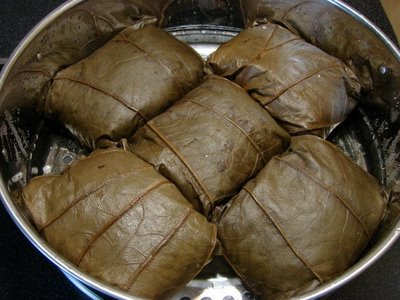
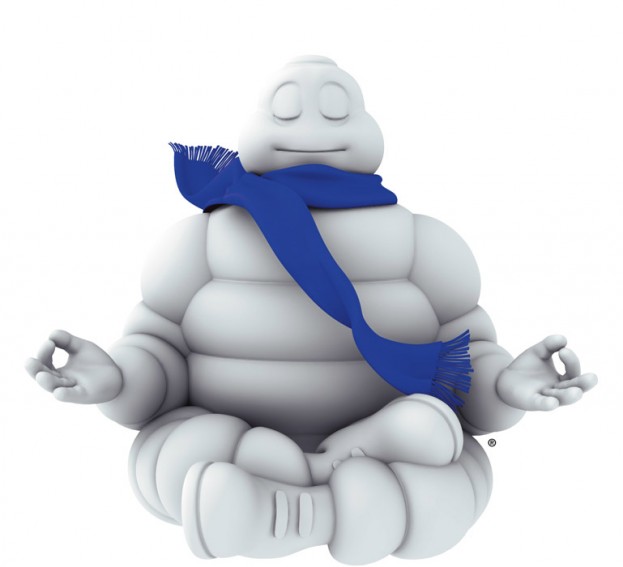
I knew the day we went to eat dim sum with two Chinese exchange students that lo mai gai, sticky rice wrapped in a lotus leaf with pork, would wreak havoc on my mid-section.  I could ill afford the Michelin look, because the next day I was scheduled for a photo shoot to obtain an author photo for my book Ruminations from the Minivan:  musings from a world grown large, then small, which is coming out soon.

We had a great time with the Chinese girls, I ate leftover lo mai gai for a mid-afternoon snack and was predictably puffy the next morning.  So I ate oatmeal for breakfast, worked out and instructed the photographer to take head shots only.

It was worth it.

Despite the warmth and easy demeanor of the photographer, I still found the photo shoot uncomfortable, especially when I looked at all the images she had taken on her digital camera and saw my many nuanced poses reflected back at me in Fifty Shades of Alison.

I hadn’t until realized until then that, unlike writing a book, promoting a book means getting into the picture instead of remaining comfortably behind the scenes, and that this is just the first of many times in the coming months that I will have to put myself out there — vanity be damned.

What saved me was a recent interview I’d had with B.J. Neblett, a fellow author who was writing a profile of me for our writers’ collective website.  The morning we met, I was unshowered and wearing an old sweatshirt of Jeff’s. B.J. didn’t care that I was scruffy. We had an enjoyable conversation, which was reflected in the flattering profile he wrote about me.

I’m not going to pretend to have given up vanity, not to be flattered when people compliment me on my youthful appearance and not to be shocked when I resemble my maternal forbears in their later years (spoiler alert – there is one poem in my new book entitled, “My Grandmother’s Thighs”). I will sporadically pay attention to the glycemic index but hopefully, as the years go by, I will scrupulously pay attention to the life index — dim sum bloating be damned.

Aging gracefully

 I had a great idea for a recipe to share with you that I thought would cleverly tie the themes in this post together.  I planned to call it “Vanity Fare.”  It comes from Dorie Greenspan‘s book Around My French Kitchen and involves slicing boneless skinless chicken breasts into strips, sauteeing them in butter and then adding a cup of creme fraiche with two LU Cinnamon Sugar cookies crumbled and mixed in.  I was going to say that when chicken breasts are sweet and creamy and comforting, nobody cares if they are pleasantly plump.

“What’s for dinner,” daughters #1 and #2 asked suspiciously (they are often suspicious when I am cooking). “Chicken with cookies!” I said, assuming they would be thrilled to have a dessert-like twist on dinner.  I was thrilled to produce such an effortless elegant meal so quickly because I had to rush off to a meeting before the meal was over. They took tentative bites and proclaimed it “too rich.”  The next day, I found some chicken wadded up in a napkin and (not very well) hidden in my office.  We had pasta that night for dinner.

 I hope when my kids look at pictures of me and I’m sporting a tummy, they’ll see the kind eyes and joyful open smile of a mother who ate carbohydrates to make them happy.

Cold Feet: The Thyroid Chronicles, Part I

I’ll start by telling you that I suffer from latrophobia, fear of going to the doctor.  Though I haven’t undergone counseling to figure out the root causes, I think this fear took hold during childhood.  Growing up in a tumultuous household, I was a bedwetter, and I found it humiliating that during my annual physical, Dr. E felt compelled to “examine” my nether regions, looking, I assume, for signs of rash. In those days you didn’t question doctors and parents didn’t ask kids about their feelings.  Even though for many years, on the eve of my check-up I would parade around the house with homemade picket signs which read:

I HATE DR. E!!!!!!!

my mother didn’t pick up on my discomfort or, if she did, didn’t think it was worth alleviating.

It was the mid-1960s, after all.
(You’ll be happy to know this is one of the issues we resolved on her deathbed.  Dr. E was apparently a celebrated pediatrician and my mother thought she was acting in my best interests).

When I became an adult, I dreaded going to the doctor for a different reason:  the weigh-in.  In some crazy, retro, pre-feminist way, I managed to transform what is supposed to be a partnership caring for and maintaining my body/machine into a self-created moral test of my character.

Even though I’m older and wiser now, I still avoid going to the doctor unless I am in desperate need of a Z-pack of antibiotics, have a sports-related injury or am having my annual Pap smear or mammogram (they don’t weigh you for those).

In other words, I don’t get an annual physical.

When I first started noticing that my body seemed different, I assumed the ravages of age and perimenopause were taking hold.

Certain friends who shall remain nameless here have gained a bit of weight around the middle, many have joked about forgetfulness (including my dear friend C., who forgot to feed my cats over Labor Day weekend.  They were hungry for more than just affection when we got home). Broken nails, my friends have seen a few.  Let’s face it, we’re not as young as we used to be.

Reference material nerd that I am, earlier this year I felt compelled to purchase Dr. Christiane Northrup’s book The Wisdom of Menopause and keep it on my bedside table for a little light reading about hormonal changes. As I read through the section on mid-life weight control, something in Step Five:  Get Your Thyroid Checked jumped out at me.

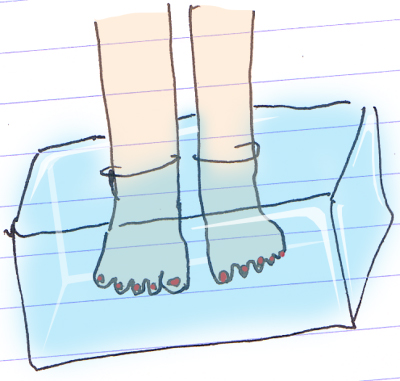
Cold Feet

My feet are always cold, even in summer.  As I read through the rest of the possible signs of hypothyroidism, I realized most of them could apply to me. (It kind of reminded me of one of those quizzes in Cosmopolitan:  Ten signs that tell you he’s cheating.  By the time you finish taking the quiz, you are convinced that he is).

I added getting my thyroid checked to my mental medical to-do list, along with the colonoscopy I should have had last year, but of course, I didn’t do anything about scheduling either one of these important, potentially life-saving tests. (No, JDM, I have not had a shingles vaccine.  No, sister-in-law D., I have not had a flu shot either).

On vacation this summer, I awoke each morning, more bloated than the next.  It felt like more than an excess of tequila and tortilla chips, and, as I thought about it, the problem had been worsening for months.  Was I suffering from cellular inflammation or an overabundance of fat-accumulating hormones, such as insulin?   Was my thyroid the culprit?

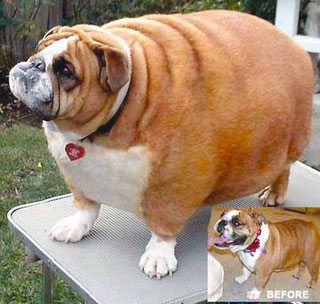
Even dogs can suffer from hypothyroidism

There was only one way to find out.  Feeling very mature (in a good way), I called my Ob/Gyn’s office to schedule my annual Pap smear and mentioned that I also wanted my thyroid checked.  The young receptionist wanted to verify my insurance coverage and gave me the name of an insurance carrier we haven’t used for years.  “No,” I said.  My carrier is C**, the same one I had last year.  “You haven’t been here for three years,” she said coldly.

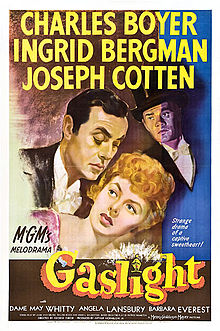
I felt like Ingrid Bergman in Gaslight.

I had to wait till I got home to comb through my insurance documents, call my insurance company and check all of my calendars for the past three years to prove that I had seen that doctor last year and the year before that.  When that turned out to be fruitless, I called the doctor’s office again to ask them to check my physical file.  This time the receptionist was more understanding when she informed me that there were no notes in my file after 2009.  “I know how you feel,” she said sympathetically.  “I was born the same year as you.”

I was not surprised to learn that a faulty memory is another symptom of hypothyroidism.

The plot and my waistline thicken

The weeks I had to wait for my appointment felt interminable, but I tried to make them productive.  I gave up alcohol, tried to stay away from carbohydrates and made sure to adhere to a regular exercise regime in spite of my achy joints (another symptom).

I researched doctors and made an appointment for a physical with one who looked promising (in my own latrophobic defense, apart from my Ob/Gyn, whom I have seen for seventeen years, I haven’t been able to find a doctor or a practice that impressed me with professional, high quality care).

One day while out for a run, I tried to pinpoint what had changed over the past six months to make my symptoms, especially the weight gain, worsen.  I’d started making and eating granola on a regular basis, but it seemed hard to believe a cereal mix could be so potent.  Then I remembered.  Around six months ago, after being diagnosed with a herniated cervical disc, I received two epidural steroid shots and also took oral steroids. Because I have trouble remembering things, I made a note on my iPhone to do some research.

At home, a quick search on the Internet suggested there could be a link between the steroids and my thyroid. (Searching for things on the Internet reminds me of writing high school essays: combing the available research materials for snippets of information to support my thesis).

Next week I will see my Ob/Gyn and hopefully be that much closer to figuring out what, if anything, is wrong with me.  Who knows, my symptoms might just be the normal by-products of aging, which require a change in my behavior, nothing more.

But at 51,  I think I’ve finally learned my lesson.  Now, more than ever, it’s important to stay on top of your health, if for no other reason than to have a baseline to work with if something is really wrong.  Perimenopause and menopause can cause some surprising symptoms (remember pregnancy nosebleeds?).  It’s worth talking to a doctor about them, instead of suffering in silence.

Check back with me in a few months to see if I’ve scheduled that colonoscopy.

This week, four diplomats were killed in Libya and my nephew was deployed to Afghanistan. As a proud former member of the Foreign Service, who served in the Near East and South Asia bureaus, my heart is with those who dedicate their lives to promoting international understanding.

In their wonderful new book Jerusalem, chefs Yotam Ottolenghi and Sami Tamimi, a Jew and a Muslim who grew up in the western and eastern part of that city, talk about food’s ability to break through religious and cultural boundaries.

Twice this week I made Ottolenghi’s recipe for Figs with basil, goat cheese and pomegranate vinaigrette from his book Plenty.

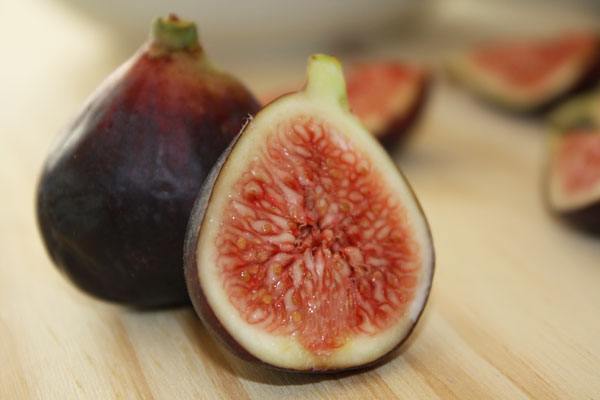
Historically, figs have been revered as a symbol of peace.  I can’t think of a better thing to eat. And they’re good for you too.

Shall I Compare Me to a Summer’s Fig?

If I were a real food blogger, I’d be writing about late summer Italian plums, figs and tomatoes, the last blackberry cobbler of the season, about eggplants and the fact that by late August my apple tree was already brimming with fruit as red as a seductress’ lips.

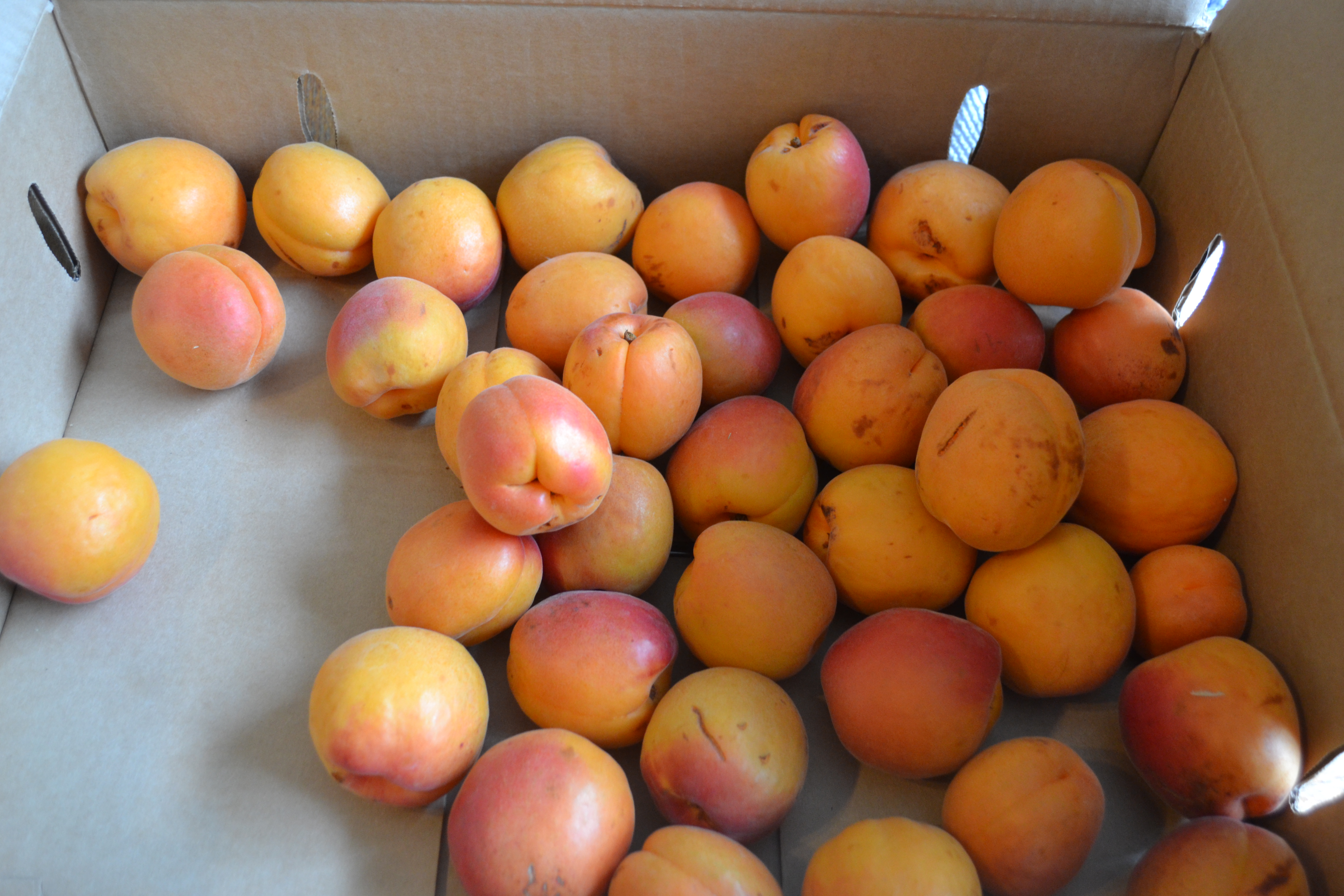
I’d be telling you that for the first summer in thirteen years, I made no jam from berries I had picked myself, but luckily was able to use Susan Herrmann Loomis’ recipe for apricot jam from her lovely book On Rue Tatin (a nice read when you are suffering from the doldrums) with the remnants of the ten-pound box of apricots I bought in Eastern Washington on the way home from a camping trip in Idaho.

I had big plans for these apricots, but a certain teenager ate most of them on the road from Quincy to Seattle.

I might mention all the terrific Mexican food we ate at the Columbia River Gorge and the fact that I got to eat at three restaurants I’d always wanted to try:  the fantastic Pok Pok in Portland, Aziza, the San Francisco restaurant owned by Mourad Lahlou, author of Mourad’s New Moroccan, one of my favorite new cookbooks this year, and the iconic Zuni Cafe, where the famed roast chicken did not disappoint. Two weeks in a row, after dining at Aziza, I made Mourad’s piquillo almond spread, a real crowd-pleaser.

I might sneak in a mention of some of the books I finally got around to reading on vacation (The Night Circus, The Tiger’s Wife and, at the behest of Daughter #1, The Hunger Games trilogy).

I could tell you that it is bittersweet to realize that with the passage of years comes the realization that I will never have enough time in a season to make all of the favorite dishes we have compiled,

especially since I can’t resist adding new favorites, such as the Garum Factory’s Avocado Salad with Pikliz.

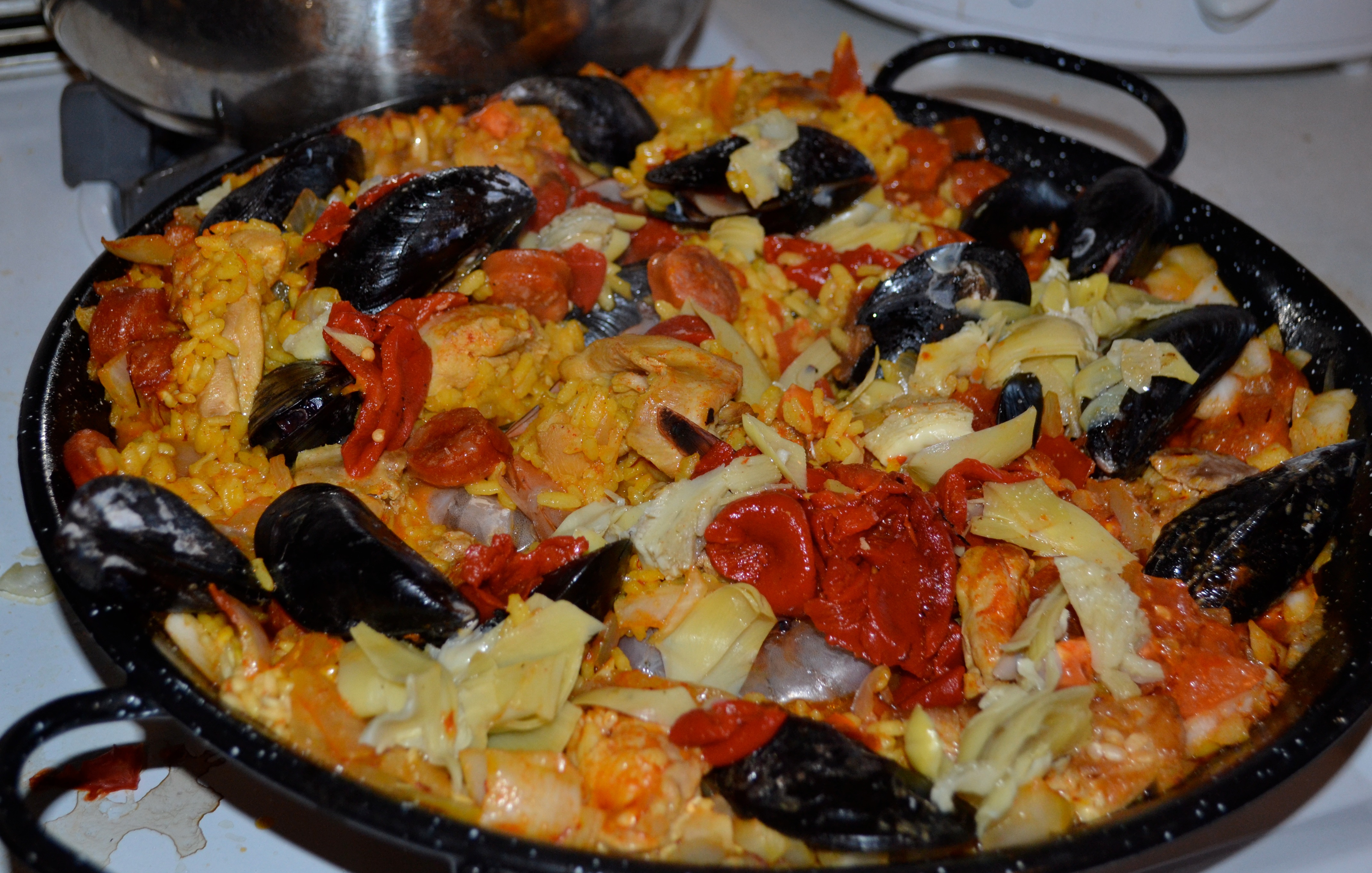
Finally, I might point out that if you have an abundance of Italian plums or figs, you could do worse than to turn to Dorie Greenspan‘s Baking from my home to yours  for inspiration (check out her Fig Cake for Fall and Flip-Over Plum Cake) and that if you are having a big gathering of friends on Lummi Island for Labor Day, people will be impressed if you whip up a big paella (even if you think you could have done a better job seasoning it).

But I’m just a broken down hybrid mid-life blogger taking advantage of a few free minutes on this, my 51st birthday, to muse about the differences between turning 50 and 51, opportunities found and lost this summer, our family’s newfound preoccupation with hair and the fact that as I progress further and further into that undefined hormonal state known as perimenopause (and perhaps because of all my fine summer dining), I am beginning to resemble a fig and am longing for the vitality I had when I turned 50.

Today was the first day of school, so if ever there was a birthday that was not all about me, this was it.  You should see our downstairs bathroom.  It’s a mess of hair straighteners, hair product, curling irons, nail polish remover and metallic blue nail polish, some of which has spilled onto the top of the toilet bowl, where it will probably remain for eternity.

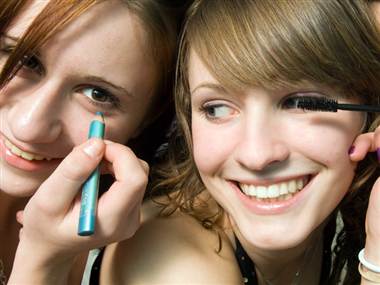
I wanted this, my friends remind me.  I wanted Daughter #1 to feel comfortable with her femininity and to embrace her beauty instead of hiding it. I love the new nightly ritual of Daughter #2, our resident fashionista, patiently straightening her sister’s hair, of watching the two of them in the bathroom at 6:30 a.m., determining how much mascara is too much, of seeing how much fun they both have with clothes.

I also want to be able to leave the house without having to factor in 45 minutes of primping every time.

Instead of a day of self-indulgence and an unbroken train of thought, my birthday (it is now the next day) ended up being about making time for other people:  a 6:30 a.m. call from my nephew, who will soon be deployed to Afghanistan and a call that interrupted my much-anticipated chance to exercise from my brother, who told me about the Bruce Springsteen concert he had just attended (he was seated next to Chris Christie).

You can take the girl out of Jersey but…

There was the farewell conversation with our elderly neighbor, who has been a part of our lives for seventeen years and is leaving her home for a retirement community, and there was teen roulette.

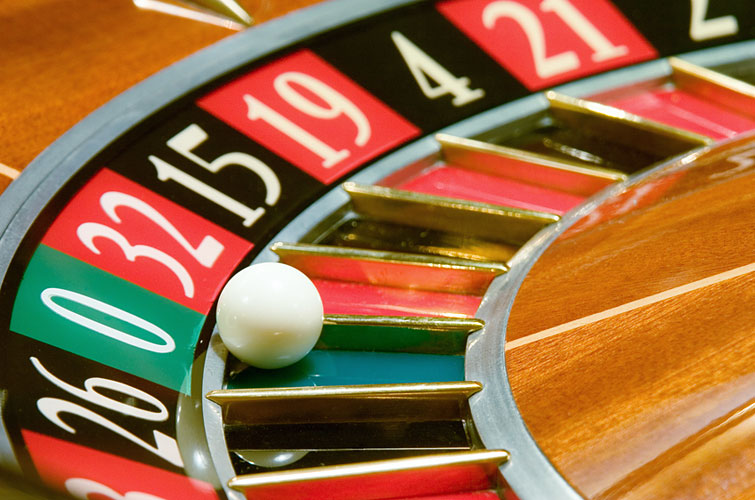
As anyone who has more than one child knows, a good day is one in which all of your kids are content. More often than not, if one has a good day, the other doesn’t but, like a game of roulette, no matter how you bet, there is no proven strategy for beating the odds.

I held my breath to see how the first day of school would turn out.  I didn’t have to hold it for very long, because Daughter #1 started school at 11:30 and Daughter #2 finished at 1:00.  We went out for a Starbucks refresher, which is as magical to my daughters as my breast milk used to be, and Daughter #2’s impressions of her first day of middle school at a new school came spilling out.  When we went to pick up Daughter #1 at her friend’s house, I quickly scanned her face for signs of how the day had gone.  Then off to the swimming pool for her swim team tryout, which had been a disaster the day before, and this time was a smashing success.

It was only as we sat down for sushi and Daughter #1, now a seasoned veteran of middle school, regaled us with funny stories,

that I let the psychic energy of the day dissipate and I relaxed and remembered it was my birthday.

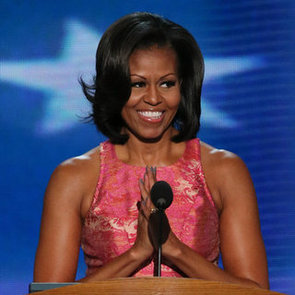
We came home to presents, lemon tart and dog poop on the stairs.  And then, as the hair straightener came out and my daughters took up their respective positions of straightener and straightenee, we listened to Michelle Obama’s speech about hard work and personal responsibility and contributing to the well being of society.

We’re gearing up for a new school year, a new array of seasonal foods to inspire us, a new   soccer season and new books to read (including my birthday bounty:  Alif the Unseen by G. Willow Wilson and Jerusalem by Yotam Ottolenghi, author of Plenty, one of my favorite cookbooks this year).

All in all, it was a pretty good summer, a pretty good first day of school and a pretty good birthday.

All’s well that ends well.
Someone to Watch Over Me

The two biggest things that happened last week were the Supreme Court’s upholding of the Obama health care plan and the passing of Nora Ephron.  So much has been written about both, that I don’t feel I have anything to add to the eloquence already expressed by so many others, though health care and loss are ever-present mid-life concerns.

Amidst the hubbub and emotions of a difficult weekend and week beginning, in which our family had a monumental decision to make, I received a quiet email from F, the father of my childhood friend C.  Entitled “C needs your help,” he told me that C’s mother R, who has been battling cancer for years, had been brought home from the hospital for the last time and was beginning hospice care.

C and I grew up together in a smallish town, where everyone knew everyone else and we all knew each other’s parents pretty well.
C and my mother had a special bond.  C had weathered an unusual number of blows for a teenager — the death of her high school boyfriend from cancer and a chronic and elusive auto-immune disorder that confounded doctors and would strike without warning.  After I left to spend my senior year of high school in France, as C dealt with the havoc the disease and its medication were wreaking on her body, my mother would take her to explore the growing number of ethnic restaurants in the area. When I traveled to Florida to bring my cancer-riddled mother home with me to Seattle, C came down from New Jersey to say a last goodbye.
My relationship with C’s mother and father was less intimate, but no less constant.  Snippets of memories have surfaced. I remember the Kiss posters in C’s bedroom, as we plotted how to sneak past her mother to go to the midnight showing of the Rocky Horror Picture Show.

I still remember the exact placement of the table and chairs in C’s kitchen, where I would sit and tell her mother stories about France, while she played with her little dog, Muffy. I marveled at the ease with which C’s mother slipped into Italian whenever we visited her immigrant parents, and mostly I remember her faith.  As C’s eyesight waxed and waned because of her disease, her mother would light candles and pray to Saint Lucy, the patron saint of the blind.

Though I didn’t see them again after I reached my mid-twenties, C’s parents remained my cheerleaders from afar. They always asked about me, my mother said, adding that they were always proud of what I was doing.

When my mother was dying, C’s father, who by that time had been dealing with his own wife’s cancer for a few years, sent me encouraging words of wisdom.  I hope I’ve adequately expressed to him how much his support meant to me.

When you lose your mother, you lose the one person who keeps her eye on you, no matter how old you get, no matter how independent you seem. My mother never fully recovered from the loss of her mother and, as she lay dying, it was her mother she called out to.

I was missing my mother last weekend, as our family grappled with our decision, knowing that she alone would understand what I was wrestling with.  “What do you think she would have said to you,” asked a friend, when I told her that my mother and I had once had to make a similar decision.  I thought about it.  “She would have laughed and said, ‘Now do you understand how hard it was for me?'”

My daughters are blessed with an inner circle of mothers.  We celebrate their achievements and we provide counsel and support, when needed. My mother used to joke about being “Mother in the Dark,” that she was often the last to know what was going on with me.  But when you have a circle of mothers, there’s always someone to watch over you.

For Mother’s Day this year, my daughters and their friends filmed a tribute to all of us moms, which included an awards ceremony.  Among the mom honors they bestowed were: best dresser-upper, best with no make-up and all that jazz, best advice, best garden, best redhead, best cowgirl and best chef (yes, that was me, but when asked what their favorite dish of mine was, my kids were hard-pressed to come up with their answer:  pancakes.).

Just as I do with my own daughters, I like to imagine what these girls will be when they grow up.  I know I will always be their cheerleader, even from afar.

Shortly before my mother died, I received a call from one of my brother’s childhood friends, whom I hadn’t seen for more than forty years.  Until he moved away, his family lived in a house behind ours and he and my brother bounced back and forth between houses every day, backdoors slamming with every arrival and departure.

“I was at your house when we got the news that President Kennedy was assassinated,” he told me.  “Your mother brought us together to watch the news and explained what was happening.” For him, my mother was an inextricable part of history.

As we enter our fifties, more and more of my contemporaries are losing their mothers. Though I often get the news via Facebook and sometimes I did not know these women well, I still remember them:  the mother with the gentle eyes, the one who showed how beautiful a woman can look when she’s prematurely gray, the one who drank endless cups of coffee with my mother.

Thank you, R, for being an inextricable part of my history and for being a member of my inner circle of mothers.

With much love to R, C, F and your family.

Depending on your vintage, Nora Ephron was like a friend, sister or mother/mentor and the way in which she shared the experiences of being a woman was beneficial to so many.  Here’s Lena Dunham’s take on Nora from the New Yorker:

And They Called It Puppy Love

Move over, soccer moms.  There’s a new stereotype in town:  middle-aged mothers of middle-grade kids in love with middling (okay,small) dogs.

And I am soon to be one of them.

How to explain the yearning?

What parent hasn’t listened to years of entreaties from kids begging for a dog?  In our case, the begging came mostly from Daughter #2.  When we describe the difference in our daughters’ personalities, we sum it up this way:  Daughter #1 is like a literary cat, who loves solitude and curling up with a good book.  Daughter #2 is like a dog, craving activity,  people and balls.

It was difficult to harden our hearts to Daughter #2’s dog dreams because we knew how good a dog would be for her and, by extension, for the rest of us.  And when your child is naturally inclined towards something, it’s hard to resist.  I say this as the mother who rushed out to buy a discounted piano the night before we hosted a party for 100 people in our cramped 1912 house because our neighborhood piano store was going out of business and because Daughter #2 showed musical promise.

I sobbed as we re-arranged the furniture, so moved at having had the power to grant her wish.  Have I mentioned that now, four years later, Daughter #2 would like to quit piano lessons?

We managed to push aside the dog requests by making sure Daughter #2 had plenty of access to other dogs: her friend R’s dog, dogs in our neighborhood and in her dogless friend B’s neighborhood.  We were never so rash as B’s father RC to make promises such as, “if you clean up 40 dog poops, we’ll consider getting a dog.” Daughter #2 and B have steel wills and have probably picked up 400 poops between them.  RC is on the spot.

Around two years ago, I found myself wavering.  If Daughter #2 wanted a dog so much, I reasoned, why not give her one?  We’re already experiencing family life at full throttle, so what’s one more thing?

This had been my rationale for breaking my anti-rodent injunction when Daughter #1 graduated from elementary school.  A rat, or any rodent with a long nasty tail, was out, but I could live with a hamster.  And live with a hamster I do.  A very sweet hamster named Zen, whom I found on Craig’s list and whom we drove from Seattle to Whidbey Island to get, after several email exchanges and photo sharing with the owner of her birth parents.

It was a bit over the top, but at least I didn’t cry.

Around six months ago, after a particularly heartfelt request from D #2 for a dog for her elementary school graduation, Jeff confessed to me that he was softening (for the record, his opposition to a dog had been our limited yard space. If we moved to a bigger house in the country, he was all for a dog).  A few months after that, I injured my neck and began taking long walks every day, passing a host of neighbors and their dogs strolling companionably together.

“If you get a dog, no matter how much your kids promise to help, the dog will end up being your responsibility,” everyone warned me.

I had a lot of time to think during those walks.  I imagined what it would be like to be responsible for a dog and began listing the qualities my ideal dog would have:  no shedding, easy-going and good with cats,

Courtesy of the May 7, 2012 New Yorker

small with small poops.  A far cry from the Lab or Golden Retriever Daughter #2 had dreamed of.

Luckily, her friend G had just gotten a Shih Tzu puppy.  I tested the waters,  Given the choice between a small dog or no dog, which would D #2 choose?

We considered all sorts of breeds before I settled on Havanese, a breed that is growing in popularity.

Venus Williams and Harold

I hunted down reputable breeders looking for puppies and we suffered one disappointment when a possible puppy was sold the day before we were scheduled to visit her.

Meanwhile, I trolled petfinders and rescue sites and Jeff, wary of a small, designer dog, suggested we visit shelters.  We found several sad dogs and a few big, beautiful dogs, but none that was right for us.

In the end, I found a lovely breeder named S and things worked out similarly to the way they did when we got Zen, though we didn’t have to drive as far. S invited us to visit her expectant dog and sire, and shared emails and photos when the puppies were born.  Shortly thereafter, just after dropping Jeff off at the airport for a business trip to Taiwan, the girls and I went to S’s house to choose our puppy.

This weekend, Jeff will meet him for the first time. He says he’s slowly getting used to the idea of a little dog, though draws the line at walking the dog if he (the dog) is wearing any article of clothing.

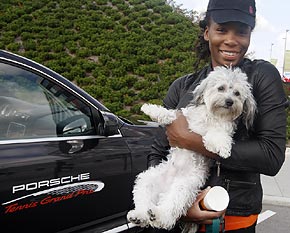
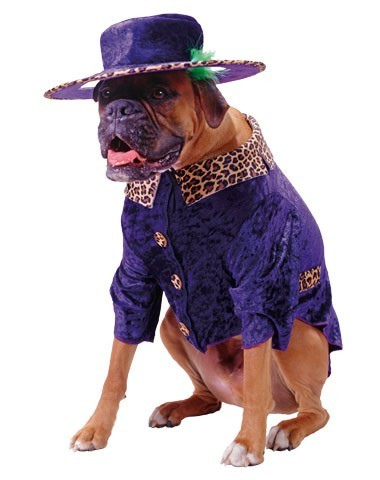
Even if we dress him like Shaft?

The girls have nixed all the great Cuban names we came up with and are hoping that once he meets him, Jeff will agree that the compromise name the three of us came up with is a perfect fit.

While we were en route to meet our puppy, we listened to a rebroadcast of This American Life’s episode In Dog We Trust. In Act 1, The Youth In Asia (which you can also find in his book Me Talk Pretty Someday), David Sedaris reminisces about his family pets.  The death of one of them, he says, felt like the end of an era.

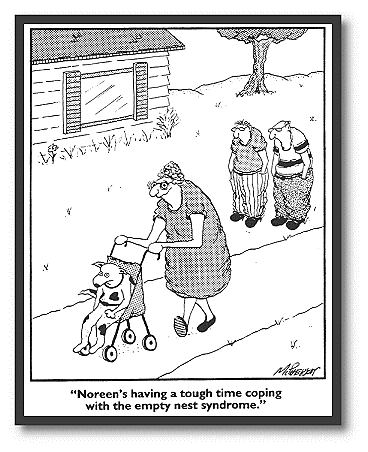
For me, this puppy feels like both the end and the beginning of an era.  I have wondered, with the women I know who love these little dogs, whether they are replacements for our children, who are beginning to stick a few toes out of the nest.

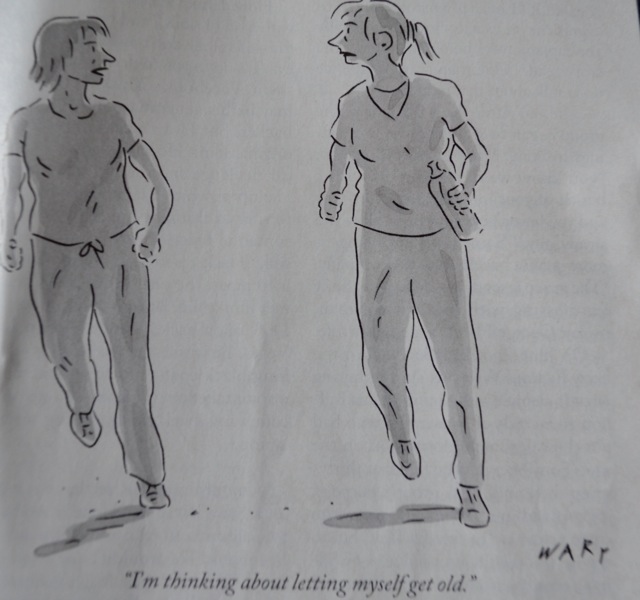
My recent experience with a chronic ailment was a sobering reminder that I won’t always be able to push my body the way I want to.

Courtesy of the New Yorker, May 7, 2012

The dog walkers in my neighborhood all seem to be in pretty good shape, though.

Though I have a few years left as a soccer mom, I can tell I will be entering a new subculture.  My puppy and I already have some summer play dates lined up and I’ve gotten tips on where to find the best groomers in town.

When I think back to those sweet early days, when my kids were babies and toddlers, I didn’t always fully appreciate being in the moment.

I plan to enjoy every (or almost every) moment of our remaining time as a family of four with two cats, one hamster, eight fish (last time I checked) and one dog.

When Caring for Your Aging Self Takes You By Surprise

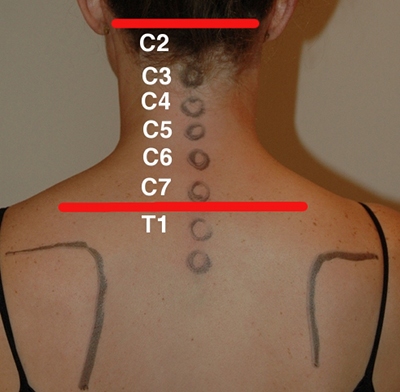
The albatross around my neck (the herniated disc between the C-6 and C-7 vertebrae) has opened me up to a plethora of new experiences.  In the past few weeks I have:  had acupuncture for the first time, courtesy of my friend Dave.  It was quite pleasant;

had my first MRI, bearable because they let me listen to Pandora.  Listening to the medley of Jason Mraz’s “I’m Yours” and “Somewhere Over the Rainbow” was very soothing.  “Landslide,” not so much.

taken up power walking, and discovered a host of interesting radio programs to keep those walks interesting;

This is one of my new favorites, courtesy of NPR.

Most importantly, I’ve learned what it means to be a patient living with chronic pain and uncertainty.

If, as I do, you think of yourself as a healthy person who rarely needs a doctor, it can be a shock to be ushered into the world of medical procedures.  When you are used to living an active lifestyle, it can be a shock to have your activities curtailed in the short-term, and an even bigger shock to face the possibility that in the long-term, you may have to give some of them up.

You sit in the waiting room of your doctor’s office or the radiology clinic with your spouse beside you and fast forward twenty or so years to when the two of you are elderly and waiting rooms and test results and fighting with insurance companies will be the norm.  But at least you have each other.  Statistics show that approximately one-third of adults between 46 and 64 are divorced, separated, or have never been married, and that this will reshape old age.  Jane Gross, author of A Bittersweet Season, Caring for Our Aging Parents and Ourselves, who I often cite in this blog, wrote of her recent experiences with eye surgery and her realization that she couldn’t go it alone, couldn’t ask so much of her friends and needed to hire a home health aide. You can read Part I and Part II of “When I Needed Help,” courtesy of the New York Times blog, “The New Old Age.”

We live in an era in which some of us (in particular the affluent and well-educated) believe we can control our health through diet and exercise.  I certainly feel that way and, in the weeks since my diagnosis, have been trying to will the inflammation out of my body by eating every healthy, anti-inflammatory food I can get my hands on.  You can imagine how popular this has made me at dinner time.

I bet Sasha and Malia eat brown rice without complaining.

After we evaluated the MRI results with the doctor and determined that medical intervention was in order, I came to view my lack of success at curing myself naturally as some sort of moral failure on my part.  Jeff tried to talk me down. “No amount of broccoli is going to fix this.”

In that case...

Each morning, as I eat my bowl of homemade granola and non-fat Greek yogurt, I remember my grandfather, who ate Grape Nuts, prunes and skim milk every day for breakfast and continued playing tennis and swimming until the day he died.  I think about my mother, a healthy eater, who prided herself on looking, acting and feeling younger than her years, and so, was taken by surprise when terminal cancer hit.  I think about my mother-in-law, who has resisted taking medication for her osteoporosis because she fears the side effects, and my father-in-law, who has suffered from spinal stenosis for years without permanent relief.  I think about my sister-in-law, the same age as me and equally active, who has been felled by a foot injury and has no one at home to help her.

The other day, while on my walk, I ran into my friends P. and A.  We exchanged pleasantries and I told them about my herniated disc.  P, who turned 50 six months before I did, told me: “I’m on my way for a colonoscopy.” We smiled knowingly at each other.

I’m off to take my walk now and after that, Jeff will drive me to the radiology clinic, where I will have an epidural shot of steroids in the neck.  It’s a shot in the dark (actually it’s a shot involving a fluoroscope, which uses  X-rays to visualize the local anatomy and target the inflamed area, thus minimizing exposure of the rest of the body to the steroids). I’ve heard mixed results about steroid shots and you can only safely have a few of them. I am willing myself to believe that it is going to work the first time.

I want to be my young, healthy self for a while longer.

Here’s an interesting link, courtesy of the New York Times “Well” blog: “Getting Fat But Staying Fit?”

Hormones Hit the Big Time

Wading through my post-vacation stack of newspapers, I found an article entitled “All the Rage” in T, the New York Times style magazine.  It was not a description of spring fashion trends.  Written by Ayelet Waldman, it was an account of how PMS exacerbates her bipolar disorder.

You may remember Waldman, wife of author Michael Chabon, for her controversial 2005 Modern Love essay, in which she admitted that she loved her husband more than her four kids.  Since then, she’s had some fun playing agent provacateur among the mommy set, most recently in her memoir, Bad Mother.  In a Fresh Air interview with Terry Gross after the book came out,  Waldman acknowledged that her bipolar disorder may have led to some inappropriate moments of “oversharing.”

At the risk of oversharing myself (since I do not have bipolar disorder, I don’t have a handy excuse), I should tell you that recently I enticed Jeff with a “come hither” look to see the latest additions to my bedtime reading.

Not this:

or this:

But this:

and this:

Ooh, baby.

An avid appreciator of reference materials, I bought these books as a way to take control of my health.  Sadly, after a hopeful healing trend, my neck recovery hit a downward trajectory, probably because of hours at my laptop revising my book manuscript and one wimpy afternoon of skiing during our recent trip to the Canadian Okanagan (the photo above is the view from our condo at the Big White ski resort). There are MRIs and acupuncture and cortisone shots in my future.

I bought the menopause book for research.  I’d skimmed Christiane Northrup’s seminal work ten years ago, around the time perimenopause-like symptoms first debuted in my body. (At the ripe age of 40, I had a baby and a toddler to care for, so sheer fatigue may have trumped hormones as the culprit behind my mood swings and frustrations.)  At the time, I was put off by Northrup’s thesis that menopause is an opportunity for shedding extraneous burdens, and especially her suggestion that sometimes these burdens included husbands.

Though I’m still not interested in shedding my husband (after all, who else would appreciate the humor I found in my choice of boudoir reading?), this time around, the book warranted a closer look for its recommendations on mid-life weight control, reasons to have your thyroid checked and the physiological foundations of menopause.

My friends and I have been furtively comparing notes about symptoms we’ve been experiencing that may or may not be due to the impending “changes,” and we share a similar sense of bewilderment about these changes, not unlike how our daughters feel and felt about menstruation.

Menarche of the penguins

If you live in Seattle and have had children go through puberty, you’ve likely heard about an invaluable resource, commonly referred to as “that class.”  “That class” is actually one component of the Great Conversations program offered at Seattle Children’s Hospital, which offers classes and presentations on puberty, sexuality, parenting and other topics relating to adolescence.

In 1988, nurse Julie Metzger developed “For Girls Only,”as a fun, informal way for mothers and daughters to discuss puberty.  “For Boys Only,” geared towards fathers and sons, followed in 1992 and is taught by Dr. Rob Lehman.   Both classes have been a Seattle rite-of-passage ever since, and Julie is warm, funny, supportive and very, very informative.

 Remembering how much fun it was to sit among a roomful of girls and women shouting “penis!,” my friends and I wished Julie would offer a class “For Women Only,” so we could talk freely about hot flashes and cold libidos, sleep disorders, forgetfulness and overall bitchiness and maybe even do some shouting.

“You are not the first or even the 100th to ask this same question,” Julie told me.   “That says something right there about the need, doesn’t it?”

The other night, my family and I watched an episode of Modern Family with a plot line devoted to PMS.  The fact that hormones have made it to primetime TV (the final frontier?) as well a style magazine tells me that, just as our generation of women turned mothering into endless fodder for books, magazine articles, movies and TV shows, we may be on the verge of a menopausal renaissance.  There will be “bad girls,” like Ayelet Waldman and Sandra Tsing Loh, who refuse to “go gently into the good night,” good girls like Christiane Northrup, who remind us (after we’ve shedded the excess baggage) to take our flax seeds, and the French, who put everyone to shame.

Meanwhile, the rest of us will scratch our heads, eat our yams and dark chocolate and hope that, as the topic of menopause gains traction in American society, the discussion doesn’t become a version of the “Mommy wars.”

All those flying legs of lamb could be dangerous.

Julie Metzger and Rob Lehman have just published a new book for pre-teens: Will Puberty Last My Whole Life? a collection of questions they have been asked in over 25 years of running “that class.”  The book is available at independent book stores and on Amazon.com

I’m interesting in hearing your take on menopause.  Are there books or other resources you’ve found invaluable?  Have you found an entertaining, yet informative way to tackle the topic with your peers?

Good and Plenty

I’m not supposed to be writing this.  I’m supposed to be packing for that ski trip I told you about.

But I couldn’t resist telling you about a few good things that have come my way lately.

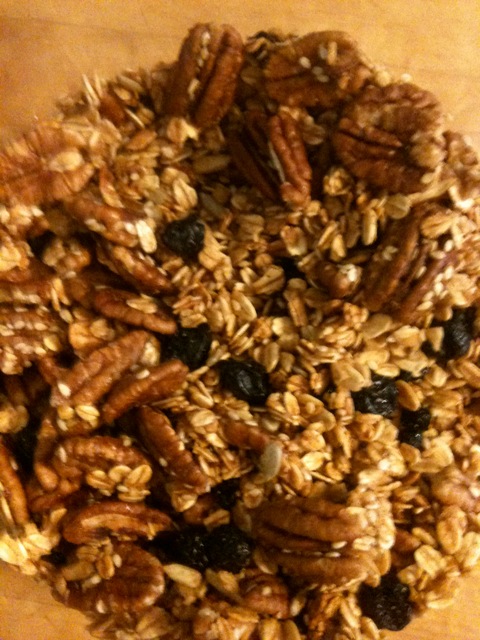
This is the granola I made this morning, inspired by the wonderful blog Orangette.  My horoscope for today recommended that I “make something with honey” (in 40-odd years of reading my horoscope in the morning paper, I have never been similarly advised) so maybe it was in the stars, but it took Molly Wizenberg extolling the virtues of homemade granola and providing me with a few great recipes to convert me.  The house smelled great.  Do yourself a favor — read Orangette.  And make your own granola (I haven’t yet tried the recipe you’ll find by clicking on the above link.  I used an earlier Orangette granola recipe, which Molly adapted from Nigella Lawson.  You can find it in the Orangette recipe index).

(I also made my own pancake mix, but we haven’t tasted it yet, so I’m not ready to share the recipe.  I snuck in flax seeds.  Shhhh.  Don’t tell Jeff and the girls).

While I was making the granola, I listened to a few stories from The Moth, the live storytelling project based in New York.  I learned about The Moth last week, when I was asked to participate in a Spoken Word performance on March 20, as part of the Ballard Writers Collective.  The stories I heard today were funny and touching.  I’m looking forward  hearing more from The Moth during our eight hour road trip.  (I’ll tell you more about the March 20 event later).

As you know, I’m interested in eldercare and in spreading the word anytime I hear of anything that makes life easier for the elderly and their caregivers.  This recent post from The New Old Age is just such a thing.  At a networking event this week, I met an eldercare advisor and was reminded of this growing business.  If you are caring for someone and feel overwhelmed, you can hire a consultant to help you navigate Medicare, find senior housing, etc.  Also, Jane Gross told me to tell you about her Facebook page, where she provides useful updates and information for fans of A Bittersweet Season:  Caring for Our Aging Parents and Ourselves.

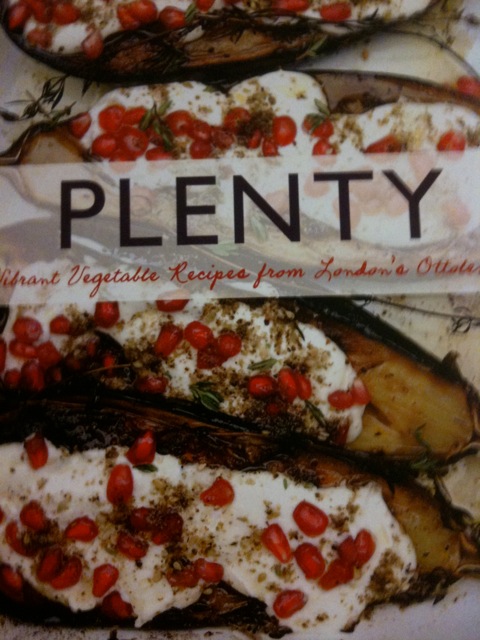
Yesterday, at Costco, I found this fantastic Near East-inspired vegetarian cookbook.  I’ve read about Yotam Ottolenghi and Plenty in my cooking magazines and in The Guardian, and have even made some of his recipes, but I was unprepared for how blown away I have been by this book.   I want to cook and eat everything in it.  Tonight.  Instead of packing.

Finally, it’s no secret that there are a few places I would rather be going than skiing.  But, to paraphrase Adele in her beautiful cover of this Bob Dylan song (you can buy the live version on iTunes), I’d go to the ends of the earth for the ones I love (though eight hours in the car with a teen and pre-teen might be pushing it).

(Check out what Margaret Cho had to say in response to Karl Lagerfeld’s snipe about Adele after the Grammys. Thanks, Theo Nestor, for sharing it.)

That’s all, folks.  I’ll be diligently doing my physical therapy exercises and writing next week, and maybe even doing a little bit of skiiing too.

Happy President’s Day.

Elderberry Whine

Ten days shy of the second anniversary of my mother’s death, I’m sharing something controversial here — Sandra Tsing Loh‘s recent polemic in the Atlantic about caring for her aging father.

Even if you think Sandra Tsing Loh’s piece is over-the-top, that she’s self-obsessed and could use another 1,000 hours of therapy, there’s no denying the power of her emotions.

I’ve written about my own life-changing experiences with eldercare and about Jane Gross’s important book, A Bittersweet Season: Caring for Our Aging Parents and Ourselves.

It’s a powerful subject and one that I’m glad is getting more attention.  When you are in the throes of it, caring for your aging parents, while also working, caring for your kids, your partner and yourself can be lonely, overwhelming and feel hopeless.  It helps when others share their stories and, like Jane Gross, use what we learn from each other to effect change.

Read this and weep:  Daddy Issues

I miss you, Mom (the original turkey-maker).