Pain in the Neck

It’s 6:30 on a Friday morning and daughter #1 and I are sniping at each other.  I want to be sure she has everything she needs for the ski bus she will take from school to Snoqualmie Summit later in the afternoon.  Skis, poles, boots, helmet, gear bag and food are all piled up by our front door, just as they are every Friday morning.  But this morning, I am bitchier than usual and daughter #1 is rolling her eyes and refusing to go through the checklist with me, though we both remember her maiden ski bus trip last year, when we packed everything except the ski boots, an omission she did not discover until she was on the mountain, ready to go.

I am bitchy because I haven’t slept for the past several nights, due to a pain in my neck.  I’d like daughter #1, who is 13 and can’t always control herself, to stop being a pain in the bleep and cut me some slack.  It doesn’t happen and we part on unfriendly terms.

Later, after I have been diagnosed with a herniated disc, pumped full of steroids and set up with a physical therapy regimen, I will have the foresight to send her a text apologizing for my bitchiness.

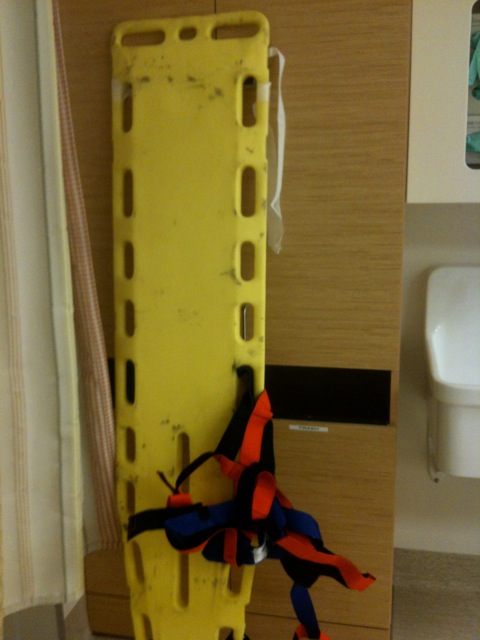
Still later, when she has been strapped to a backboard and rushed down the mountain in an ambulance, I will look at her texted response to my apology:  “I’m sorry I was a whiny schmuck.”   Me: “I’m glad you’re my whiny schmuck  :).”  Her:  :).

The next day we are walking companionably together in stiff-necked glory, me, whacked out on steroids and pain meds and a muscle relaxant, her, a little sore and just beginning to realize what might have been.

She tells me she dreaded making the call to us that night, knowing we would be upset.  I tell her how helpless we felt because we weren’t there to comfort her and about the confusion of receiving several truncated calls from the ski patrol, her ski instructor and a chaperone who happened to be a doctor, trying to piece together what had happened and assess her situation.  She’d fallen and somersaulted, landing on her back, while learning mogul safety, but had managed to ski herself down the mountain (good sign) before realizing she felt dizzy (bad sign).  As a precaution, she was strapped to a backboard and it was determined that she should be taken by ambulance to the emergency room.  The experts deliberated over which one, and we reacted to each possibility: the one nearest our house (good sign), the one at Seattle’s largest trauma hospital (bad sign), and finally, the one closest to the mountain (good sign).

She tells me what it was like to be immobilized on her back in a screaming ambulance, crying, with no one but an awkward EMT to comfort her with small talk.

I tell her about rushing to the hospital, a 45 minute drive from our house, with her pajama-clad frightened younger sister in tow.  On the way, something smashed into our windshield, aimed at my heart.  “Have we been shot????” Jeff was rattled by the sudden impact.  Indeed, there is a bullet-like hole on the outside of the glass and it seems hard to believe it could have come from a rock.

By 11:00 p.m., backboard just a memory,
we are at a drive-through Krispy Kreme at a strip-mall in Issaquah laughing at the strangeness of our situation and allowing the first waves of relief to sink in, along with the sugar.

Though I am unable to turn my head toward the backseat to smile, we agree that this was the mother of all gazumps.

Daughter #2 suggests I can bog about this.  I feel a twinge of guilt over what we may be turning into.

The pharmacist calmly explained all the possible side effects of my meds.  My friend Diane, a nurse, puts it in plainer terms.  “You’re going to be bloated and bitchy and miserable.”  I already feel that way 11 days of each month, thanks to my perimenopausal PMS, which is kind of like PMS on steroids and which I have learned to manage with exercise, smoked salmon, red wine and my private reserve of dark chocolate.
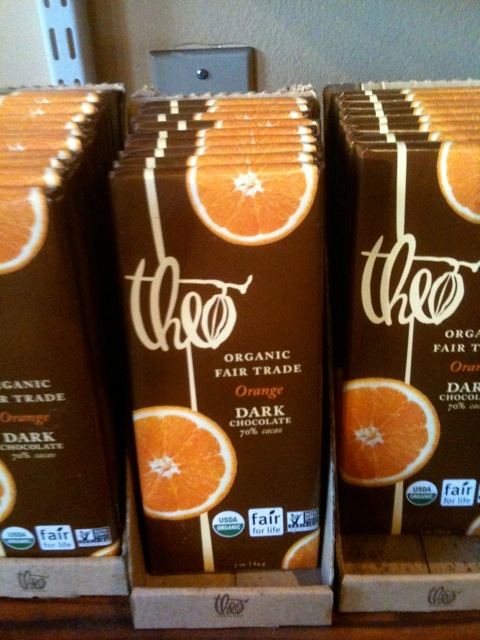
I keep it on a special shelf in the freezer.

Now that I am experiencing perimenopausal PMS and am on steroids, I realize that my previous forays into moodiness were a walk in the park compared to this new dimension of craziness.  I have never suffered from chronic depression, nor have I ever taken anti-depressants.  I have a new-found empathy for those who do.

My funny family is able to make light of Mom’s ‘roid rage and Daughter #1 buys me some Doublemint gum to cool me down. But, though I stop taking the muscle relaxants after the first one, and limit the pain meds to just one at bedtime, my consciousness is altered, like a mid-life follower of Timothy Leary, though I drive a minivan instead of a magic bus.

I take a four-mile walk on a glorious sunshiny day and my iPod astutely shuffles to Katrina and the Wave to help cheer me up.

It doesn’t work.

It’s been a long time since I’ve had the intensity of feeling one experiences in middle school, when the mountains can seem more beautiful than they ever have before

yet you question your place in this world.  I have a new-found empathy for those who feel these extremes and also have to navigate the intricate social dynamics of the school lunchroom.

As the pain lessens and the meds wind down, I am regaining enough healthy perspective to understand that we dodged a number of bullets.  That fateful Friday would have been the 17th birthday of my friend Beth’s son Ian. There was a madman with a gun terrorizing a neighborhood to our north, where residents were advised to stay home behind locked doors.  There was an accident at our Sunday Farmers Market, resulting in the serious injury of a baby. I think the moon was full.

Our insurance will pay to get the windshield fixed. Daughter #1 is planning to go skiing again on Friday and I’ll be up and running again in no time. Over the years, we will re-tell the story of Daughter #1’s ambulance adventure when she comes home from college for the holidays or whenever we pass a drive-through Krispy Kreme kiosk.

In the grand scheme of things, I am grateful that in the end, this turned out to be nothing more than a pain in the neck.

Though many things can cause them, herniated discs can also be a by-product of aging. I’m grateful to my Facebook friends who stuck their necks out for me by sharing their stories and favorite remedies.  Thanks to Nancy Schatz Alton, a member of the Ballard Writers Collective and co-author of The Healthy Back Book, which jump-started my efforts to take charge of my own recovery.  Thanks to Christina Wilsdon, witty writer and animal aficionado, for suggesting Treat Your Own Neck, by Robin MacKenzie.  Thanks to my neighbor Shannon for the nightly laser treatments, to Diane for the frankness and the heating pad, and to Liz and Paul for the promise of a rotisserie chicken and cookies.

In addition to drugs, physical therapy and ergonomic office arrangements, everyone agreed that dark chocolate has charms to soothe the savage beast.   Some kindred spirits also felt that the pair of pink shoes I’ve been ogling would certainly have profound therapeutic benefits.

Finally, I haven’t felt much like eating because of the water retention, and have felt even less like cooking, which, if you know me, you know signals that my stars (not just my neck) are out of alignment.  But this morning, while thinking about anti-inflammatory, all-around good for you foods, I remembered this wonderful salad from the cookbook Turquoise: A Chef’s Travels in Turkey by Greg and Lucy Malouf.  Afiyet Olsun! (Turkish for enjoy your meal)

Green Olive, Walnut and Pomegranate Salad

3/4 cup walnuts, toasted for 5-10 minutes in a 350 degree oven.  After cooling, pour the nuts into a towel and rub well to remove skin.  Then coarsely chop

1/2 cup pitted green olives, washed and coarsely chopped

1/4 unsalted shelled pistachios, coarsely chopped

1/2 cup pomegranate seeds

2 small shallots, peeled and finely diced

1 red serrano chile, seeded and finely diced

1Tablespoon shredded flat-leaf parsley leaves

1 Tablespoon olive oil

I Tablespoon walnut oil

splash of pomegranate molasses

juice of 1/2 lemon

sea salt

freshly ground black pepper

Combine all ingredients in a large bowl and toss gently.  Let stand five minutes before serving so flavors can meld.
When Life Gives You Lemons…

One of my “day jobs” is education reporter, a role I fell into by accident.  As the mother of two school-age kids, I spend a lot of time thinking, talking and yes, complaining about public education (Jeff can attest to this.  In addition to boring people at parties with talk of fish oil, don’t get me started on the middle school math curriculum).  Because it matters so much to me, I’ve decided that in addition to volunteering in the schools, the best way for me to be part of the solution, instead of merely bitching about the problems, is to write objectively about efforts to improve our imperiled public education system and the people who are working hard to make a difference.

Some have called this the civil rights struggle of our time.

When my mother was dying and I was fighting to make sense of her convoluted Medicare coverage, I became an impassioned advocate for Medicare reform and especially for people of my generation — the sandwich generation — to educate ourselves about the harsh realities of elder care.

If all politics is local, maybe all activism is first and foremost located in our hearts.

Two years ago, I sat in a Starbucks at the Plantation Towne Square shopping mall in Florida with my childhood acquaintance and neighbor Beth.  I hadn’t seen Beth since high school, nearly thirty years before, and had only heard snippets about her life from my mother, who was the human embodiment of a social networking site long before Mark Zuckerberg’s birth, able to provide a status update on pretty much anybody from our hometown.

My mother came to visit me after the birth of my second child bearing Table Toppers, the disposable stick-on placemats that she told me Beth, a lawyer and now mother of three, had invented so that mothers trying to feed their toddlers in public places didn’t have to fret about germs.

To be honest, though I’d always liked Beth, I wasn’t interested in hearing about her innovation and applauding her entrepreneurial spirit.  I was in the full throes of an identity crisis that had stemmed from leaving my prestigious international career to be a stay-at-home mother.  Unlike Beth, I hadn’t crafted a creative new identity that merged my professional skills with my new role as parent. I didn’t want to be reminded that there were other women who, after giving birth, had managed to find fulfilling ways to blend career and family.

I came to Florida to care for my mother, who was scheduled for some outpatient surgery. But when I got there, her condition was much worse than I expected.  Our relationship, which had been strained over the years, was awkward, and so to make her feel better and to pass the time, I let her tell me about people we knew in common, including Beth, who lived nearby.  There had been a tragedy, my mother said.  Beth’s oldest son had contracted leukemia at age 11 and hadn’t survived.

I think it was more than cabin fever that led me to break free of my mother and arrange to meet Beth for coffee.

We sat across from each other and commented on how much we both resembled our mothers.  Beth’s chipper high school class president demeanor now had a careworn veneer, but I noticed she also had her mother’s softness and warm, quiet eyes — qualities I had always admired.

We caught each other up on our lives and the people we knew in common, and then we talked, mother-to-mother, about the unspeakable loss she had suffered.  It wasn’t the cancer that had killed Ian, Beth explained, it was the treatment.  Ian had been diagnosed with T-Cell Acute Lymphoblastic Leukemia (ALL) , a form of cancer that can have a 75-80% recovery rate. But his immune system had been so compromised by the toxic cancer treatment, that, though cancer-free at the time, he was unable to survive the meningitis he had contracted while the “cure” was underway.

Along with frustration over the futility of Ian’s death, Beth and her husband Brad were haunted by Ian’s own feelings about his treatment, which had been painful, isolating and humiliating.  Ian often asked why the “cure” had to hurt so much.

“After Ian died, I felt like I was going through the motions as a parent,” Beth admitted.  “Before his death I had thrown myself into parenting, yet I hadn’t been able to prevent something terrible from happening or been able to shield Ian from pain.  Afterwards, it was hard to get excited about birthday parties and school events for my other two sons.”

But Beth is a more than a turkey-maker, she’s a lemonade-maker. She and her family threw themselves into another innovative, entrepreneurial project — the creation of the I Care I Cure Childhood Cancer Foundation, which raises awareness and money to fund gentler treatments for childhood cancer. To date, the foundation and its partners have raised hundreds of thousands of dollars for cutting-edge, targeted therapies for pediatric cancer.

In addition to its ongoing fundraising, the Florida-based foundation hosts a 5K run and family fun day, so that activism can be a family affair. The fifth annual event will be held on February 12.  There is also a network of I Care I Cure Service Clubs for kids across the country, to share Ian’s commitment to community service with his peers, and new efforts to develop teen service learning projects.  You can learn more about these opportunities on the foundation’s website and/or “like” it on Facebook.

Three months after Beth and I met for coffee, my mother died and a year after that, Beth lost her mother. We live on opposite sides of the country and probably won’t ever see each other again.  Since I don’t have my mother to keep me up-to-date, I’ll have to rely on Facebook to follow Beth’s activities.

There’s a saying that books broaden your perspective because they enable you to lead a thousand lives different than your own. The same can be true of your encounters with other people.  I’m grateful for what I learned from my mid-life reacquaintance with Beth, just as I’m grateful every time I get to interview someone for an article and learn what motivates them.  We can’t always and don’t always want to walk a mile in someone else’s shoes.  But we can listen to them share their experiences.

I’ve had a recent bump in readership and subscribers and I want to thank you all. Through this blog I have reconnected with old friends and have made new ones too.  One such person is Ken Rivard, who with his wife Jody Adams, writes the wonderful food blog The Garum Factory.  During my musings about the feasibility of mid-life activism, Ken, who I think of as a wise older brother, commented, “I think the hardest thing, the older you get, is to shake yourself out of the habitual rut of your own life, your own perceptions, etc. and remember when the world was wide open.”         .    

When life gives you lemons, you make lemonade.  When the situation is not so drastic, say on a gray weekend morning when you are waiting for snow, do yourself a favor and make these Lemon-Bay Scones with Currants, courtesy of the Garum Factory.  When you look at the recipe, you might initially be daunted by the effort involved in making and freezing bay leaf and Meyer Lemon-infused brown butter.  Don’t be.  It sounds harder and more time-consuming than it actually is.  And, like activism, once you set your mind to it, you’ll be glad you did.

Upstairs, Downstairs

First week of the new year and I feel like I’m recovering from jet lag, despite the fact that I didn’t go anywhere.  I’ve been dragging myself out of bed at 6:00 a.m., am exhausted by 9:00 a.m. and brain dead by 8:00 p.m.  Though I didn’t exactly vacation during the holidays — there were special meals to prepare, houseguests to host and lots of laundry and dishes — the absence from our usual routine was refreshingly stress-free.  We slept in, watched multiple episodes of Downton Abbey and ate whatever we wanted, whenever we wanted.

No sooner did January begin, then the onslaught of emails and calendar commitments began, along with a series of professional and personal deadlines, resulting in a feeling of impending doom.

It doesn’t help that the Seattle winter rain has begun in earnest, making excursions, especially evening ones, bone-chilling and soggy.  No wonder Daughter #1 wants a cloak for her birthday.  Cloaks make venturing out in nasty weather seem dashing and romantic, not mundane and pitiful.

Let us be off to piano lessons!

Thank goodness for books.

One of my New Year’s resolutions is to finish the ever-growing stack of books on my bedside table.  Usually I have so many magazines and newspapers to read that the flow of my book reading is constantly interrupted (kind of like trying to work with the alluring distraction of email, Facebook and Linked in). I’m in a Mother-Daughter book group and a grownup book group, so am often juggling multiple tomes. Plus, I’m usually so tired by the time I crawl into bed that I tend to fall asleep with the book, newspaper or magazine on my face.

I have a pretty big stack of back issues of the New Yorker too

But while I was sick, I took to my bed for a few days and read.

Books.   One at a time, for hours at a time.  Just like I used to do when I was younger and didn’t have to contend with the competing distractions of electronics and other people.

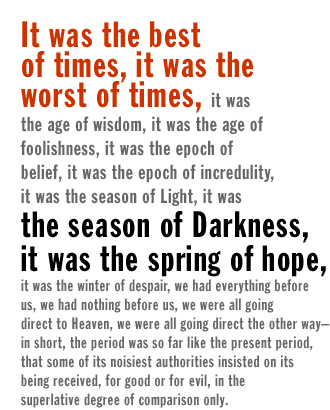
I read Iranian-American chef Donia Bijan’s delightful memoir Maman’s Homesick Pie (and used her mother’s delicious fruit and pine nut stuffing recipe for our Christmas dinner) and finished A Tale of Two Cities, a book I hadn’t read since high school.  There is something very satisfying about reading a book with a famous first line and a famous last line, though when you try to apply these to say, the middle school experience, sometimes people don’t fully appreciate the comparison.

I read Day of Honey, journalist Annia Ciezadlo’s memoir of food, love and war (complete with recipes) in Baghdad and Beirut, which also includes such universal topics as mother-in-law clashes and spousal career clashes (as in, “I gave up my job to follow you to a war zone, I’m just beginning to establish myself as a freelancer and now you want me to leave?!”).

One of my favorite scenes in the book is Ciezadlo’s description of dodging gunfire aimed at her kitchen window to make sure the pasta wasn’t overcooked —  a woman after my own heart.

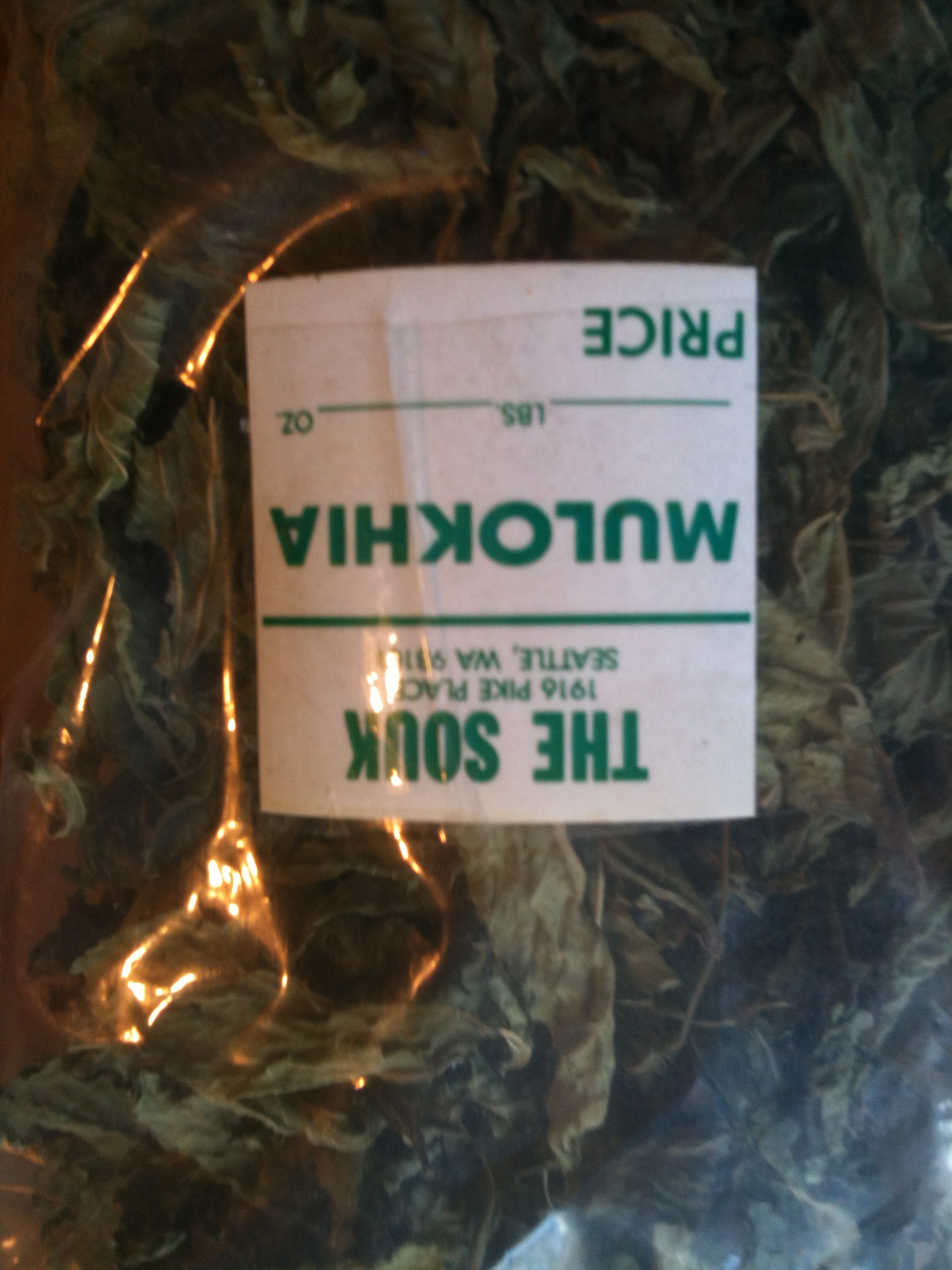
She has an especially garlicky recipe for melokeya that enticed me to buy some of the dried leaves so I can try it.

The women of Downton Abbey don’t appear to read books,  but the “upstairs” ones seem to spend an inordinate amount of time in their bedrooms resting, despite the fact that they have no jobs or household responsibilities, other than plotting and dressing for dinner.  Their bedrooms are like fortresses, impenetrable from the demands of public life.

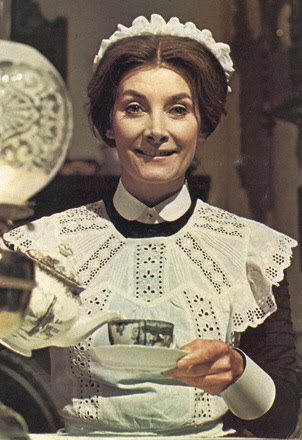
We all know that in modern life, we are more like “downstairs” women (see paragraph one), though not as properly turned-out.

So as an experiment, and out of desperation, during the first few days of re-entry week, I tried heading upstairs to my bedroom in the early evening to “rest” with a book. (Michael Ondaatje‘s The Cat’s Table).  I’ve since decided that books will be my “upstairs” reading and magazines, newspapers and Facebook (where I get many of my ideas about what to read, courtesy of NPR, Slate, Salon, the Atlantic and my other “likes”) will be left downstairs.  The true test of this approach will come this Sunday night, when I have to forego the temptation to get into bed with the Sunday New York Times, my guilty pleasure.

Someone I know will appreciate the extra space

Work will also be upstairs, in the office, instead of downstairs at the dining room table, where’s it’s too easy to throw in a load of laundry or soak the beans for Boston Baked Beans, the first of many colonial cooking endeavors we will undertake this month, courtesy of Daughter #2 and her creative teacher Ms. P.  (I am envisioning an amusing twist on European Chicken Night, a F**k You, European Tyrants! recipe for Chicken and Wild Rice).

I’m not telling you anything you don’t already know.  By mid-life, we’ve had years of dueling January admonishments to eat a more healthy diet, exercise more, be more productive, but also to take time for ourselves to stop and smell the roses and unplug (see what Pico Iyer had to say in the New York Times on the joy of quiet.  I read it last Sunday night in bed).

We also know that come early February, all of this will be forgotten in the push to promote romance and expensive chocolate.

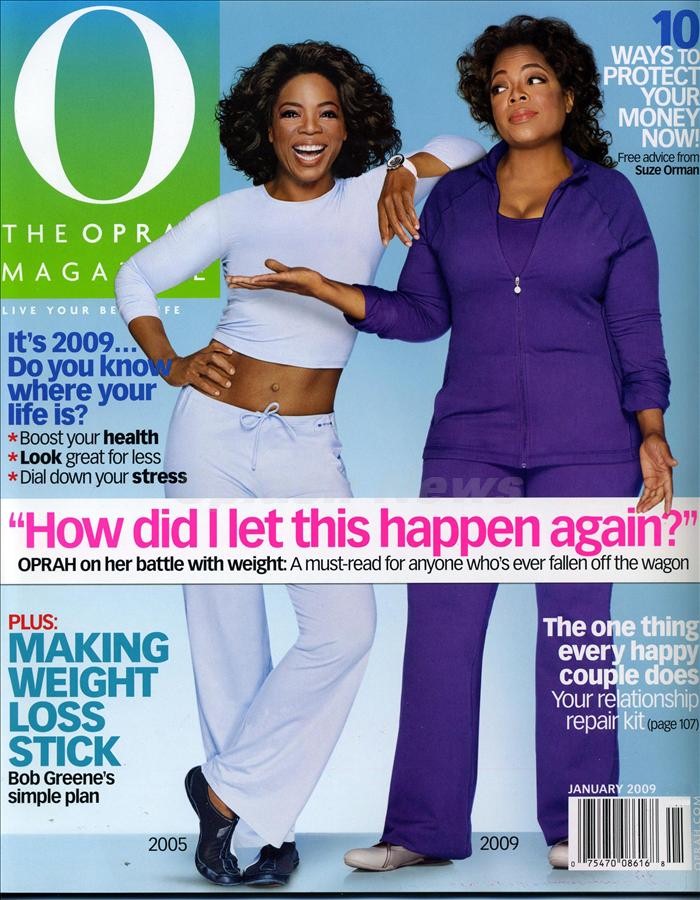
I sometimes entertain myself by imaging the editors at O magazine, fed up with devising countless different magazine covers enticing us to “live our best lives”, creating a “dummy” issue:

Don't Bother

Stick With Your Dead-End Job Till Retirement

You Can Buy Bigger Clothes in Smaller Sizes at Target

I leave you now to exercise and tackle those pesky deadlines, while the Boston Baked Beans are in the oven.

But know that tonight, when I head upstairs and take to my bed with my book, to paraphrase Sydney Carton, whose fate was far more gruesome and noble than mine will be this evening, “it is a far, far better rest that I go to…”

Scentiment

Thanks to the miracle of antibiotics (which lasts for ten days, instead of eight), I’m my old, energetic self again and happy to get back to writing.  Sandra Tsing Loh gave me the perfect opening to begin a conversation on this bog about what an aunt of mine used to darkly refer to as “The Changes.”

But seriously, it’s Christmas Eve.  Does anybody really want to read or write about menopause?  I think not.

Instead I want to write in praise of sweet-smelling women.

When I was a little girl, my mother and all of the capable, well put-together women I knew each had her own distinctive scent. If you know anything about the alchemy of perfume, you’re aware that the same perfume mixes with an individual’s body chemistry to produce a unique aroma.

At holiday time and at other family gatherings, I loved breathing in the symphony of scent that was produced by a roomful of grandmothers and mothers and aunts and great-aunts. Greeting them at the door, gathering their coats and my great-grandmother’s fur stole, I’d give myself over to the mixture of scents that was my heritage, as the women of my family bustled around the kitchen to make things special.

Friends’ mothers and grandmothers had their own scent, just as their families had their own traditions.  If you complimented a women on her perfume, she’d proudly name her signature fragrance — Joy, Fracas, Diorissimo and, of course, Chanel Number 5.

My mother went through perfume phases — moving on from Jackie Kennedy-inspired French traditional elegance to freer pheromones.  Remember Charlie?  You could track the changes in social mores from the 1950s to the 1980s by the scents she wore.

These days there is less of a divide between girls and women.  I still dress pretty much the way I did when I was sixteen, in jeans and clogs and comfy sweaters.  So do most of my friends. Our kids call most of us by our first names.

So it makes me happy when my daughters identify me with my scent (these days it’s Euphoria by Calvin Klein, though I miss my more exotic past, which was accented with Samsara by Guerlain).

I hope it instills in them the same sense of trust and belonging that I so loved as a girl.

The other day we were in the mall and found ourselves in the perfume section at Nordstrom.  Though so many of the elegant touches I remember as a girl, like after-dinner mints, have faded away, you can still get perfume samples at Nordstrom.

Daughter #2 tried Chanel Number 5 and I explained its historical and cultural significance.  Then she pranced over to a display table with more contemporary scents and sprayed them on over the Chanel.

I cringed momentarily at the aromatic collision and then smiled, thinking of the joy that awaits her and her sister as they experiment with the scents that will accent their lives.

We drove home in a car that reeked with what I referred to as Katy Swift Bieber as the girls clutched their perfume samples.

I wish perfume was not just another commodity in the branding of a superstar.

Once in a while I encounter a woman who smells so good I feel compelled to  compliment her.  And once in a while someone asks me a question you don’t hear very much these days:  “What are you wearing?” and they are not wondering about my clothes.  My step mother-in-law (happy birthday ESMIL) is one of those sweet smelling women.  When she comes to visit, she unpacks her mini perfume containers and arrays them in the guest bathroom.  Her bathroom at home is similarly arrayed with beautiful glass vials. I hope she knows how happy this makes me.

There are women, such as Jane GrossDorie Greenspan, Jane Brody and Lisa Belkin, who I classify as “sweet-smelling women.”  I still have so much to learn from them.

My mother and grandmother are no longer alive to share holidays and traditions with.  Every year we make latkes to honor my grandmother and keep alive one small piece of my heritage, that can be passed on to my daughters.

And every day I wear perfume, partly for me, and partly for them, so that its scent is imprinted in their memories.

May you enjoy the sweet-smelling women in your lives during this holiday season.   If you’re so inclined, ask them about “The Changes” they’ve experienced.  And then let’s talk about it in the new year.

Happy Holidays.

Food for Thought

Thanks to everyone who sent me get well wishes.  As it turns out, my illness was usurped by the needs of my family.  Jeff was diagnosed with pneumonia, there has been an outbreak of pneumonia in daughter #2’s school and though she doesn’t have it, she has had a cough she can’t shake, which necessitated several trips to the doctor.  Daughter #1 had to weather the slings and arrows of growing up this week and our rat-catching cat Cheeto awoke with one eye glued shut and a pitiful look in his other eye.   What choice did I have but to get better and fast?

In our family, this is known as “gazumping” ( taken from a mercenary British real estate practice but, as Lemony Snicket would say, a word which here means trumping someone else’s misfortune with more dire circumstances of your own).   As my friend and fellow mother Lauren ruefully stated, “You get three hours to be sick before everyone else needs to be taken care of.”

Ain't it the truth

So it’s only now that I’ve had a chance to compose that serious post-holiday entry I promised.

The people we shared our Thanksgiving dinner with this year ranged in age from two to 89. This is unusual for us and it offered the opportunity to consider life from a variety of perspectives.

As two year-olds do, ours looked upon everything with fresh eyes, brightening the most mundane of tasks with his enthusiasm. In the weeks since he’s been gone, as I shamble downstairs in the wee hours to make the morning coffee, I can hear the faint echo of his sweet voice counting the coffee scoops with me in English and in French. It keeps me going until the caffeine kicks in.

"Un, deux, trois, quatre...."

The 89 year-old is revisiting great literary works and told me that during a recent bout of insomnia, she deconstructed a T.S. Eliot poem.  I hope that when my life is no longer ruled by “To Do” lists, I will use my inadvertent waking hours as wisely.

And the 20 year-old college student, so sure of everything, reminded me of those heady days of discovery – foreign film, jazz, philosophy — and above all, certainty in the face of uncertainty.  Even if you had no idea what life held for you post-graduation, you were sure  that you were going to make your mark on the world in a way that your parents never had.

The Sunday after Thanksgiving, we attended the memorial service for our friend Kim. Though, like any human being, he lived a full, rich, yet sometimes flawed life, much of the focus and many of the comments at the service dealt with his later years, when he served as a human rights advocate and a teacher, and especially the past four years following a debilitating stroke, when he served as an inspiration to everyone who knew him.

My favorite remarks at the service were made by Kim’s brother-in-law Kevin, who met Kim as a young man often at odds with the father whose namesake he was, and with whom he maintained a 40+ year- relationship.  Kevin read excerpts from the eulogies both he and Kim had made at Kim, Sr.’s funeral.  By then Kim, Jr. had made peace of sorts with his father.  It was interesting, Kevin told us, how many of the qualities he and Kim had admired in the father could also be attributed to the son. Thanks to Kevin’s remarks, I got a glimpse of the full measure of our friend as he developed over a lifetime.

The morning after the service, Jeff told me he had had trouble sleeping.  In what I now characterize as our “quiet desperation” conversation, he said that when he considered the impact Kim had had on the world, he worried about his own contributions or lack thereof.

For here we are at 50 – not two, or 20 or 89. We have mouths to feed, to-do lists to work through and events, both fortunate and unfortunate, to contend with. Though we, as Voltaire suggested, strive to tend our own gardens with care, raising responsible citizens, making soup for sick friends, volunteering at schools, coaching soccer teams and occasionally donating money for tsunami relief and holiday food banks, during those inadvertent waking hours, we may wonder if our contributions are enough and whether we  feel fulfilled by the choices we have made in our lives. No matter how pressing our own needs, there is always someone who can gazump us with far more urgent problems.  There may also be lingering regrets about roads not taken.

A 900-word blog is not the place to provide answers to the big questions of the human condition, which philosophers and religions have grappled with since time immemorial.  But it can be a venue for discussion, especially now, during holiday and resolution season, when many of us strive to be our best selves.

For those of you approaching, at or past mid-life (however you choose to define it), I’d like to know your thoughts on this.  How have you reconciled your life choices? Do you have plans for your senior years that involve “giving back” in some way? Or will that be the time when you finally get to sing your song?

Forgive me if this seems irreverent, but I have a recipe that I think complements this train of thought .

I often feel like my best, most virtuous self when I eat kale.  Given the preponderance of kale recipes I’ve seen lately, I sense I am not alone. This one comes from Food 52.  It’s very easy to throw together and is a welcome, crunchy change from self-indulgence, yet is fulfilling all the same.  Don’t tell your kids they are eating kale.  Call it salad and they will eat it. And don’t forget to use the nifty method for separating the kale leaves from the stems that I learned from the Garum Factory. I feel as wide-eyed as a two year-old whenever I do.

Kale Salad with Apples and Hazelnuts (adapted from Food 52)

Serves 4

5 cups curly kale and mustard green leaves, torn into small pieces

(I used only kale and it was fine)

2 scallions, trimmed and thinly sliced on the bias

2 tablespoons olive oil

1 tablespoon brown rice vinegar

(I used regular, unseasoned rice vinegar)

Sea salt and coarsely ground black pepper

1 tart apple

1/4 cup hazelnuts, chopped and toasted

1/4 cup pecorino romano or parmesan, shaved with a vegetable peeler

  1. In a large bowl, combine the kale, mustard greens, scallions, olive oil, vinegar, salt and pepper. Mix with your hands to really blend the dressing and rub it into the greens. Let the salad sit while you prepare the rest.
  2. Core the apple. Thinly — like, super thinly — slice the two halves from stem to flower end. If you have a mandoline, that’s the easiest way to go. Add the apples to the salad and gently fold together so they don’t break in half. Taste and adjust seasonings.
  3. Spread the salad on a platter. Sprinkle with the hazelnuts and cheese shavings.

courtesy of The New Yorker

Blessed are the Turkey-Makers

There are serious post-holiday blog entries to be written about multi-generational interactions with family, making a difference in the world and whether you should make the same stuffing each Thanksgiving because your children and grandchildren will cherish the Proustian memories it invokes long after you are gone.

 I feel this way whenever I make sweet potatoes with marshmallows on top,

despite the fact that a certain person in my household scoffs at this paean to the Thanksgivings of my youth, even though he has a strong Proustian response to the ridges in jellied canned cranberry sauce.

I married him anyway and serve it beside the fresh stuff. (Our daughters diplomatically eat both “mom’s” and “dad’s” cranberry sauce, but let the record show that they LOVE mom’s sweet potatoes with marshmallows on top, a dish I am confident will be eaten by my great-great grandchildren, long after the desire to eat anything from a can has been bred out of the family line).

Ideas for my serious post-holiday blog entry have been bubbling to the surface like soup dumplings for the past several days and I have been looking forward to setting them down on my screen and weaving them together.

But not today.  Today I am sick in bed.  In fact, I am typing this from my bed.  If you knew me you would be shocked to hear that I am in bed, as I’m one of those people who rarely gets sick and if I do, I keep functioning at full throttle.

Years ago, I began referring to people like me as turkey- makers:  we roll up our sleeves and pitch in without being asked,

We also know how to improvise

we make chicken matzoh ball soup for sick family and friends, we volunteer as a matter of course and we sometimes forget to take care of ourselves.

Not all turkey-makers are women and not all women are turkey-makers but, just as there seems to be a gender-related pre-disposition towards watching football and waiting for pie, the same can be said about turkey-makers.

Even when I’m not sick, one of my favorite ways to spend the day is cooking and writing.  So as a way to heal myself, since there is nobody around to make or bring me soup, I’m doing just that, with intermittent stints in bed.  Here are the highlights from a day in the life of a sick turkey-maker:

6:15 a.m. – begrudgingly awaken so I can make breakfast and pack lunch for the middle-schooler, who will surely complain about the injustice of having to get up so early after four days off from school.

7:30 a.m. – eye the butternut squash that did not get used during Thanksgiving weekend and peruse my many recipes for butternut squash soup.  Though I am sorely tempted by one I have not yet tried – Butternut Soup with Pear, Cider and Vanilla Bean from Molly Wizenberg’s book A Homemade Life, we have no cider and the goal is to avoid a trip to the store.  Instead I settle on the butternut squash soup from The Vineyard Kitchen by Maria Helm Sinskey.  If you are looking for holiday gifts, I recommend this seasonally-organized collection of recipes that always seem to turn out well.  I also recommend Molly’s book, for the stories as well as the recipes, and her charming blog Orangette.

9:15 a.m. – buoyed by the fact that daughter #2 woke up and got ready for school without a fuss, I head off to aerobics class with plenty of tissues in my pocket.

9:45 a.m. – back home again after realizing that jumping jacks, throbbing heads and runny noses are an unfortunate combination.  I throw the butternut squash in the oven and get into bed with the Sunday New York Times and a mug of Darjeeling tea.

10:45 a.m. – I’m out of bed, the squash is out of the oven and I decide to finally get around to making the ginger molasses pumpkin bread from Food 52 that I’d meant to have on hand for our holiday houseguests. I’m hoping that this can be my new go-to pumpkin bread to replace Joan Mondale‘s pumpkin bread recipe that was given to me when I moved to Washington, DC in 1982.   I go back to bed with my computer.

11ish  a.m. – As the spicy smell of the pumpkin bread makes its way upstairs and manages to penetrate my blocked nasal passages, I feel as comforted as if there were a Jewish grandmother in the house.  The long-forgotten country- western song I’m My Own Grandpa comes to mind when I remember that I am both patient and nurse.

11:45 a.m. – The Food 52 recipe comments warn that determining the “doneness” of the pumpkin cake is deceptive and it is easily undercooked.  I leave it in for fifteen extra minutes and peel and slice the squash.

12ish p.m. – While the bread cools I make a package of instant Tom Yom soup bought and kept on hand for just such an occasion.  I notice the noodles are green and are made with morohetya, which I have never heard of.  I have a hunch, which is confirmed, that morohetya is another word for melokheya, also known as Egyptian spinach, and the eponymous garlicky soup, which is one of Egypt’s most popular national dishes and one of the world’s best soups.  I wish I had some now. (You’ll find two different recipes by clicking on the related links).

12:30 p.m. – My husband, who has many fine qualities despite his appalling taste in cranberry sauce, calls to say hi and when he realizes I am sick suggests I stop cooking and take care of myself. I partially follow his advice and call S., now fully recovered from  pneumonia, and ask her to bring daughter #1 to tonight’s soccer tournament game at the other end of town at rush hour.  I feel better already.

I’m pretty sure the pumpkin bread is overcooked.

Here’s where things get tricky for a sick turkey-maker. I got so involved in cooking and writing that I forgot to go back to bed.  The kids will be home soon, I still have to make the butternut squash soup and the biscuits I’d planned to go with them, which I forgot to tell you about and which may be overly ambitious, even for me.  I also need to put together the graphics and links for this post and manage to get some rest so I can head out into the world tomorrow and be a productive member of society.

But I don’t want to leave you without a recipe. Before we had kids and had to ration our cooking of spicy foods, our favorite recipe to cure almost all ailments was Armenian Chicken and Lentil Soup with Dried Apricots.  We used to keep a supply on hand in the freezer all winter in Tupperware containers labeled ACS. I think I got the recipe from the Washington Post in 1994 or so.  The bit of recipe sleuthing I just did (instead of going back to bed) indicates that this recipe may have come from a book called Chicken Soup Cookbook by Janet Hazen.

And in case you were worried, I managed to salvage the pumpkin bread by spreading it with Peach Preserves with Vanilla and Bourbon, made by Deluxe Foods and purchased at our very own Ballard Sunday Farmer’s Market.  Check out their website for holiday gift ideas (they ship) and places to purchase.

For all the turkey- makers out there, this one’s for you.

Armenian Chicken and Lentil Soup with Dried Apricots

1 large onion, diced

3 cloves garlic, finely chopped

1 1/2 tablespoons sesame seeds

2 teaspoons each ground mace and cayenne pepper

3 tablespoons olive oil

1 cup dried red lentils, sorted and washed

12 cups chicken stock

1/2 cup minced, dried apricots

2 cups shredded cooked chicken

1/2 cup lemon juice

salt, pepper to taste

In a heavy-bottomed 6-quart saucepan, cook onion, garlic, sesame seeds and spices in olive oil over moderate heat for 5-7 minutes, stirring frequently.  Add lentils, chicken stock and apricots and bring to as boil over high heat.  Reduce heat to moderate and cook 40-50 minutes, until lentils are very tender. Add chicken and lemon juice and cook 5 minutes longer.  Season with salt and pepper and serve.

A well-loved recipe

Seeing the World in a Grain of Rice

Last week was one of sugar highs and lows.  Halloween on Monday, resulting in way too many Snickers bars lying around the house in plain sight,

disheartening presentations on education reform Tuesday and Wednesday, and the early morning discovery of a dead rat at the bottom of the stairs,

The guilty party

an exhilarating Thursday (culminating in a satisfying European Chicken Night featuring a simple recipe for Chicken Dijon, courtesy of the October issue of Food and Wine magazine) and a dismal, rainy Friday in which we learned of the passing of our dear friend, Kim.

Saturday morning was brighter than expected. I headed to Seattle’s Fremont neighborhood to Book Larder, a new community cookbook store, to see Adam Gopnik, long-time New Yorker writer, and author of the new book The Table Comes First  Family, France and the Meaning of Food, a book he says is about how food comes to us from our hearts and minds.

Book Larder has gotten a lot of well -deserved press since it opened last month. Born from the passing of another Kim, Seattle book impresario Kim Ricketts, it’s a place for people who love food to come together and is an important addition to our city’s independent booksellers.

Adam Gopnik’s Paris to the Moon is one of the books that transformed me. I’m not sure whether Gopnik or one of his reviewers said it first, but his writing is about seeing the world in a grain of sand.

The book came out in 2000, when I was the mother of a toddler and soon-to-be- mother of a new baby and the way I viewed the world was already in the process of transformation. On our refrigerator hangs a Get Out of Jail Free Card, Good for a Reading by Adam Gopnik, placed there by my husband Jeff, who was watching me struggle to navigate the passage from world-traveling career woman to stay-at-home mother, and noticing how the small moments in life suddenly meant the world to me.  I’ve made use of the card every time Adam Gopnik has been to Seattle ever since.

You should know that Adam Gopnik comes across as a genuinely nice guy. Earlier in the week, I had attended a book presentation by another erudite East Coaster, who was arrogant and insulting to his audience.

Though Gopnik has been criticized for the denseness of his prose and smugness of his lifestyle and was even the subject of a New Republic book review with the opening sentence, “I sometimes wonder if Adam Gopnik was put on this earth to annoy,” in Book Larder’s intimate setting he confessed to reading recipes in bed (there were nods of recognition from around the room), admitted his kids eat junk food, and made it possible to believe that he, too, might possibly confront a dead rat at the bottom of the stairs and eat a Snickers for comfort afterwards, though he would then probably write about the origins of comfort food and reveal that the concept was the brainchild of Louis XIV.

The Sun King’s perfect Saturday included chocolate, shopping for shoes and kicking back with some chick lit.

Our friend Kim was a ruminator too, not the neurotic New York variation, but an outdoorsman, teacher and world citizen. After he was felled by a stroke and confined to a wheelchair, in near constant pain and with compromised vision and speech, eating was a chore for Kim.  One meal could take hours and no sooner was it cleaned up, then it was time for the laborious process to begin again.  Yet eating became one of Kim’s pure pleasures.  He cut a dashing figure in the serape he wore because he was always cold, wheelchair anchored in a patch of capricious Pacific Northwest sunshine, reaching with his good hand into a pouch around his neck where he kept a stash of chocolate.

When we visited Kim and his wife Judy, we would often bring food, and the ceremonial meals we shared became the highlight of our time together. At the table, Kim’s irreverent wit and keen intelligence trumped his physical incapacities. The essence of our friend remained unchanged.

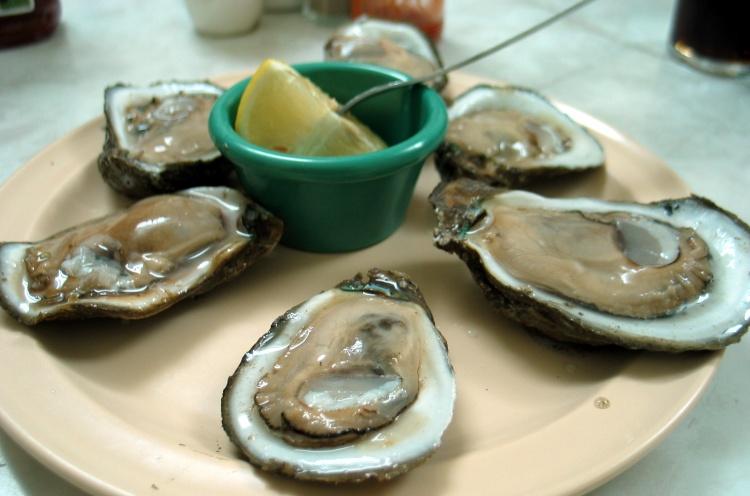
The last time we saw him, we dined on smoked salmon, bialys, blueberries, Judy’s brownies and Kim’s favorite — oysters. Jeff reminded me that oysters were also the last food we shared with Kim shortly after he and Judy returned from doing peace mediation work in Africa, and a week or so before his stroke of lightning, four years ago.

Tomorrow night I will participate in an international potluck dinner at my daughter’s school, an event I conceived eight years ago, after a chance conversation with a Mexican father about chilaquiles, one of my favorite comfort foods, reminded me that food (like children) is the great equalizer.

The above link will take you to a recipe by Marilyn Tausend, author of the fantastic book Cocina de la Familia, and to whom I owe a huge public apology for never returning the back issues of Sunset magazine that she lent me many years ago.  I hear Ms. Tausend is working on a new cookbook.  I hope when it comes out, she’ll be hosted at Book Larder and I can make the proper amends.

I’ll be making Sri Lankan Love Cake for the international potluck, in honor of Kim and everyone else I’ve shared meals with.

You may feel about Adam Gopnik the way some people feel about oysters, but there’s no accounting for taste.

The important thing is that the people around your table touch your heart and your mind.

Rest in peace, dear friend

By now you’ve probably noticed that I don’t create my own recipes, I just collect them (think of me as the Arianna Huffington of the recipe world).  I am happy to have found a way to share my favorites.

I’ve added two new food-related sites to my blogroll:  The Garum Factory (check out their method for separating kale leaves from stems.  It was the most fun I had all week) and Food 52, Amanda Hesser’s online food community.  I got a good look at the new Food 52 cookbook and several other enticing food tomes and am hoping that anyone in my family at a loss for what to get me for Christmas, will give me a gift certificate to Book Larder.

Comfort Me with Apples*: Apple Cakes I Have Known and Loved

Last Sunday was one of those perfect fall days – crisp and colorful and cozy.  Still basking in the glow of a satisfying Saturday (three soccer games, including the final Seattle Sounders home game, which featured an unexpected last minute win) and the lingering aroma of sweet baked apples, courtesy of my daughter and her friend, that made our house smell as if it were being staged by a real estate agent, I got up, made pancakes for my family, went for a run and settled in to make apple cake for our Mother-Daugher book group.  As I mixed the ingredients, I reveled in the good fortune that finds me with a loving family, fun, supportive friends and an apple tree in my yard that is having an especially good yield of large, tangy fruit this year.

That got me thinking of all the apple cakes I have known and loved, since moving to Seattle sixteen years ago.

Seattle is a notoriously hard place to break into.  Non-natives like me share knowing nods when we talk about “Seattle Nice,” the phenomenon in which locals, even store clerks, are polite and downright friendly (a big change for us East-Coasters) but resist taking relationships to a deeper level.  It has something to do with their lives being full of family and friends they’ve had since grade school.  It’s nothing personal, they just don’t have room for too many other people.

From A Sensitive Liberal’s Guide to Life (www.uptightseattleite.com)

Having moved here from Washington, DC, a transient city, where few people have roots and you routinely socialize with people you just met five minutes ago, I was mystified by “Seattle Nice.”  So I tried to break in with apple cake.

In those early years, my “go-to” cakes were the Chunky Apple Walnut Cake from the Silver Palate cookbook and the Chunky Apple Walnut Cake from Oregon’s Cuisine of the Rain,  a book I hoped would hasten my transformation from outsider to authentic Pacific Northwesterner. Both cakes, which were made in Bundt pans and were therefore hard to screw up, elicited oohs and aahs when I brought them to work functions.

The years passed, I had kids (which, like dogs, are a sure-fire social ice-breaker), I made friends and I began moving out of my apple dessert comfort zone, managing to make two or three different apple recipes a season.

I knew better than to attempt apple pie and call it my own, because I don’t come from pie-making people, and I hadn’t then, and haven’t still, found that perfect foolproof pie crust that seals your credentials so that people are forever in awe of you.

Still, apple is the chicken of the fruit world, and you would have to live a thousand lifetimes to tackle all of the variations of golden, caramelized fruit alone or co-mingling with close or distant fruity relatives, encased in or free of dough, with or without vanilla or Calvados or nuts, topless or covered with something crisp. Sure these recipes seem nice, but do you have room in your life for them all?

June’s Apple Crisp from the Silver Palate Good Times Cookbook, dubbed “Apple Glop” by my husband, was one of our first culinary standbys as a nascent family. As my confidence in the kitchen grew, I flirted with an apple-almond tart here, the odd apple galette there, and a few tartes Tatins. And then I discovered Santori Cake.

It came from Pasta and Co., one of Seattle’s first real foodie stores, where you could also purchase a perfect Balsamic vinegar- roasted chicken and an alluring array of pasta salads and delicious mini-cheesecakes for a picnic, like something out of a French movie, or a romantic evening at home. Santori Cake has all the elements of every delicious apple dessert you’ve ever tasted — gooey, caramelized cinnamon-spiced fruit with a crunchy exterior.  Best of all, people can’t thank you enough for baking it. It’s a cake worth exclaiming over.

While the Santori Cake was baking last Sunday, the idyllic afternoon gave way to minor tiffs and disappointments.  Sometimes our family reminds me of a crowded pan of apples — we bump up against each other, fighting for space and attention, and once in a while somebody gets burned.

 A few bites of the Santori Cake changed all that, at least for a little while.

Last spring R., a friend I have been getting to know on a deeper level, who warms those around her with her wisdom, made a delicious French apple cake for a book group meeting. The recipe came by way of Paris-based food blogger and pastry chef David Lebovitz, who got it from Dorie Greenspan, from her latest book Around My French Table.

Reader, I made that cake.

I also began following Dorie Greenspan and David Lebovitz’s blogs, which are very different. I aspire to be Dorie Greenspan.  I want to be friends with David Lebovitz.

On Facebook this week my “friend” David shared an article entitled How to Cook a Perfect Tarte Tatin, which compared the relative merits of various recipes for this classic French upside -down apple dessert.  For an inveterate recipe junkie like me, this article was a time-saving godsend.

Apple cakes are like friends. Though it takes a while to find the ones you want to establish meaningful relationships with, once you do, your life will be enriched.

It’s shaping up to be a very different weekend from the last one, blustery and gray and soggy with rain. We’ve already made one trip to the mall and one trip to the emergency room and it’s still only Friday night.

So though I probably won’t bake anything, with or without apples, it’s nice to feel at home and to have friends, real and virtual, to share recipes and stories and wisdom.

Santori:  The Apple Cake Recipe Customers Beg For

(from Pasta & Co. Encore, copyright 1997 by Marcella Rosene)

Ingredients:

3 cups sugar

1 Tablespoon baking soda

1 1/2 teaspoons ground cinnamon

1 1/4 teaspoons salt

3/4 cup vegetable oil

3 eggs

1 1/2 teaspoons vanilla extract

6 cups (approximately 4 apples) peeled, cored and sliced tart cooking apples, such as Granny Smith

1 1/2 cups very coarsely chopped walnuts

3 cups flour

Preheat oven to 325 if using a metal pan; 300 if using a glass one.  Lightly butter a 9×13 inch shallow baking pan.

In a large bowl, combine sugar, baking soda, cinnamon, salt, oil, eggs and vanilla.  Mix well and stir in apples and walnuts until they are coated with batter.  Stir in flour.  Batter will be quite firm.  Spoon into prepared pan.

Bake in preheated oven for 1 hour and 20 minutes if using a metal pan, 1 hour and 30 minutes if using a glass one.  Check for doneness by inserting a toothpick, baking for up to another 20 minutes.  When done, remove from oven and let cool on a rack before cutting into squares.

*Books are as comforting as apples.  For a nice, satisfying, cozy read this winter, I recommend former Gourmet editor Ruth Reichl’s memoirs Tender At the Bone, Comfort Me With Apples and Garlic and Sapphires.

Chicken Matzoh Ball Soup for the Soccer Mom’s Soul

Today I decided to make Chicken Matzoh Ball soup for my friend S., who is suffering from pneumonia. 

S., whose husband has been out of town for the past month, was planning to host a sleepover birthday party for her daughter this week, on the same night as the middle school open house for parents.  When I found out she had pneumonia, after consulting with our level-headed friend C., I convinced S., who didn’t want to disappoint her daughter, to reschedule the party. I gently suggested that it was important for her kids to understand she was vulnerable, that parents can’t always do everything. Then I offered to make her soup.

S., C. and I are part of a strong community of parents who routinely bail each other out.  We’ve picked up each other’s kids from school, made emergency deliveries of lice treatment equipment and have supported each other through the social traumas inflicted and experienced by girls. Cooking is my strong suit.  It is not among S.’s many talents.  What better way to repay years of friendship then with a steaming hot pot of “Jewish penicillin,” still something of a novelty in Seattle.

“While I’m at it, I’ll make two pots of chicken matzoh ball soup,” I reasoned.  Things have been cattywampus in our household too.  My husband Jeff is in Korea, the girls and I are coughing and sneezing and we’ve had evening commitments every night of the week.

I didn’t grow up eating or especially liking Chicken Matzoh Ball soup and do not have a family recipe, passed down from generation to generation, to rely on.  Instead, the recipe I use comes from Claudia Roden’s The Book of Jewish Food. Claudia Roden is one of my favorite cookbook authors and the revised version of her Book of Middle Eastern Food is probably my favorite cookbook of all time. It’s as much storybook as cookbook, and I have whiled away many happy hours lost in its pages.

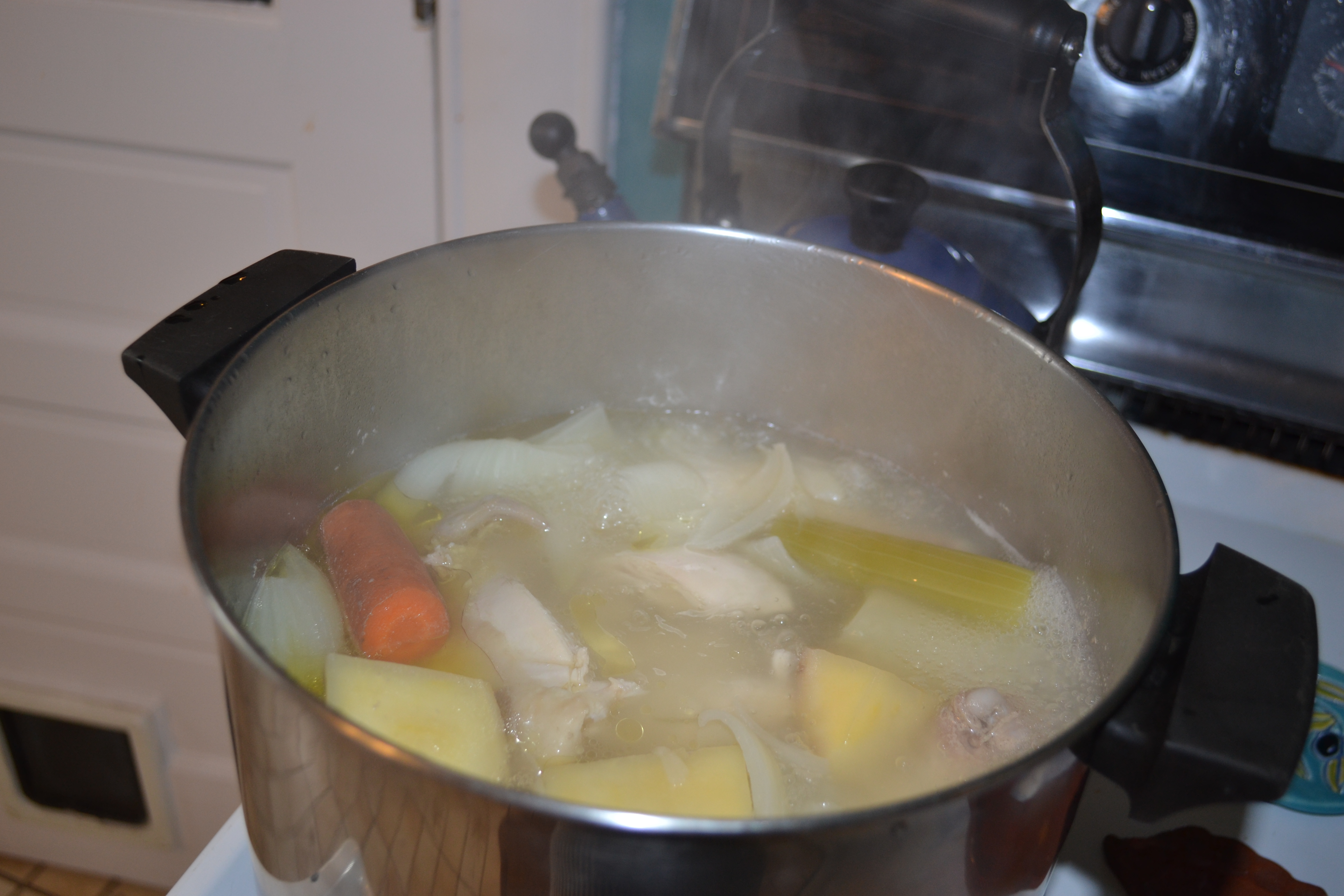
I set the pots of chicken, turnips, leeks, onions and carrots on the stove at around 3:00. The goal was for the soup to be ready by 6:00 soccer practice, where I would deliver it to S.

The soup bubbled away and all seemed right with the world.

Then, my universe unraveled.

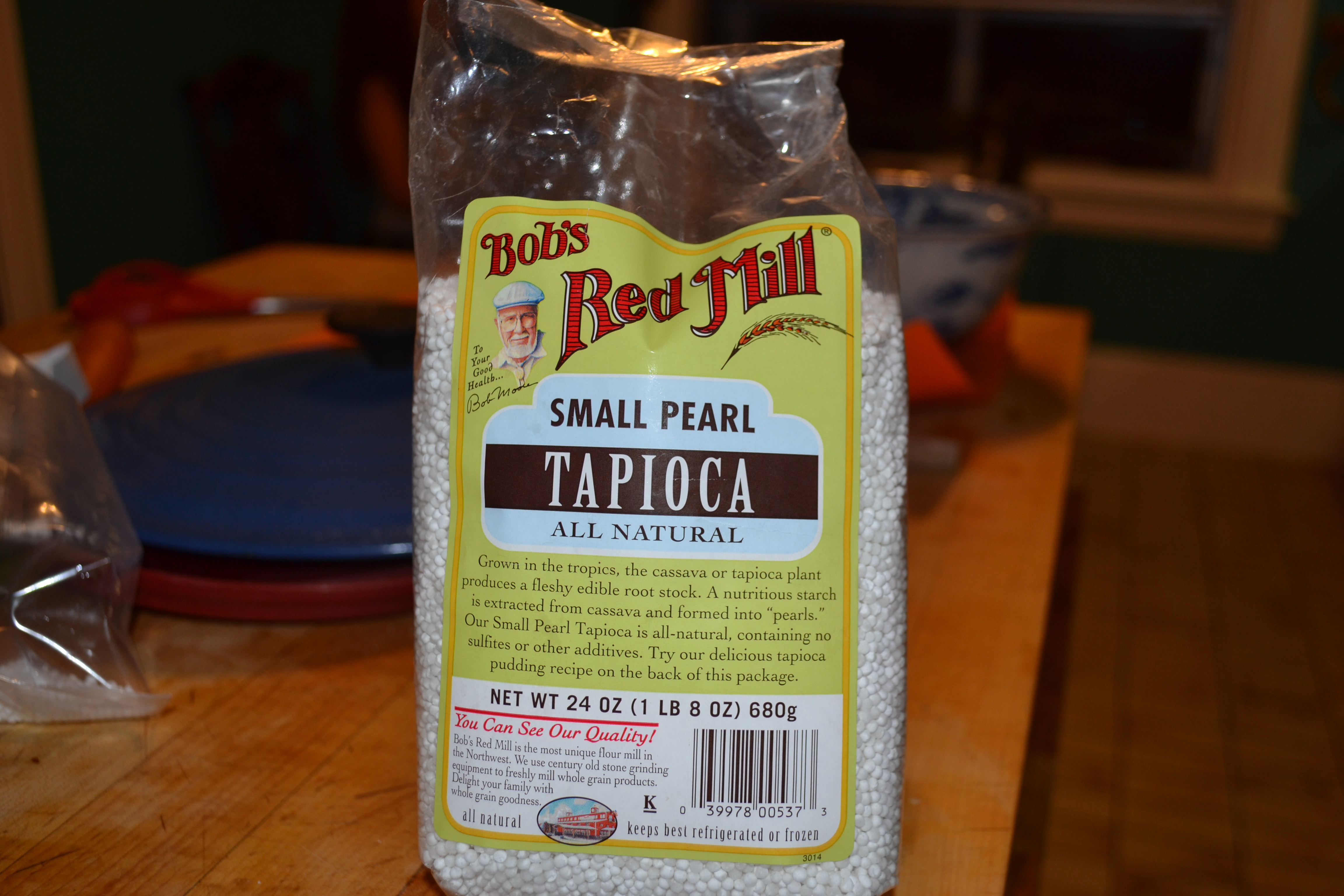
Daughter #2, usually on top of things, remembered that she had a Colonial cooking project involving tapioca due the next day.  The  same thing had happened the week before and, though we had chosen Gingerbread, the easiest recipe, it had compromised the serenity of European Chicken Night. 

We would have to embark on a tapioca procurement expedition later on.  No big deal.  I mixed the matzoh meal and the egg and set them in the refrigerator to rest, while I strained the soup. 

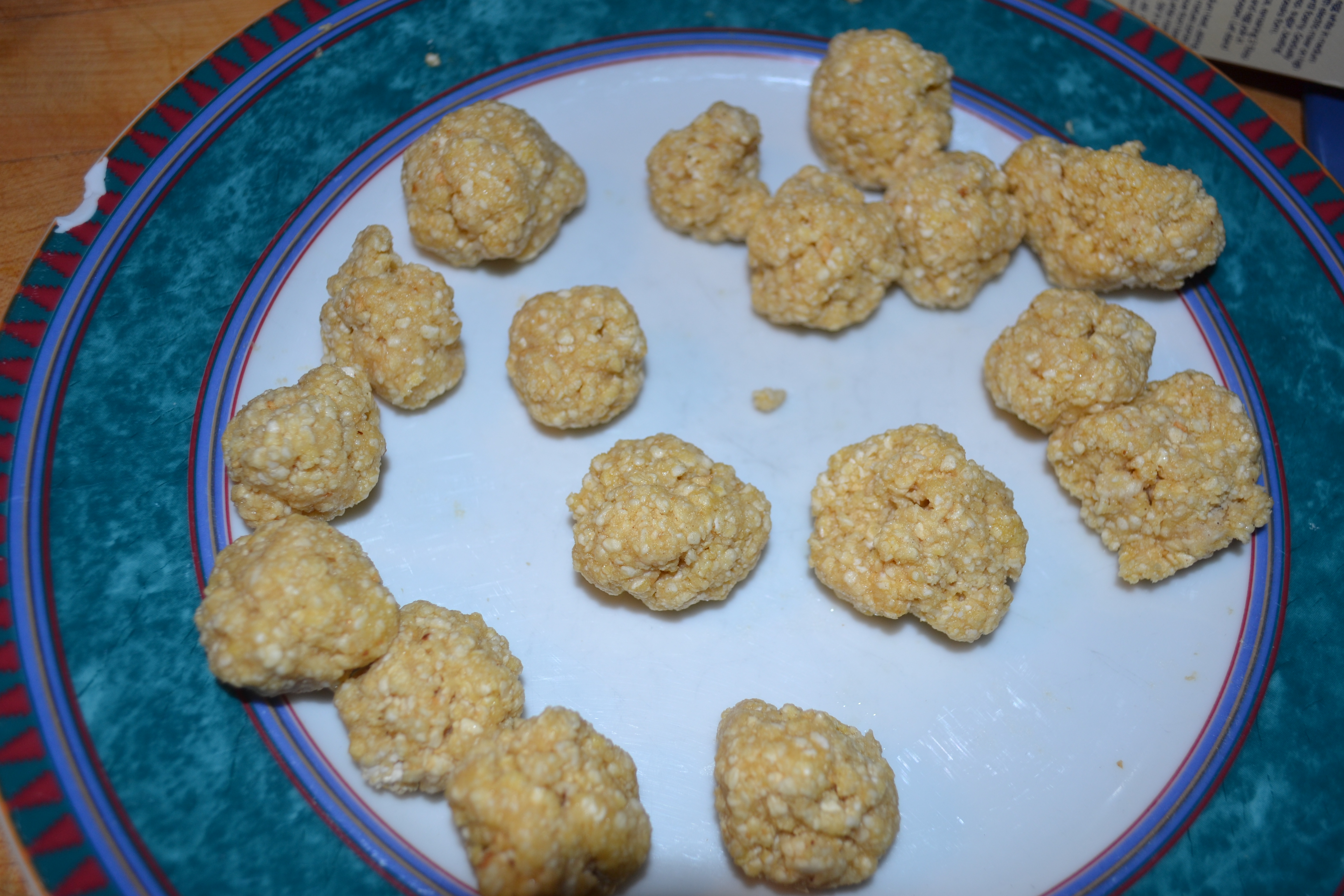
On to math homework.  I have long since stopped being able to help my daughters with their math and when Jeff is away I am reminded how much I detest their discovery math curriculum and its textbooks that don’t actually show you how to solve the problems. A math freakout occurred over a problem involving a brownie pan.  Words were exchanged when I tried to help, so I encouraged Daughter #2, who is a fashionista, to pick out her outfit for school pictures the next day. Meanwhile, I rolled out the matzoh meal mix into balls and returned the chicken meat and fresh carrots to the soup stock.

Daughter #1, perhaps miffed at not being the center of attention, mentioned that her braces hurt, her ear hurt and wondered if she had to go to soccer practice. I set the matzoh balls into a pot of boiling water.

After modeling her school picture outfit and extracting a promise that I would iron it the next morning, Daughter #2 consulted the tapioca recipe, only to discover that it was supposed to soak overnight and cook for three hours. We were in for a lengthy evening.

Daughter #1 went to soccer practice.  At 6:00,  I poured a batch of the now-finished soup into a container for S, set it in a paper bag and carefully placed it in the car.  Daughter #2 and I set off to buy tapioca. By the time we got to the soccer field, S’s daughter had already been dropped off, so I made arrangements for our for our friend J, who was driving S’s daughter home, to stop by my house after practice to pick up the soup.

When we got home, Daughter #2 and I rushed out of the car, so she could quick-soak the tapioca, eat a bowl of soup, finish the math homework, take a shower and cook the tapioca, pretending Colonial people had the luxury of using the quick recipe on the back of the package.  Things were looking up.

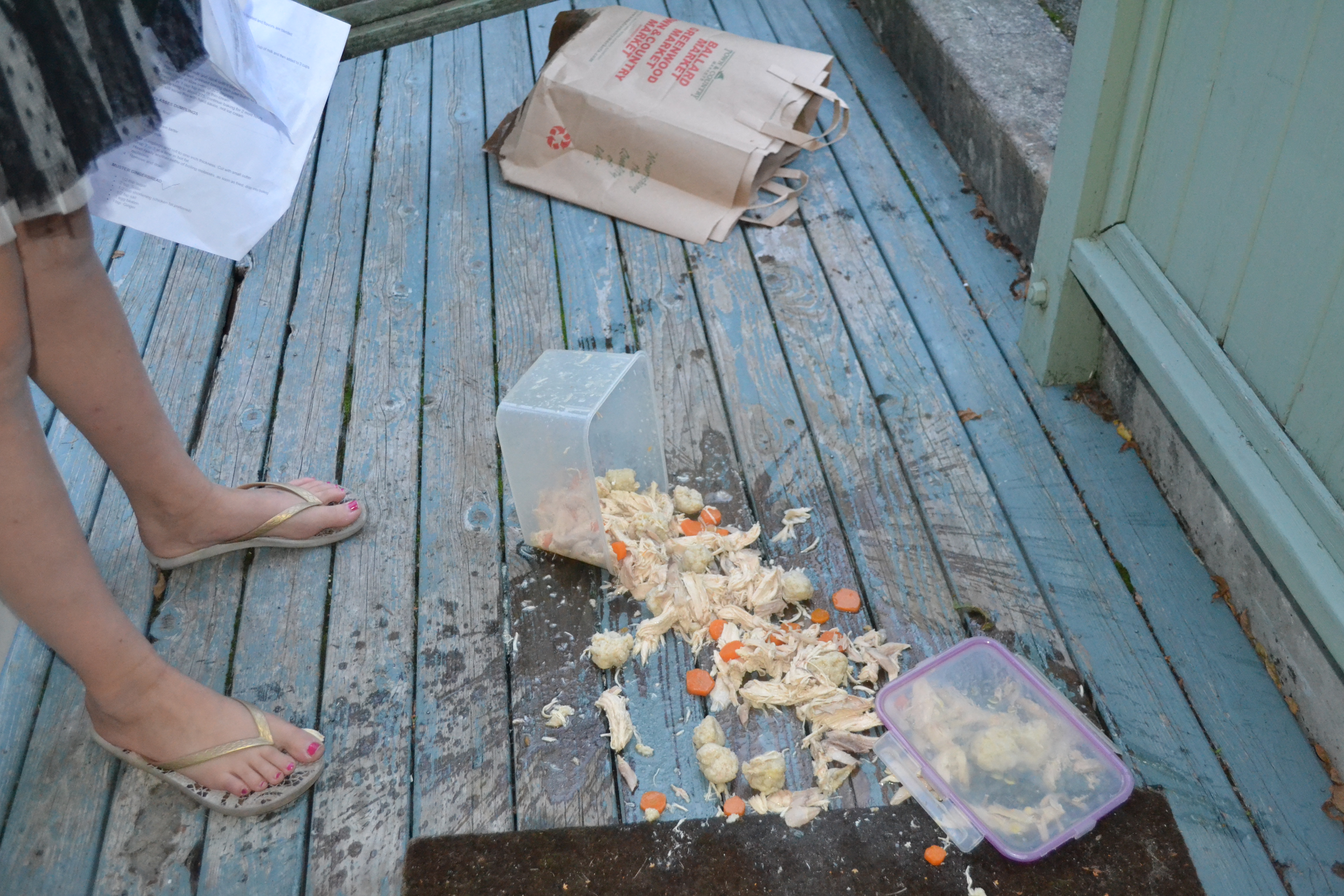
I stepped onto the back porch to unlock the door.  The saturated paper bag gave way.

S’s soup container landed with a splat before bursting open, sending chicken, matzoh balls and any illusion that I had things under control flying.

Once the military precision of the evening gave way to chaos,my daughters rose to the occasion and things worked out nicely in the end.  I poured a new batch of soup for S and packed it in a plastic bag, cautioning J. and S’s daughter to handle it carefully.  The kids ate tapioca for dessert, which was easy on Daughter #1’s achy braces.  Daughter #2 figured out the math problem and wondered why her math book made things more complicated than they had to be.

I hope S. enjoyed her soup.

The next time I want to nurture a friend,  I think I’ll just rent the movie Bridesmaids for her instead.

Hey, Kids! It’s European Chicken Night!

Ever since I had kids and my international career came to an end, I’ve traveled the world without leaving my kitchen.  I’m an inveterate collector of cookbooks and an avid tester of recipes, known for my ethnic dinner parties, unusual potluck contributions and weeknight dinners that deviate substantially from the usual family fare. When the kids were little, I would sometimes pretend we were in the country of the cuisine of the evening, giving everyone new names and encouraging them to speak English with foreign accents.  It was fun and it saved me from the drudgery that caring for a young family can sometimes be.


Now everyone is older.  The kids have traveled to some of the countries we’ve pretended to be in and to others we never even imagined.  Our evenings are filled with the realities of homework, soccer practice and piano lessons and there doesn’t seem to be much time to pretend anymore.

Except on Thursdays.  This fall, I have dubbed Thursdays European Chicken Night.  Chicken – described as a blank canvas for the creative cook and the little black dress of the kitchen.  They do sublime things with it in France, mostly involving cream sauce.  While going through ten years of cooking magazines and reorganizing my substantial stash of cookbooks after a recent kitchen painting project, I unearthed mouthwatering recipe after recipe with chicken as the star and felt a sense of urgency that we had to try them before it was too late.

Week One:  It’s September, school has recently started and there is an unseasonable (for Seattle) chill in the air.  What better night to serve something the NY Times magazine (who adapted it from Chez Panisse Fruit) calls Poulet a la Normande and my French cookbooks confirm is indeed a classic from the Normandy region of France — chicken in a cream sauce flavored with apples and Calvados.  The kids remind me that they lapped it up like kittens.  I think European Chicken Night is going to be a success.

Week Two:  It’s too hot to cook, much less think about eating chicken. I find a vaguely Greek recipe for barbecued chicken skewers but I am missing some key marinade ingredients and make poor substitutions.  There is one odd ingredient in the recipe that we all agree is out of place.  The meal, the ingredient and the recipe are quickly forgotten.

Week Three:  This night will be unforgettable.  I have found a recipe for Roast Chicken with Apples that comes from the town of Metz in the Lorraine region of France, where the first Jews settled in 221 AD.  Though we are a secular household, I think this is the perfect dish to commemorate the Jewish New Year and I spend the day in happy anticipation.  Reality check:  one daughter comes unglued after school, my husband wants to know why no one ever told him about European Chicken Night, the daughter who hasn’t come unglued gets tired of behaving and I want to throw the chicken at all of them.  I wonder if French women ever feel that way.  But then, voila!  Small miracle.  We sit down and tuck into the sweetly cinnamon-flavored chicken and apples and everyone calms down.  I tell them about the Jews of Metz and about the history of the accompanying pilau, a rice dish which originated in Persia and has traveled around the world.  We happily reminisce about meals we have eaten in other countries.  This is my little tribe and I love them. (I got this recipe from epicurious.com.   It comes from Joan Nathan’s new book about Jewish cooking in France.)

Week Four is upon us.  My husband and I will be like two ships passing in the night.  He will return from a business trip only in time to eat whatever leftovers remain from ECN.  I leave the next morning for a long weekend.  He departs the morning after my return for another business trip, with more time in the air then on the ground. Everyone is battling a cold. Though my taste buds are craving the exotic, I know better than to impose my whims on the kids or to burden myself with an ambitious cooking project.  So I think I will rely on a favorite standby – the Sauteed Chicken Breasts with Fresh Sage in Patricia Well’s book Trattoria.  I’m sure Patricia doesn’t make this with defrosted Costco chicken breasts, but it doesn’t matter. There are some cookbook authors you can depend on no matter what and I love it when I can follow a recipe to a T. Anyway, if I weren’t a harried fifty year-old soccer mom in a rainy city with ravenous kids who will be gone before I know it, I might be dining peacefully in a charming trattoria in an undiscovered village in Italy.

I think it’s a night for pretending.

Some trusty classics