
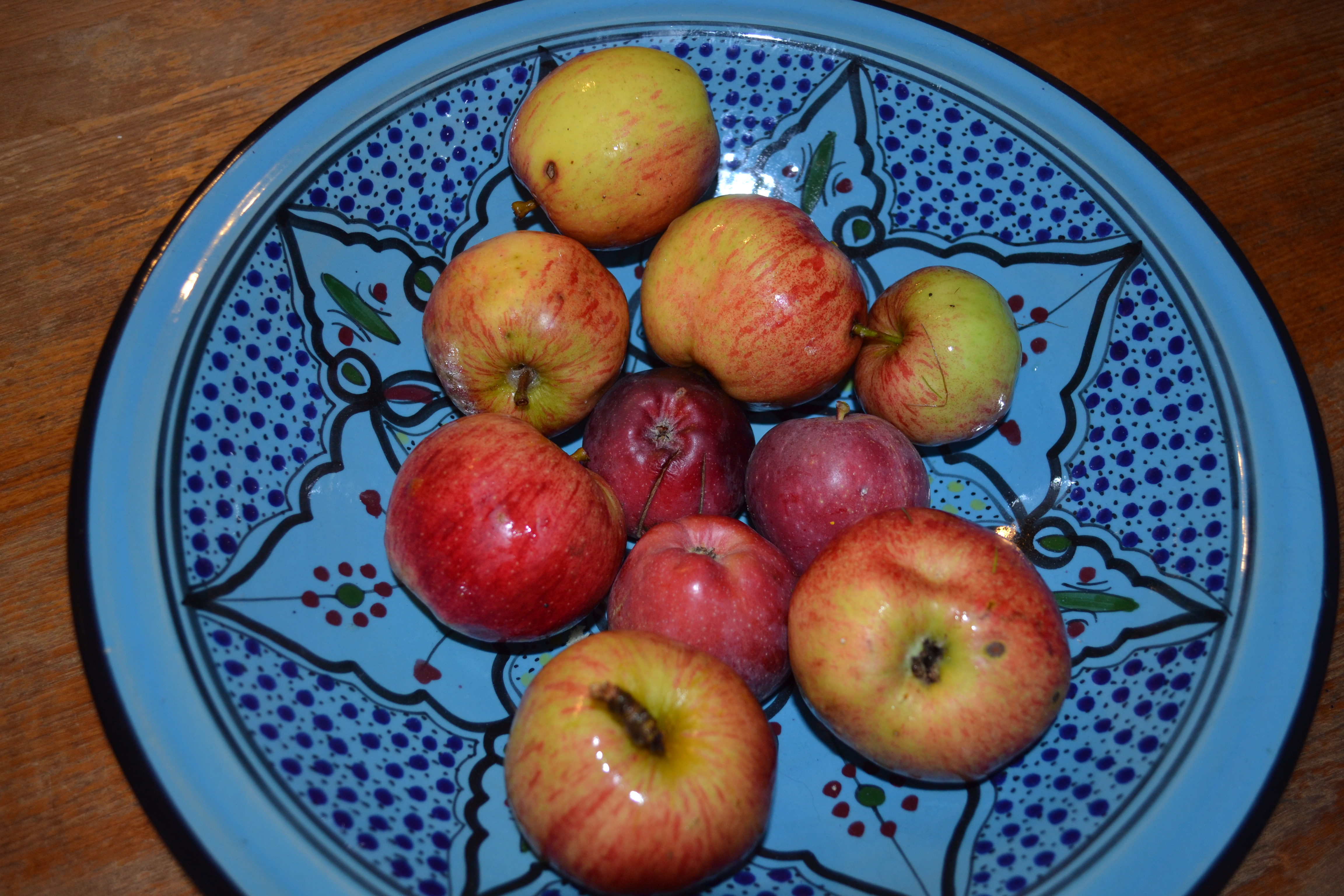
Last Sunday was one of those perfect fall days – crisp and colorful and cozy. Still basking in the glow of a satisfying Saturday (three soccer games, including the final Seattle Sounders home game, which featured an unexpected last minute win) and the lingering aroma of sweet baked apples, courtesy of my daughter and her friend, that made our house smell as if it were being staged by a real estate agent, I got up, made pancakes for my family, went for a run and settled in to make apple cake for our Mother-Daugher book group. As I mixed the ingredients, I reveled in the good fortune that finds me with a loving family, fun, supportive friends and an apple tree in my yard that is having an especially good yield of large, tangy fruit this year.

That got me thinking of all the apple cakes I have known and loved, since moving to Seattle sixteen years ago.
Seattle is a notoriously hard place to break into. Non-natives like me share knowing nods when we talk about “Seattle Nice,” the phenomenon in which locals, even store clerks, are polite and downright friendly (a big change for us East-Coasters) but resist taking relationships to a deeper level. It has something to do with their lives being full of family and friends they’ve had since grade school. It’s nothing personal, they just don’t have room for too many other people.

From A Sensitive Liberal’s Guide to Life (www.uptightseattleite.com)
Having moved here from Washington, DC, a transient city, where few people have roots and you routinely socialize with people you just met five minutes ago, I was mystified by “Seattle Nice.” So I tried to break in with apple cake.
In those early years, my “go-to” cakes were the Chunky Apple Walnut Cake from the Silver Palate cookbook and the Chunky Apple Walnut Cake from Oregon’s Cuisine of the Rain, a book I hoped would hasten my transformation from outsider to authentic Pacific Northwesterner. Both cakes, which were made in Bundt pans and were therefore hard to screw up, elicited oohs and aahs when I brought them to work functions.
The years passed, I had kids (which, like dogs, are a sure-fire social ice-breaker), I made friends and I began moving out of my apple dessert comfort zone, managing to make two or three different apple recipes a season.
I knew better than to attempt apple pie and call it my own, because I don’t come from pie-making people, and I hadn’t then, and haven’t still, found that perfect foolproof pie crust that seals your credentials so that people are forever in awe of you.
Still, apple is the chicken of the fruit world, and you would have to live a thousand lifetimes to tackle all of the variations of golden, caramelized fruit alone or co-mingling with close or distant fruity relatives, encased in or free of dough, with or without vanilla or Calvados or nuts, topless or covered with something crisp. Sure these recipes seem nice, but do you have room in your life for them all?
June’s Apple Crisp from the Silver Palate Good Times Cookbook, dubbed “Apple Glop” by my husband, was one of our first culinary standbys as a nascent family. As my confidence in the kitchen grew, I flirted with an apple-almond tart here, the odd apple galette there, and a few tartes Tatins. And then I discovered Santori Cake.
It came from Pasta and Co., one of Seattle’s first real foodie stores, where you could also purchase a perfect Balsamic vinegar- roasted chicken and an alluring array of pasta salads and delicious mini-cheesecakes for a picnic, like something out of a French movie, or a romantic evening at home. Santori Cake has all the elements of every delicious apple dessert you’ve ever tasted — gooey, caramelized cinnamon-spiced fruit with a crunchy exterior. Best of all, people can’t thank you enough for baking it. It’s a cake worth exclaiming over.
While the Santori Cake was baking last Sunday, the idyllic afternoon gave way to minor tiffs and disappointments. Sometimes our family reminds me of a crowded pan of apples — we bump up against each other, fighting for space and attention, and once in a while somebody gets burned.
 A few bites of the Santori Cake changed all that, at least for a little while.

Last spring R., a friend I have been getting to know on a deeper level, who warms those around her with her wisdom, made a delicious French apple cake for a book group meeting. The recipe came by way of Paris-based food blogger and pastry chef David Lebovitz, who got it from Dorie Greenspan, from her latest book Around My French Table.
Reader, I made that cake.
I also began following Dorie Greenspan and David Lebovitz’s blogs, which are very different. I aspire to be Dorie Greenspan. I want to be friends with David Lebovitz.
On Facebook this week my “friend” David shared an article entitled How to Cook a Perfect Tarte Tatin, which compared the relative merits of various recipes for this classic French upside -down apple dessert. For an inveterate recipe junkie like me, this article was a time-saving godsend.
Apple cakes are like friends. Though it takes a while to find the ones you want to establish meaningful relationships with, once you do, your life will be enriched.
It’s shaping up to be a very different weekend from the last one, blustery and gray and soggy with rain. We’ve already made one trip to the mall and one trip to the emergency room and it’s still only Friday night.

So though I probably won’t bake anything, with or without apples, it’s nice to feel at home and to have friends, real and virtual, to share recipes and stories and wisdom.
Santori: The Apple Cake Recipe Customers Beg For
(from Pasta & Co. Encore, copyright 1997 by Marcella Rosene)
Ingredients:
3 cups sugar
1 Tablespoon baking soda
1 1/2 teaspoons ground cinnamon
1 1/4 teaspoons salt
3/4 cup vegetable oil
3 eggs
1 1/2 teaspoons vanilla extract
6 cups (approximately 4 apples) peeled, cored and sliced tart cooking apples, such as Granny Smith
1 1/2 cups very coarsely chopped walnuts
3 cups flour
Preheat oven to 325 if using a metal pan; 300 if using a glass one. Lightly butter a 9×13 inch shallow baking pan.
In a large bowl, combine sugar, baking soda, cinnamon, salt, oil, eggs and vanilla. Mix well and stir in apples and walnuts until they are coated with batter. Stir in flour. Batter will be quite firm. Spoon into prepared pan.
Bake in preheated oven for 1 hour and 20 minutes if using a metal pan, 1 hour and 30 minutes if using a glass one. Check for doneness by inserting a toothpick, baking for up to another 20 minutes. When done, remove from oven and let cool on a rack before cutting into squares.
*Books are as comforting as apples. For a nice, satisfying, cozy read this winter, I recommend former Gourmet editor Ruth Reichl’s memoirs Tender At the Bone, Comfort Me With Apples and Garlic and Sapphires.




 Slice of Midlife